
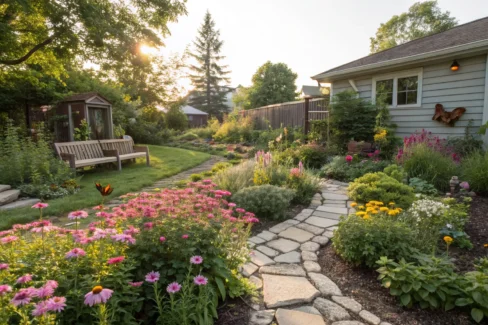
Pollinator gardens can turn any outdoor space into a lively, buzzing sanctuary. I’ve spent years experimenting with layouts that not only attract pollinators but also create a feast for the eyes—here are my favorite layout ideas, each with its own twist.
How About a Pollinator Pathway?
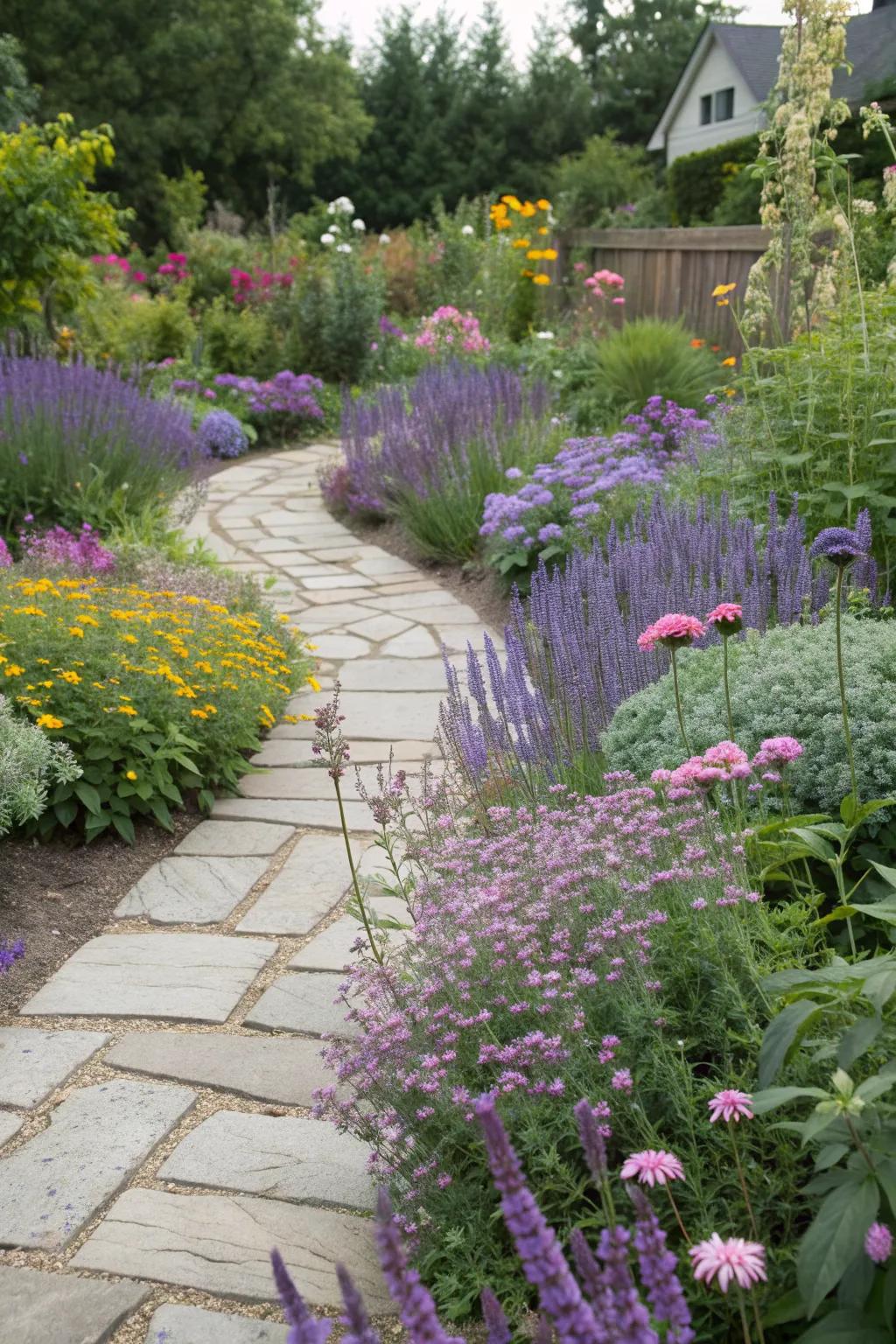
One client wanted a path that meanders through waves of flowers—so we lined a winding stone walkway with drifts of salvia, lavender, and allium, turning every step into a pollinator parade. It’s a layout that encourages both people and pollinators to explore.
A few useful items:
- Pollinator-friendly flower seed mix: Transform your walkway with a vibrant bloom mix that attracts bees, butterflies, and hummingbirds all season.
- Natural stone garden path edging: Define and beautify your winding path with elegant stone edging for a polished, classic garden look.
- Decorative outdoor solar pathway lights: Light up your pollinator pathway at dusk with eco-friendly solar lights and enjoy the view longer.
Curious? Can a Seating Nook Boost Pollinator Watching?
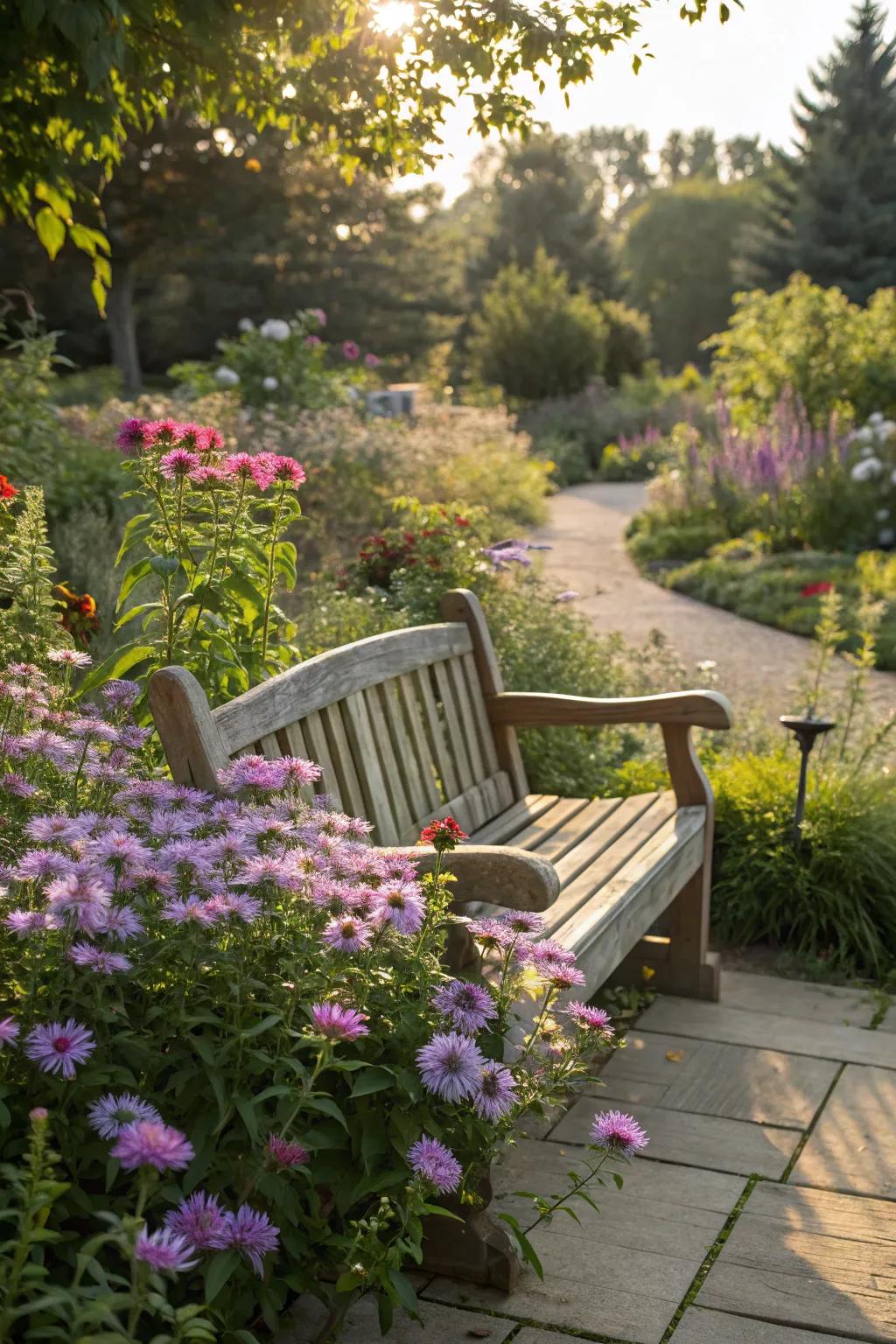
In my own yard, I tucked a bench inside a ring of tall asters and fragrant bee balm—now it’s my favorite spot for morning coffee and watching hummingbirds up close. Designing a seating nook within the blooms lets you enjoy the show as pollinators go about their work.
Grab the essentials:
- Wooden Garden Bench: Add a classic wooden garden bench for a comfortable, inviting spot to relax among flowering pollinator plants.
- Outdoor Solar Path Lights: Illuminate your garden walkways so you can watch pollinators even at dusk with gentle solar path lights.
- Bee Balm and Aster Flower Seeds: Attract more pollinators by planting bee balm and aster seeds around your seating nook for colorful blooms.
Lesson Learned: Leave the Leaves for Winter Shelter

I used to tidy up too early in spring and noticed fewer butterflies the next year—now I leave leaf litter and stems as winter cover for pollinator larvae and overwintering bees. It’s a simple layout tweak that makes a huge difference in your garden’s ecology.
Products that may fit:
- Compostable Leaf Bags: Collect and store excess leaf litter for sheltering pollinators or creating natural mulch in your garden.
- Garden Mulch Mats: Use mulch mats to retain moisture and create a safe overwintering space for pollinators and beneficial insects.
- Bee and Insect Habitat House: Install a habitat house to provide extra shelter for bees and larvae during the colder seasons.
Descriptive: Year-Round Blooms for Constant Buzz

I plan every garden with overlapping bloom times—spring bulbs, summer coneflowers, fall asters—so there’s always something in flower. This staggered layout keeps the pollinators coming, no matter the month.
Useful items to consider:
- Pollinator Flower Seed Mix (Spring, Summer, Fall Blooms): Start your pollinator garden easily with a diverse seed mix for non-stop blooms all season long.
- Bee and Butterfly Garden Plant Markers: Organize each plant’s bloom time with labeled markers, ensuring staggered color for every season.
- Drip Irrigation Kit for Flower Beds: Keep blooming borders healthy and hydrated with a reliable drip irrigation kit designed for garden beds.
Client Spotlight: Themed Planting for Specific Pollinators

A client with a soft spot for hummingbirds asked for reds and tubular blooms—so we designed a bed of penstemon, bee balm, and cardinal flower, and the hummingbirds showed up within a week. Tailoring plant selection to your favorite pollinator can make your layout feel like a personal wildlife show.
Explore these options:
- Hummingbird flower seed mix (including penstemon, bee balm, and cardinal flower): Attract hummingbirds with a seed mix designed for vibrant red blooms and tubular flowers in your garden.
- Soaker hose irrigation system for flower beds: Ensure new pollinator beds thrive by providing consistent moisture with an easy-to-install soaker hose system.
- Decorative hummingbird feeders: Complement your themed garden and attract even more hummingbirds with a decorative outdoor feeder nearby.


