If you’re dealing with a murky pond, the best way to keep algae in check is to let nature do the heavy lifting. By adding water plants that soak up excess nutrients, you can keep your pond crystal clear without reaching for the chemicals. Here are seven of the most popular pond plants for fighting algae, plus my personal secret tip.
[[pflanzen]]
++Flowering Rush (Butomus umbellatus)
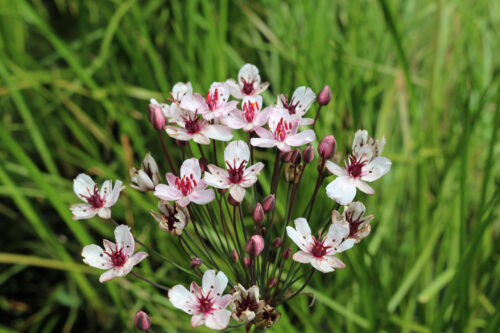
The Flowering Rush loves nutrient-rich, muddy soil and is a champion at handling fluctuating water levels (anywhere from four to twelve inches deep). This makes it a perfect fit for the shallow zones of your pond. Interestingly, its leaves change shape depending on the water level: foliage above the surface looks like tall grass, while underwater leaves transform into ribbon-like strands. From June to August, it puts on a show with delicate pink blossoms that are a huge hit with local pollinators.
++Water Soldier (Stratiotes aloides)
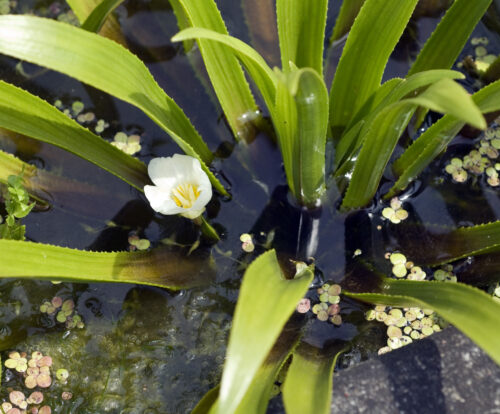
Adding this plant to your pond is like hosting a little piece of conservation history, as it’s actually on the Red List of endangered species in many areas. Most of the year, the Water Soldier stays completely submerged. However, during blooming season, its serrated, sword-shaped leaves and pure white flowers with yellow centers pop up to say hello. It’s happiest in deeper water, reaching down up to six feet.
++Frogbit (Hydrocharis morsus-ranae)
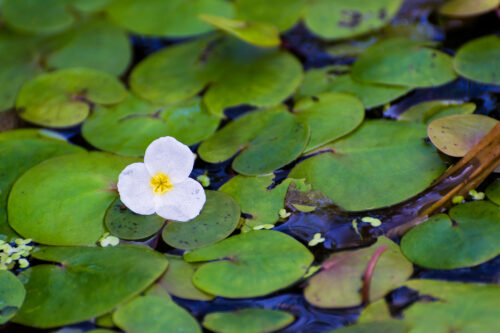
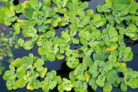
Floating plants like Frogbit are algae-fighting superstars because they pull nutrients directly from the water. Plus, they look great doing it! The dark green, glossy leaves are shaped a bit like a frog’s snout (hence the name). Between May and August, you’ll see dainty white flowers floating on long stems above the foliage, appearing either solo or in small clusters of three.
++Moneywort / Creeping Jenny (Lysimachia nummularia)
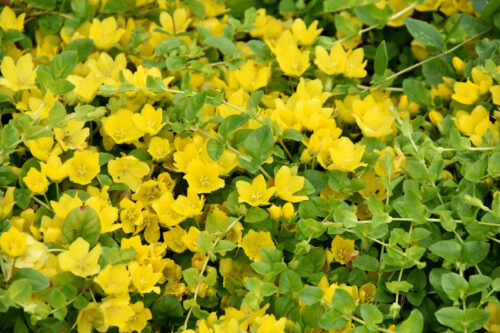
When planted along the pond’s edge, the fast-growing Moneywort acts like a nutrient sponge, starving out algae before it can take hold. In milder winters, its leathery light-green leaves will even stay evergreen. The bright yellow, cup-shaped flowers look like little gold coins scattered along the bank. The best part? It’s not picky at all—it thrives in full sun, partial shade, or even full shade.
++Canadian Waterweed (Elodea canadensis)
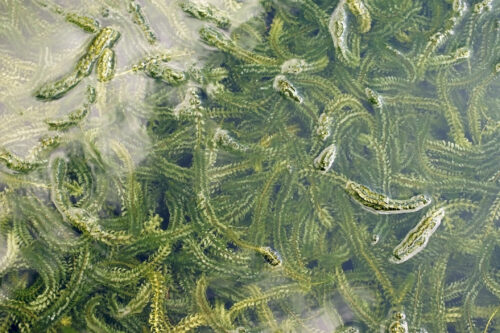
If you want a heavy hitter for water clarity, look no further than Waterweed. It’s incredibly effective at filtering out excess nutrients and pumping oxygen back into the pond. It lives entirely underwater in the deep zones, with stems reaching anywhere from one to three feet long. From May to September, it sends up tiny, unassuming white flowers that float on the surface on delicate threads.
++Coontail / Hornwort (Ceratophyllum demersum)
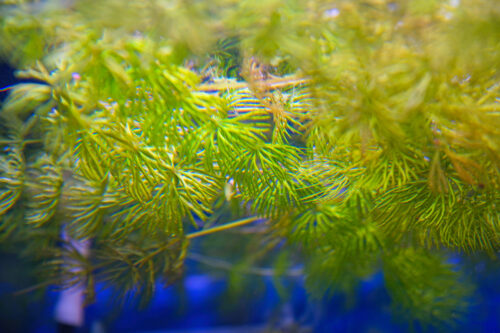
This is a fantastic oxygenator and one of the most adaptable underwater plants you can find. Because it has such a high “appetite” for nutrients, it’s a direct competitor for algae and keeps blooms in check. It grows in long, free-floating strands near the surface and has stiff, fork-shaped needles that feel rough to the touch. Since it doesn’t need much light, it even grows well in the shadows beneath water lily pads.
++Water Lily (Nymphaea hybrids)
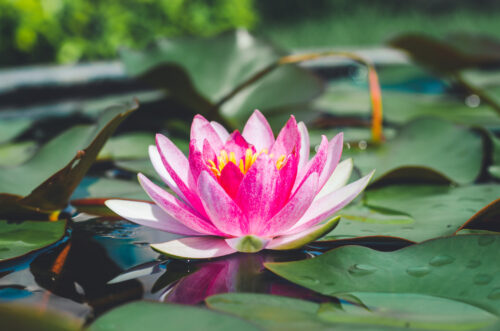
Water lilies are the “shades” of the pond world. By covering the surface with their broad leaves, they block out the sunlight that algae need to grow. They anchor themselves into the pond floor with rhizomes and send up long stems to the surface. Depending on the variety, you can find stunning bowl-shaped flowers from June to September in single or double blooms—some even have a lovely, light fragrance.
%%My Secret Tip: Floating Fern (Salvinia natans)
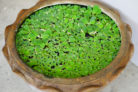
Ponds in full sun are often algae magnets. That’s where the sun-loving Floating Fern comes in. It provides much-needed shade and gobbles up nutrients. Its small leaves (about an inch long) are covered in fine hairs that give it a unique texture. While it’s great at self-propagating in the summer, keep in mind it’s not fully winter-hardy. To keep it going year after year, you’ll want to bring a few starters indoors before the first frost.