Shade-loving plants are a total lifesaver for those tricky spots in the garden that don’t get much sun, whether they’re tucked under big trees or shadowed by the side of the house. We’re breaking down seven of the most popular plants for shade, plus we’ll let you in on our favorite pro-tip for adding a pop of color.
[[pflanzen]]
++Ferns (Pteridophyta)
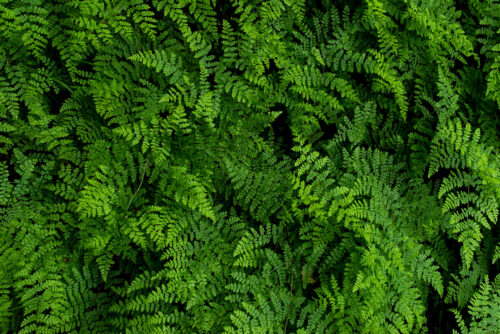
Shade-loving ferns really thrive in that cool, woodland vibe that you find in the darker corners of the yard. The evergreen varieties are especially great because they keep your garden looking lush and interesting all year round. With their wild, ancient look, they’re a perfect fit for a natural-style landscape. These hardy plants grow from underground rhizomes, sending up those delicate, feathery fronds we all love.
++Bleeding Heart (Lamprocapnos spectabilis)
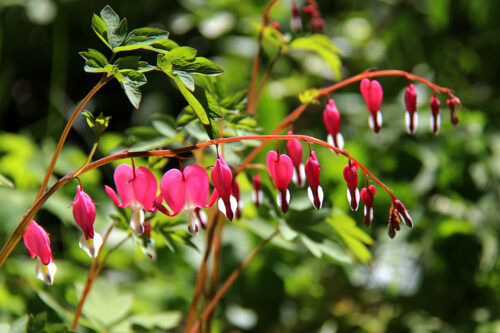
This cottage garden classic is absolutely stunning with its heart-shaped flowers dangling from arching stems. You’ll see them blooming in pink or white starting in May. Just a heads-up: the foliage usually yellows and dies back after blooming, which is totally normal. Bleeding Hearts love cool, lightly shaded spots—like under a deciduous tree. Pro tip: leave the fallen leaves on the ground in the fall to create that moist, rich “forest floor” soil they crave.
++Coleus (Solenostemon scutellarioides)
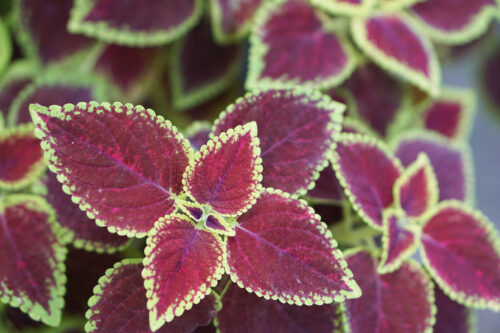
If you want a burst of color without waiting for flowers, Coleus is your best friend. Their leaves come in everything from neon green and hot pink to deep burgundy and violet. They are super easy to care for, though in most US climates, they’re treated as annuals. You can take cuttings in the fall to grow new plants indoors for next year! They also look fantastic in pots on a shaded patio or balcony.
++Hosta (Hosta)
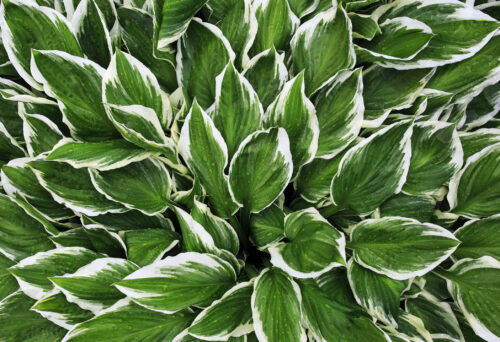
Hostas are the undisputed kings of the shade garden. While they do have pretty bell-shaped white or purple flowers, most gardeners grow them for their incredible foliage. They grow relatively slowly but spread out over time, getting more impressive every year. They really appreciate a cool, humid spot, so planting them near shrubs or under a canopy is ideal.
++Lady’s Mantle (Alchemilla)
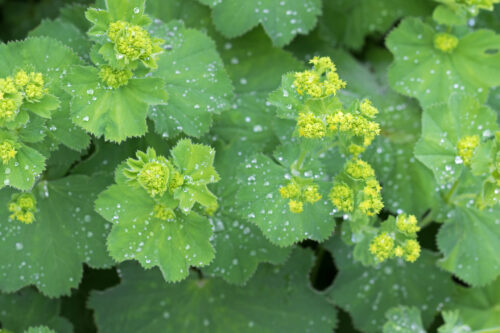
The coolest thing about Lady’s Mantle is the way the leaves catch water. Because of their unique texture, raindrops or morning dew sit on the leaves like shimmering silver pearls. In the summer, they produce clouds of tiny, chartreuse (yellow-green) flowers. Lady’s Mantle is a real “set it and forget it” plant—it’s not picky about soil and is very low-maintenance.
++Lily of the Valley (Convallaria majalis)
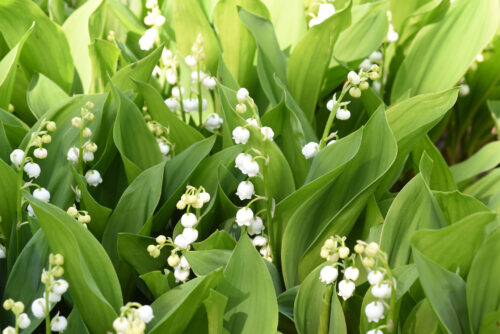
In the wild, you’ll often find these sweet little flowers in shady beech forests. From March through June, they produce tiny, white, bell-shaped blooms that smell absolutely incredible. The flowers grow between pairs of glossy green leaves. Just a word of caution: Lily of the Valley is toxic, so keep an eye on curious pets or kiddos.
++Wild Garlic / Ramps (Allium ursinum)
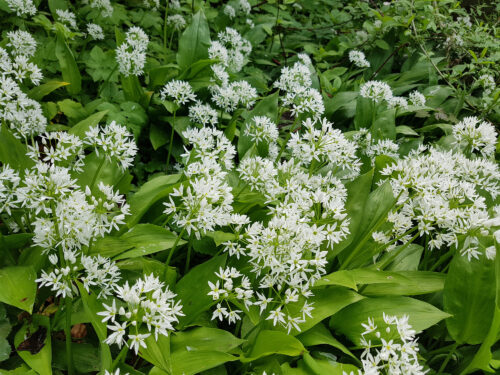
Wild garlic has become a huge hit for shade gardeners lately. It grows naturally in many wooded areas and has a wonderful, mild garlic aroma. Starting in April, it sprouts beautiful white flower clusters that look great against the dark green leaves. The best part? The leaves and the flowers are both edible and delicious in a spring pesto!
%%Coral Bells (Heuchera)
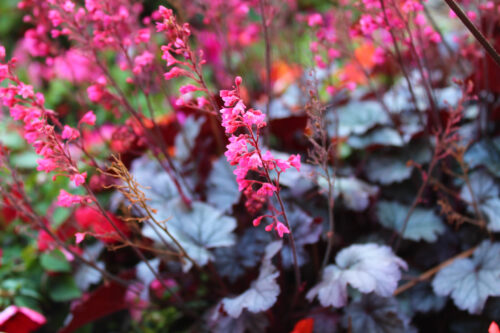
Here is our secret weapon for year-round color! Coral Bells come in an insane variety of colors—from lime green and burnt orange to deep purple and silver. Many even have intricate patterns on the leaves. If you mix a few different varieties together, you can make a shady corner look vibrant even without flowers. That said, they do produce delicate wands of tiny red, pink, or white flowers from May to September that float above the foliage like a mist.