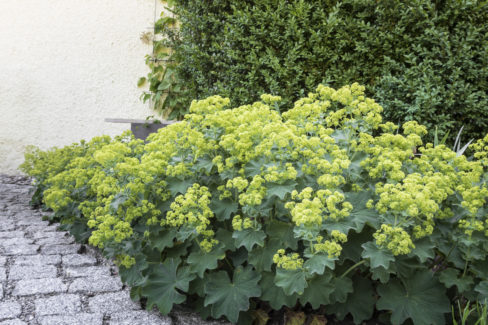
Lady’s Mantle is one of those “set it and forget it” plants that every gardener dreams of. It’s incredibly low-maintenance and thrives in just about any spot you give it. But beyond its easy-going nature, this member of the rose family is famous for its impressive healing properties, which is why you’ll spot it in so many backyard gardens.
Nature’s Gift to Women: Where Does the Name Come From?
Lady’s Mantle is often called a true gift from nature for women. The herb contains plant hormones that are chemically very similar to progesterone, making it a go-to natural remedy for various feminine health issues. It’s traditionally used to help with everything from menstrual cramps and heavy cycles to managing the ups and downs of menopause.
Back in the Middle Ages, scientists were so fascinated by the plant that they nicknamed it “Alchemist’s Herb,” which eventually led to its botanical name, *Alchemilla*. Alchemists were especially captivated by the morning dew that collects on the leaves; they used to meticulously gather these droplets, believing they were a natural distillate with magical properties.
By the way, depending on who you talk to, you might hear this plant called “Dew Cup,” “Lion’s Foot,” or “Bear’s Foot.”
Lady’s Mantle Profile: The Quick Facts
- Genus & Family: Part of the Rose family (*Rosaceae*), botanical genus *Alchemilla*.
- Origin: Mostly native to Eastern Europe and parts of Asia.
- Hardiness: Very frost-resistant; almost all known species are hardy perennials.
- Growth Habit: Upright, low-growing, and herbaceous.
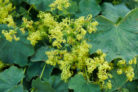
- Foliage: Round to kidney-shaped leaves with beautiful scalloped edges.
- Bloom Time: June through July (with a potential second bloom through mid-September).
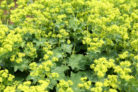
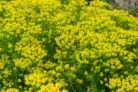
- Flowers: Tiny, chartreuse (yellow-green) flowers that grow in airy clusters.
- Fruit: Small, single-seeded nutlets.
- Location: Does well in full sun to partial shade.
- Soil: Prefers moderately nutrient-rich soil; handles loam, clay, or lime well.
- Propagation: Can be grown from seed or divided (it doesn’t produce runners).
- Uses: Ornamental garden plant, medicinal herb, culinary ingredient, groundcover, or floral arrangements.
The Power of Lady’s Mantle: Using it as a Healing Herb
While it looks gorgeous as a border plant or decorative filler, Lady’s Mantle is a powerhouse in the apothecary and the kitchen. The leaves and flowers are commonly used in herbal teas, salves, creams, and even natural mouthwashes.
Whether used internally or topically, Lady’s Mantle is known for being:
- Blood-purifying
- Circulation-boosting
- Anti-inflammatory
- Pain-relieving
- Antispasmodic (great for cramps!)
- Calming
- Antibacterial
- Digestive-friendly
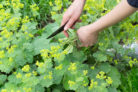
Both the leaves and the flowers can be used to treat a variety of ailments, including stomach issues, wound healing, or even migraines. If you’re planning to harvest the edible parts of the plant, the best time to do it is right at the beginning of the blooming season for the best potency.