Snake plants (botanically known as *Sansevieria*) are famous for their striking, architectural leaves. Most people don’t even realize these plants can bloom because it happens so rarely! But if your snake plant decides to show off, you’re in for a real treat.
What Do the Flowers Look Like?
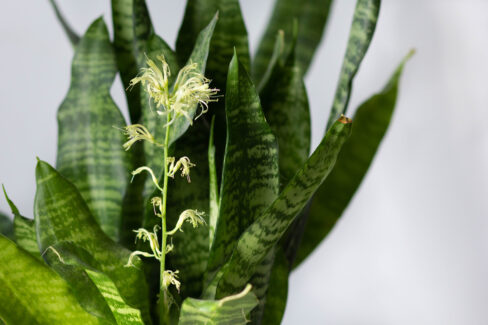
Snake plant flowers usually grow on tall, spike-like stalks or branched clusters. Some species even produce dense, head-like blooms. The coolest part? These flowers typically open at night and fill the room with a lovely, sweet fragrance. The color of the individual blossoms depends on which specific variety you have at home.
When Do They Bloom?
It’s pretty rare for a snake plant to bloom as an indoor plant. Generally, only older, well-established plants will produce flowers. But don’t worry—unlike some succulents, snake plants aren’t “monocarpic,” meaning they won’t die after they bloom. Just keep in mind that each individual rosette or stalk will only flower once in its lifetime.
In most homes, you’ll see these blooms pop up during the winter or early spring.
Flowers of Popular Varieties
- Sansevieria bacularis: White flowers accented with purple stripes.
- Sansevieria burmanica: Greenish-white flower clusters that can reach 24 to 30 inches long.
- Sansevieria concinna: Spike-shaped clusters about 6 to 12 inches long with white flowers.
- Sansevieria cylindrica: Massive flower spikes (2 to 3 feet long!) with snowy white or pale pink blossoms.
- Sansevieria francisii: Shorter spikes (5 to 10 inches) with greenish-white to brownish-green flowers.
- Sansevieria libera: White flowers on clusters ranging from 24 to 32 inches long.
- Sansevieria longiflora: Elegant white flower clusters.
- Sansevieria parva: Delicate white to pinkish blossoms.
- Sansevieria raffillii: Impressive clusters reaching 3 to 4 feet long with greenish-white flowers.
- Sansevieria senegambica: White flowers that take on a purple glow in the sunlight, usually 12 to 20 inches long.
- Sansevieria subspicata: Greenish-white flowers on 12 to 16-inch clusters.
- Sansevieria trifasciata: The classic snake plant; features white flowers on spikes between 12 and 30 inches long.
How to Encourage Blooming
You don’t need a magic wand to get your snake plant to bloom, but you do need to keep it happy. Consistent care is key—that means mastering your watering routine and fertilizing occasionally. The most important factor, though, is the location. While snake plants are famous for “surviving” in dark corners, they won’t thrive there. If they don’t get enough bright, indirect light, they almost certainly won’t have the energy to produce those beautiful flowers.