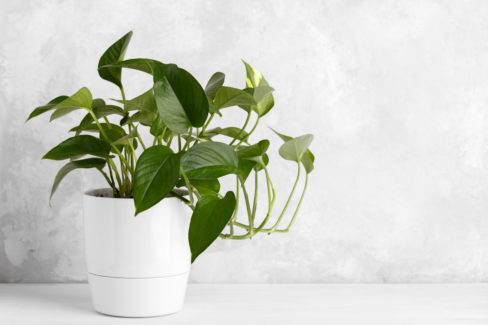
The Pothos (botanical name *Epipremnum aureum*) is a staple in the American home, mostly loved for its gorgeous trailing foliage. But did you know this plant can actually produce flowers? While it’s pretty rare to see them bloom indoors, it’s not entirely impossible!
What Do the Flowers Look Like?
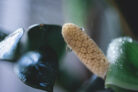
Even though Pothos is usually sold as a foliage-only plant, it is technically a flowering species. The bloom grows in the form of a “spadix” (a fleshy spike) that can reach up to 9 inches long, tucked inside a leaf-like hood called a “spatha.” These are usually a muted off-white, yellow, or greenish color. While that might sound impressive, the flowers are actually pretty understated compared to those big, heart-shaped leaves we love.
Blooming in the Wild
In its natural tropical habitat, the Pothos typically blooms between June and August. However, the plant won’t just flower whenever it feels like it—it has to reach a certain level of maturity first. You can tell a Pothos has reached its “adult” stage when it starts growing “mature leaves,” which are:
- Deeply lobed or split (kind of like a Monstera)
- Roughly 18 inches long
Can They Bloom Indoors?
Since Pothos can’t handle the frost, most of us keep them as houseplants, either cascading from a basket or climbing up a moss pole. Interestingly, whether your plant hangs or climbs doesn’t actually determine if it will bloom; it’s all about the climate and the age of the plant.
Here’s the catch: our cozy living rooms are a far cry from the humid, tropical rainforests where Pothos thrive. Because of this, indoor plants almost never develop those giant “adult” leaves needed for flowering. That’s why seeing a Pothos bloom in a home setting is considered a real “blue moon” event.
That being said, if you happen to spot a spike-like growth on your Pothos, get excited—you might just have a rare bloom on your hands! If it happens, just keep doing what you’re doing. Don’t change its location or care routine, because clearly, your plant is very happy exactly where it is.