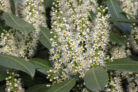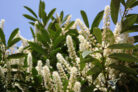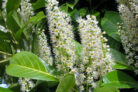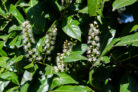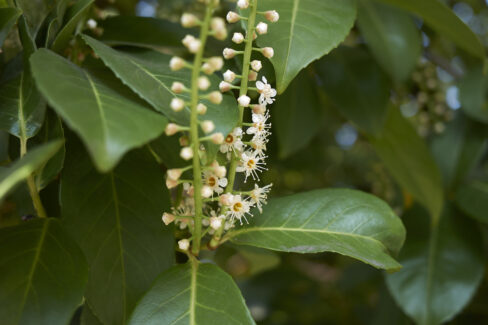
Since Cherry Laurel leaves stay a vibrant, glossy green all year round, these trees are actually a fantastic choice for bonsai lovers. If you’ve ever wanted to shrink this garden staple down to size, you’re in the right place! Here’s my guide on how to prune and care for a Cherry Laurel bonsai so it stays healthy and looking sharp.
Pruning Your Cherry Laurel into a Bonsai
If you want to grow Cherry Laurel as a miniature, turning it into a bonsai is the way to go. It allows you to keep the plant about the size of a standard houseplant. To get there, you’ll need to start with a “training cut” and commit to a bit of regular upkeep.
What you’ll need for the initial shaping:
- Bonsai shears
- A shallow planting tray or pot
- Bonsai wire
- A fine-mist watering can (bonsai sprayer)
- High-quality substrate
- Bonsai fertilizer
Start with a young Cherry Laurel or use a cutting you’ve rooted yourself. Carefully dig up the plant, making sure to protect the roots, and then give the root system a trim. You want to leave a healthy base of root ball and a few strong main roots. Next, head to the top of the plant: choose a strong main stem to be your trunk and cut it at your desired height. Keep a few short side branches to build your canopy. Now, use your bonsai wire to gently guide the trunk and branches into the shape you want. Once you’re happy with the look, pot it up and give it a good drink of water.
Keeping Your Bonsai Happy and Healthy
Because bonsai live in such small containers, they don’t have a huge reservoir of nutrients, so regular feeding is key. Grab a specialized bonsai fertilizer from your local garden center to keep it thriving. Maintenance is the name of the game here—you’ll need to regularly trim back new leaves and shoots with your shears to maintain that “miniature ancient tree” look.
After about a year, take a peek at the roots to see how much they’ve grown. Usually, this is when you’ll want to move your bonsai into a slightly larger tray. Keep an eye on it every spring to see if it’s becoming root-bound. If it needs more space, you can repot it and trim the roots back again if necessary—just always make sure to leave a solid, healthy root ball intact so the tree stays strong!