Hardy ornamental grasses are the unsung heroes of the garden, providing much-needed color and structure even when the temperatures drop. To help you keep your backyard looking lively all year long, I’ve rounded up seven of the most popular evergreen grasses, plus a little “insider tip” at the end!
[[plants]]
++Snowy Woodrush (Luzula nivea)
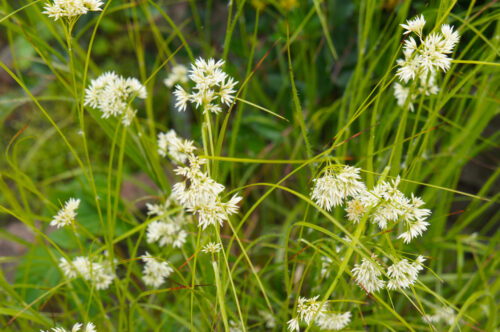
Snowy Woodrush is a low-maintenance native that looks absolutely stunning. It grows in tidy clumps about 12 inches high. Starting in June, you’ll see these lovely, white tufted flowers that look like clusters of tiny stars. The delicate, grass-like leaves are slightly hairy with little “eyelashes” along the edges. It loves partial to full shade and handles root competition like a champ, making it the perfect choice for planting under trees or shrubs.
++Blue Lyme Grass (Leymus arenarius)
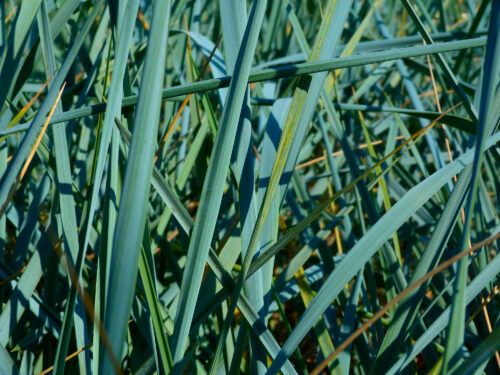
If you want to bring those beach vacation vibes to your backyard, Blue Lyme Grass is your go-to. This robust evergreen features striking blue-gray foliage that feels a bit rough to the touch. In the summer, it produces flower spikes about 6 to 12 inches long. Just a heads-up: this grass spreads via underground rhizomes and can be a bit of a space-hog, so I definitely recommend using a root barrier to keep it from taking over the whole garden!
++Fescue (Festuca)
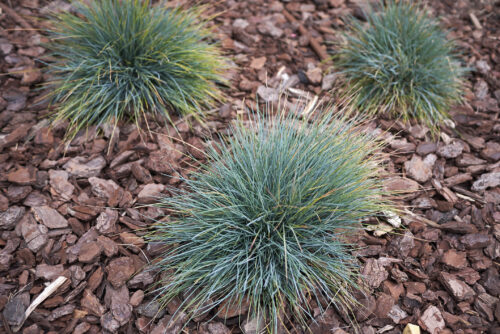
Fescues create beautiful, delicate tufts with blue-green or silvery-gray leaves that arch gracefully. In early summer, airy flower panicles appear, looking almost like they’re floating above the foliage. You can find small, cushion-like varieties like Bearskin Fescue (6 to 15 inches) or taller types like Atlas Fescue that reach up to three feet—perfect for adding structure. Pro tip: to keep that gorgeous blue color intense, plant them in lean, nutrient-poor soil.
++Sedges (Carex)
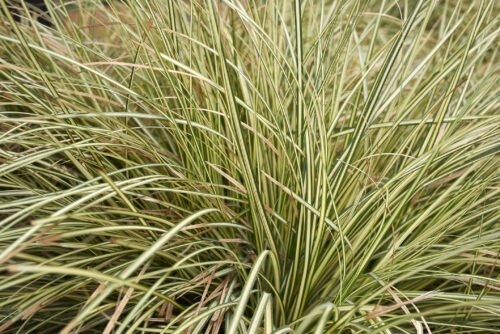
The Carex genus is massive, with over 2,000 species of evergreen ornamental grasses. The color palette is incredible—ranging from classic green and variegated white to chocolate brown and rusty red. Some, like the Gray’s Sedge, have funky, star-shaped seed heads. While tiny varieties (only 2-4 inches tall) make great groundcovers, the impressive Giant Sedge can tower up to 4 feet high.
++European Beachgrass (Ammophila arenaria)
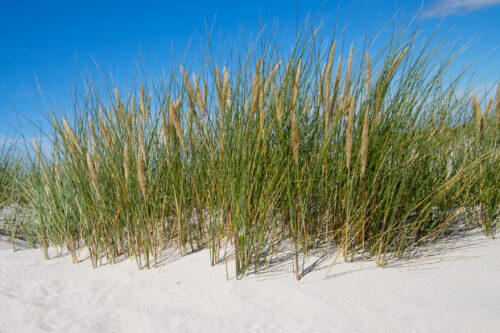
For a touch of maritime flair, try European Beachgrass. This upright grower reaches about 30 inches and has narrow, rolled-in leaves in a cool gray-blue. Thanks to a thick protective layer on the leaves, it’s incredibly tough against the elements. The flowers appear in June, and the seed heads stay on the plant long after, looking magical when covered in a light winter frost.
++Feather Grass (Stipa)
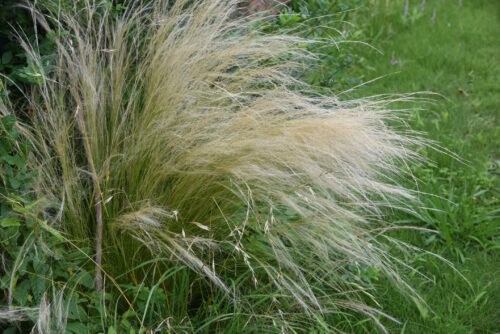
This grass is all about movement. Its feathery awns dance in the slightest breeze and shimmer like silver in the sunlight. Mexican Feather Grass is a popular choice for rose beds at around 20 inches tall, while Giant Feather Grass can hit a massive 8 feet! It’s a total showstopper in a dry garden, especially in the evening when the setting sun hits those translucent plumes.
++Fountain Grass (Pennisetum alopecuroides)
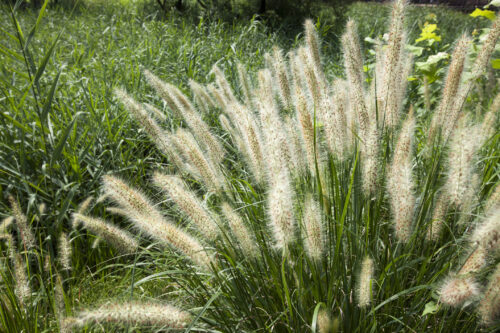
Famous for its “bottlebrush” blooms that pop up in late summer, Fountain Grass is a real crowd-pleaser. It forms large, mounded clumps of narrow, arching foliage. The leaves are a soft gray-green during the season but turn a beautiful golden hue in the fall. The sturdy flower spikes hold up well through the winter, looking like sparkling jewels when the morning frost hits them.
%%Blue Hair Grass (Koeleria glauca)
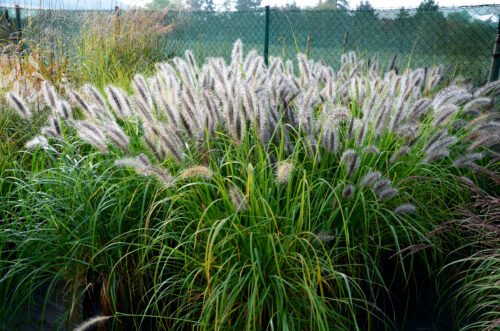
Here’s my secret tip: Blue Hair Grass is grown specifically for its amazing foliage. The blue-green stems provide a fantastic contrast to other plants and keep their color all winter long. It stays compact at about 12 inches tall, with natural-looking flower panicles appearing in June. Just like the fescues, this one prefers “lean” soil—if the soil is too rich, it loses that signature blue tint!