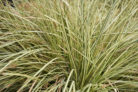
I’ll be the first to admit it: with over 2,000 different species out there, trying to identify a specific sedge can feel like a total headache for most gardeners. But don’t worry! There are a few key tricks you can use to narrow things down, especially since a handful of common species pop up much more often than others.
How to Spot a Sedge
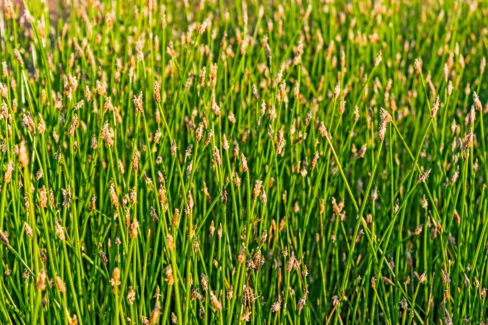
Sedges belong to the Cyperaceae family (often called “sour grasses”). The biggest giveaway that you’re looking at a sedge rather than a standard grass is the stem. Remember the old gardener’s rhyme: “Sedges have edges.” Their stems are triangular, and unlike typical grasses, they never have “nodes” (those little bumps or joints along the stalk). If you take a closer look at the foliage, you’ll usually notice these traits:
- Sharp edges on the leaves
- Small membranes (ligules) where the leaf meets the stem
- Relatively narrow blades
- A very distinct center vein (midrib)
Checking the Flower Spikes
If your plant checks all those boxes, you’ve almost certainly found a sedge! To figure out exactly which one you’re looking at, you’ll want to examine the flower spikes (the “inflorescence”). If the plant has only a single spike at the top, your location is the best clue:
- Arctic regions: Blunt Sedge
- Alpine/Mountain regions: Rock Sedge
- Central Europe / North America: Capitate Sedge
Then you have “homostachys” sedges, where the spikes all look pretty much the same. This group includes favorites like:
- Fox Sedge
- Greater Tussock-sedge
- Sand Sedge
- Slender Sedge
- Spiked Sedge
Finally, there are the “heterostachys” types, which have different-looking male and female spikes. Some common ones you might run into include:
- Gray’s Sedge (Mace Sedge)
- Golden Sedge
- Palm Sedge
- Soft-leaf Sedge
- Wood Sedge
Other Identifying Features
If you aren’t out in the wild but are checking out a neighbor’s garden or a nursery, you’ll likely find popular ornamental varieties in flower beds or containers. Here are a few “cheat sheet” traits for the most common garden sedges:
- Buchanan’s Sedge (Leatherleaf Sedge): Has a unique reddish-bronze color and grows about 28 inches tall.
- Gray’s Sedge: The seed heads look just like tiny medieval morning stars (maces); grows up to 30 inches.
- Soft-leaf Sedge: Turns a brilliant, glowing yellow in the fall and stays small, around 8 inches.
- Palm Sedge: Easy to spot because the leaves grow in a distinct, palm-like pattern.