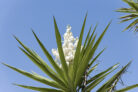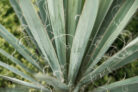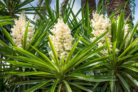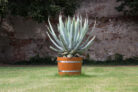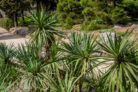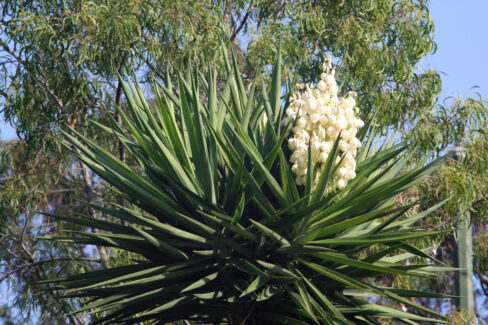
There are about 50 different species of Yucca plants found across the globe. Since they hail from vastly different climates, their “toughness” varies quite a bit. This means not every Yucca can handle a freezing winter. If you’re planning to keep yours outdoors, here’s what you need to know to keep it happy.
These Varieties Can Handle the Cold
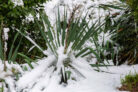
Certain types of Yuccas (often called Adam’s Needle or Spanish Bayonet) are actually surprisingly frost-tolerant. If you want a plant that can survive a cold snap, picking the right variety is key. For example, you might want to plant a Yucca gloriosa (Moundlily Yucca) or a Yucca filamentosa (Adam’s Needle). The Moundlily Yucca is a real champ, handling temperatures as low as -4 °F (-20 °C). In most U.S. regions, you can leave these in the garden year-round without a second thought.
The Adam’s Needle is also quite hardy, standing its ground down to about 5 °F (-15 °C). If your local forecast predicts a deep freeze or a long-lasting cold spell, it’s a good idea to give it a little extra love. Spreading some bark mulch around the base of the plant acts like a cozy blanket for the roots. Also, a quick pro-tip: only water your Yucca on days when the ground isn’t frozen.
Caring for Potted Yuccas
If you’re growing your Yucca in a container rather than keeping it as an indoor houseplant, you’ll need to be a bit more careful. Frost hits container roots much faster than it hits plants in the ground, because garden soil provides a natural layer of insulation that a pot just doesn’t have.
Here’s your checklist for potted Yuccas:
- Wrap the pot in burlap or frost fleece
- Only water on frost-free days
- Skip the fertilizer during winter
- Prune if necessary
Your best bet is to wrap the outside of the pot with burlap, bubble wrap, or a specialized frost blanket. If you have a greenhouse or a sunroom, you can move the pot inside for the winter. Either way, keep an eye on the soil—if the top layer feels bone-dry, give it a little water. You can take a break from fertilizing entirely between October and March; the plant is resting!