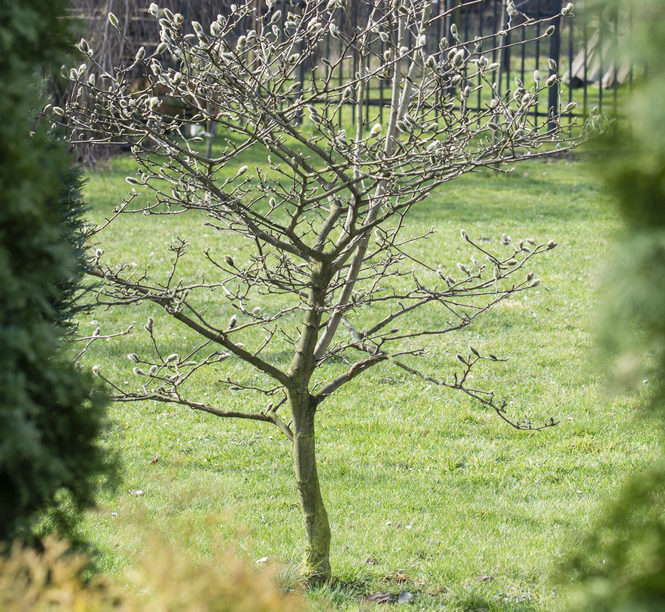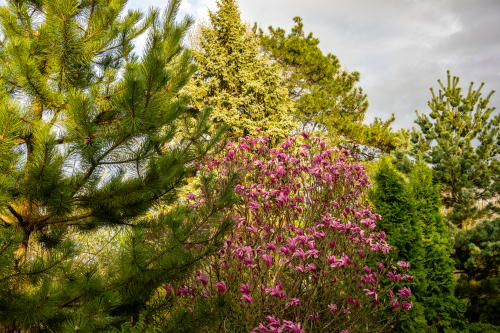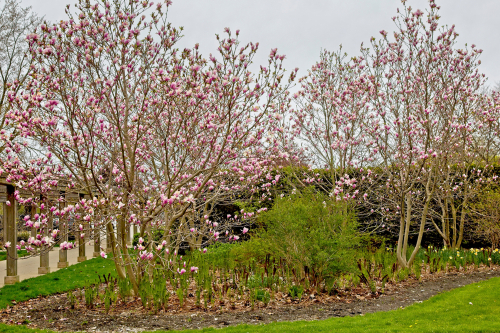
The base of a magnolia tree usually covers a pretty large area. To keep weeds from taking over that space, you’d normally have to spend a lot of time weeding. A popular alternative is to add some ground cover, but you have to be careful here—magnolias can be a bit picky about their neighbors!
A Classic Shallow Rooter
The reason magnolias have such a wide “drip line” (the area under the branches) is because of how their roots grow. Instead of diving deep into the earth, they prefer to spread out wide just below the surface. The tree needs this extensive, shallow network to soak up all the nutrients it needs to thrive. Because of this, any plants with deep, aggressive roots that compete for those top-layer nutrients are a no-go for underplanting.
The Best Companion Plants
When choosing plants to live under your magnolia, you also need to pick varieties that love acidic soil, which is a must-have for a healthy magnolia. Plus, you want plants that aren’t “water hogs,” so your tree doesn’t go thirsty. Here are a few great options that play nice:
- Wild Garlic (Allium ursinum)
- Snowdrops (Galanthus)
- Lily of the Valley (Convallaria majalis)
- Dwarf Periwinkle (Vinca minor)
- Spring Snowflake (Leucojum)
- Grape Hyacinth (Muscari)
- Crocus (Crocus)
- English Ivy (Hedera helix)
- Spotted Dead Nettle (Lamium maculatum)
- Foamflower (Tiarella)
The Alternative: Mulching
At the end of the day, you have to ask yourself if underplanting is really the best move. Even the most low-maintenance plants are going to compete with your magnolia for moisture and nutrients. Another thing to keep in mind: because magnolia roots are so close to the surface, it’s actually really easy to accidentally damage them while you’re digging holes for new plants. If you want to play it safe, a thick layer of mulch is often the better choice. It keeps the weeds down and the moisture in without stressing out your tree’s roots.