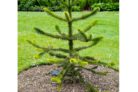
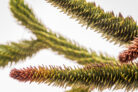
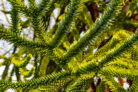
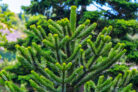
If you’re looking to add a little exotic flair to your backyard, you can’t go wrong with the Monkey Puzzle tree (Araucaria). With its striking, scale-like needles that look almost like armor, it’s a total conversation starter. But did you know its flowers are just as unique? Let’s dive into what they look like and when you can expect to see them.
When and how does the Monkey Puzzle tree bloom?
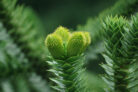
The Monkey Puzzle tree typically blooms in mid-to-late summer, usually during July and August. These trees are pretty interesting because they produce distinct male and female flowers. The male flowers are brown and cone-shaped, while the female ones are yellowish-green and round.
What is the peak blooming season?
Most Monkey Puzzle trees show off their flowers in the heat of the summer—mostly July and August. However, if the weather is just right, you might see them start as early as June.
What do the flowers actually look like?
The appearance depends entirely on whether you’re looking at a male or female flower. Despite being relatively low-maintenance, these trees have very specific reproductive parts:
- Female flowers: These are lime-green, globe-shaped beauties. They sit right on top of the branches and can grow up to 8 inches (20 cm) in circumference.
- Male flowers: These look more like dark brown, dangling cones. Unlike the female flowers, they hang underneath the branches and usually reach about 4 inches (10 cm) in length.
Do the flowers stay on the tree after blooming?
If you have an evergreen Monkey Puzzle tree—which, by the way, is a conifer that handles wintering quite well in many temperate climates—the male flowers will eventually just drop off.
The female flowers are a different story. They stay on the tree, eventually turning brown and breaking open to release their seeds.
What’s the deal with “monoecious” vs. “dioecious”?
These are just fancy gardening terms for how the flowers are distributed. “Monoecious” means a single tree grows both male and female flowers. “Dioecious” means a tree is either strictly male or strictly female. Most Monkey Puzzle trees are dioecious. If you have a female tree, it will produce reddish-brown seeds about an inch long. Once these are released (usually after a year), they make it pretty easy to propagate new little trees!
Pro Tip: Patience is a virtue
The Monkey Puzzle tree, which hails from South America, isn’t in any rush to grow up. Compared to your standard backyard firs, the Araucaria takes its sweet time to mature. In fact, you’ll need to be patient—it usually takes about 30 years before the tree is old enough to produce its first flowers!