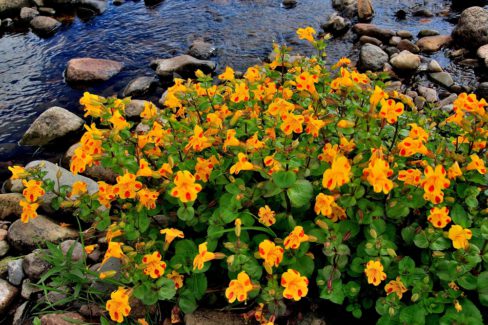
The question in the title isn’t as straightforward as you might think! That’s because there are actually between 150 and 170 different species of Monkey Flowers (Mimulus) out there. Some are annuals that live for just one season, while others are hardy perennials. So, whether your plant survives the winter really depends on which variety you’ve got in your garden.
Check Before You Buy
Monkey Flowers are originally native to North and Central America. Over here, they’re most popular with gardeners who are planning their own backyard pond. Since pond landscaping can be a bit of a project, I always recommend buying your seeds or starts from a specialized nursery. While you’re there, definitely ask the staff which varieties are annuals and which ones will come back year after year.
Getting Ready for the Cold
If you’ve opted for a perennial variety, you’ll want to give it a good trim once it’s done blooming in the fall. The timing for this depends on the specific plant—for example, *Mimulus moschatus* can keep blooming right into November! Once the flowers are spent, cut the plant back close to the ground and give it some winter protection. Since these plants love moist soil, I’ve found that a layer of brushwood or fallen leaves works much better than garden fleece, which can sometimes trap too much stagnant moisture.
Let Nature Do the Work
Here’s a little pro tip: you might not even need to worry about the extra work. Many popular annual varieties, like the Common Large Monkey Flower, are champion “self-seeders.” This means they’ll drop their own seeds and pop back up on their own next spring. The trick is to leave the spent flowers on the plant long enough for the seeds to fully ripen. Just wait until late in the fall to clear away the old plant debris.
To wrap it up, here’s what you need to know about Monkey Flowers and winter:
- It all comes down to the specific variety you have.
- For perennials, a fall pruning and a cozy layer of mulch are key.
- Many annuals will “replant” themselves for the following year if you let them go to seed.