Pears have been a staple in European orchards for centuries, and there’s nothing quite like picking a sun-warmed fruit right off your own tree. To help you decide what to plant, I’ve rounded up 7 of the most popular pear varieties, plus a little “insider secret” variety that packs a serious flavor punch.
[[pflanzen]]
++Clapp’s Favorite (Pyrus communis ‘Clapp’s Favorite’)
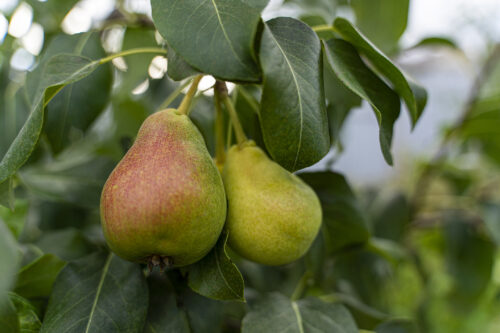
Believe it or not, this old-school heirloom actually got its start right here in the USA! Clapp’s Favorite is an early-season pear, meaning you can start harvesting those medium-to-large fruits as early as mid-August. The skin is a lovely yellowish-green that turns pale yellow when fully ripe, often sporting a pretty red blush on the side that faced the sun. Inside, the flesh is buttery and melts in your mouth with a perfect sweet-tart balance. It’s a breeze to grow, just make sure you plant it in a spot that’s protected from heavy winds.
++Hardy’s Butter Pear (Pyrus communis ‘Gellerts Butterbirne’)
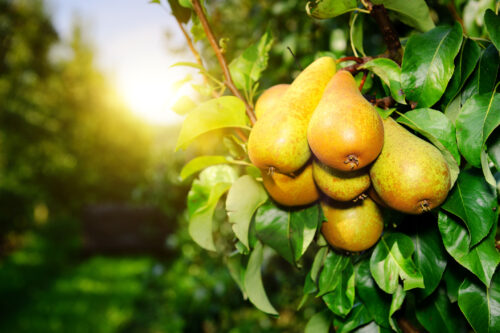
This tasty variety has been a favorite in Europe since the 1830s. It produces hefty, cone-shaped pears (sometimes weighing nearly half a pound!) with greenish-yellow to bronze skin. The flesh is a beautiful yellowish-white, incredibly juicy, and has a sophisticated sweet-wine flavor. It’s naturally resistant to scab, and if you give it a sunny, sheltered spot, it will reward you with a massive harvest. It’s a great “all-rounder”—perfect for eating fresh, drying, juicing, or canning.
++Louise Bonne of Jersey (Pyrus communis ‘Bonne Louise d’Avranches’)
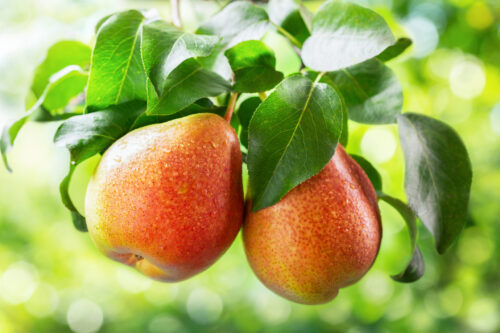
Hailing from Normandy, this traditional variety produces small-to-medium fruits with that classic pear silhouette. You’ll recognize it by its shiny green skin covered in a deep red flush. The white flesh is exceptionally juicy and smooth. If you have a cool cellar or fridge space, this is a fantastic storage pear. Just keep in mind that she likes it warm and sunny; she can be a bit sensitive to scab and late spring frosts, so pick a cozy spot in your garden.
++Legipont / Charneux (Pyrus communis ‘Köstliche von Charne(a)ux’)
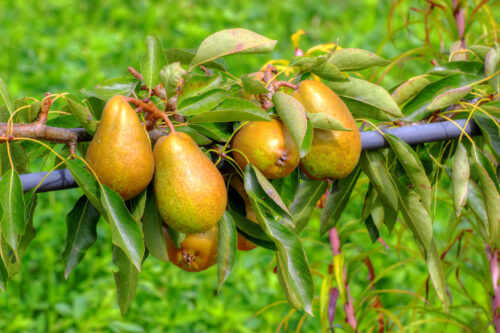
Often called the “Mayor’s Pear” in Europe, this variety was discovered as a chance seedling and became wildly popular in the early 20th century. The medium-sized fruits have yellow-green skin dotted with tiny speckles. It’s beloved for its delicate flesh and pleasant sweet-and-sour kick. Growing it is pretty straightforward as long as it gets sun to partial shade and a bit of protection from the elements. One thing to watch out for: it can be a little prone to pear rust.
++Alexander Lucas (Pyrus communis ‘Alexander Lucas’)
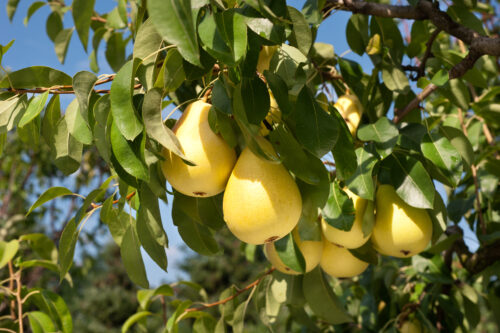
Developed in France around 1870, this variety produces large, heavy-bottomed pears starting in late September. The smooth skin shifts from green-yellow to a brilliant bright yellow as it ripens. The flavor is wonderfully mild and sweet. One of the best things about Alexander Lucas is its shelf life—keep them in a cool room and they can last up to six months! While it’s very resistant to pests, it doesn’t love high winds or scab-prone humid areas.
++Bartlett / Williams’ Bon Chrétien (Pyrus communis ‘Williams’)
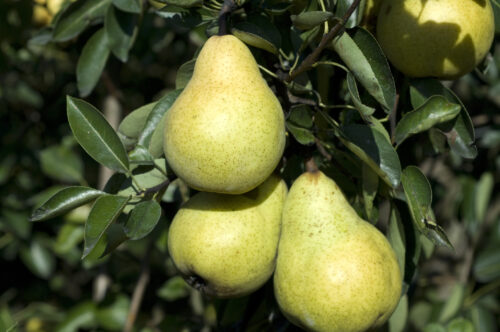
You probably know this one as the Bartlett pear! You can tell a ripe one just by the smell—it has a distinct, aromatic nutmeg scent. Dating back to 1770, it’s one of the oldest cultivated varieties. The fruit is medium-sized, turning bright yellow with fine dots when ready to eat. The flesh is white, meltingly soft, and super juicy. Just a heads-up for the organic gardeners: Bartletts are a bit of a “diva” and can be prone to scab, codling moths, and fire blight.
++Conference (Pyrus communis ‘Conference’)
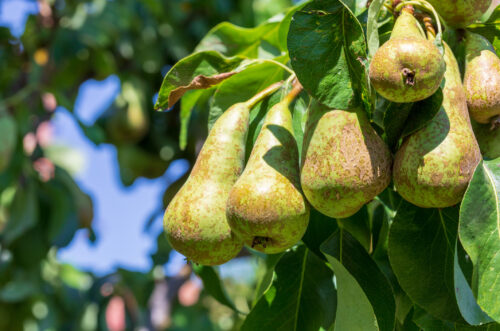
The Conference pear is likely the most popular choice for home gardens. The fruits are slim with a noticeably long neck and a slightly “lopsided” look that gives them character. The flesh is yellowish-white and has a delicious, spicy-sweet flavor. It’s generally very hardy against pests, though it can get scab if the air is too stagnant. Pro tip: make sure your soil has some lime in it, as this variety can get yellow leaves (chlorosis) if it’s lacking nutrients.
%%Abate Fetel (Pyrus communis ‘Abate Fetel’)
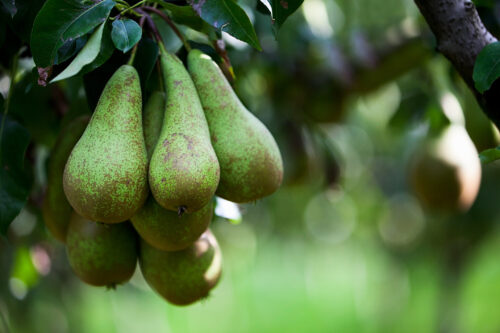
First mentioned in France in 1866, the Abate Fetel is my “secret weapon” for the garden. It produces long, large fruits with a distinctive yellow-green, slightly “rusty” skin. Harvest them in late September and let them sit for a few weeks to reach peak flavor. The flesh is sweet and a bit firmer than others, which makes it the absolute best choice for poaching or canning. But here’s the real kicker: Abate Fetel is a fantastic pollinator for almost all other pear varieties, helping your whole orchard produce a bigger harvest!