
Looking for a little more privacy in your backyard? Trees are a fantastic, natural way to create a living “privacy fence.” Here’s a breakdown of some of the best trees for screening, their unique personalities, and how to pick the perfect one for your landscape.
[[pflanzen]]
++Leyland Cypress (Cupressocyparis leylandii)
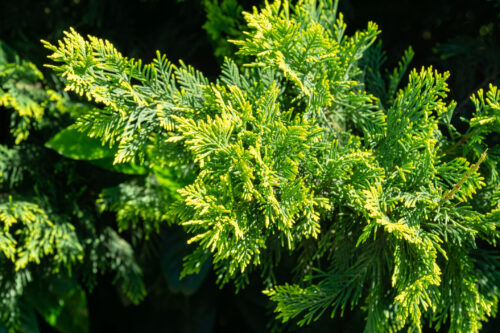
If you want privacy *fast*, the Leyland Cypress is your best friend. These trees are famous for their incredible growth rate—if they’re happy in their spot, they can put on anywhere from 1.5 to 3 feet of height per year! They have a lush, dense texture and a slender, upright shape that gives off major Mediterranean vibes. Plus, there’s something really peaceful about the way they sway in the breeze.
++European Silver Fir (Abies alba)
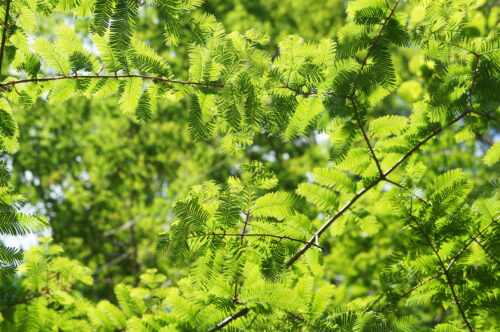
Want to block out the neighbors and add a majestic focal point at the same time? The Silver Fir is a classic choice. While these giants can reach a staggering 200 feet in the wild, they usually top out around 100 feet in a garden setting. They grow at a steady pace of about a foot per year. It’s a great pick if you have plenty of vertical space and want a traditional forest feel right in your backyard.
++Common Juniper (Juniperus communis)
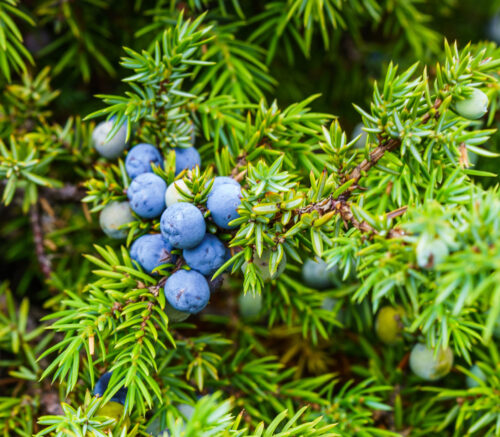
The Juniper is a multitasker. Not only does its dense foliage provide a reliable screen, but it also produces those iconic berries used to flavor gin and various savory dishes. It’s a “culinary” privacy screen! Junipers grow about 8 to 15 inches a year and are very forgiving when it comes to pruning. If it starts getting a bit too wild for your taste, you can easily trim it back to the size and shape you want.
++Norway Spruce (Picea abies)
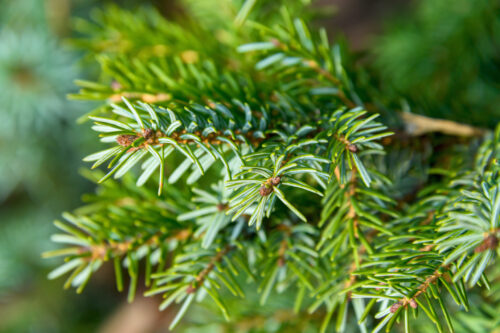
For a classic evergreen look, you can’t go wrong with a Spruce. Unlike some pine trees that tend to get “leggy” or thin out at the bottom as they age, the Norway Spruce keeps its needles all the way down to the ground. It maintains a beautiful, thick pyramid shape, which is exactly why so many gardeners choose it when they need a solid, year-round visual barrier.
++American Arborvitae (Thuja occidentalis)
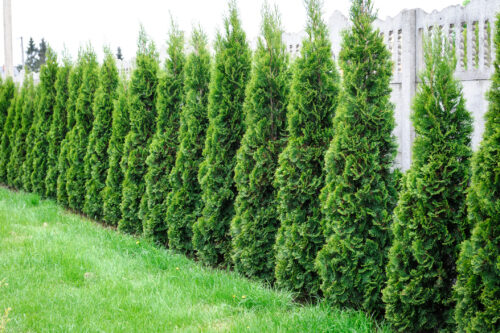
Arborvitae (often called “Tree of Life”) is arguably the king of privacy hedges. It’s hard to find another tree with needles this dense. They stay green all year and handle pruning like a champ, so you can keep them in a neat, formal row. One thing to keep in mind: because the foliage is so tight and dry, they aren’t quite as “wildlife-friendly” for nesting birds as some other evergreens, but for pure screening power, they’re hard to beat.
++European Hornbeam (Carpinus betulus)
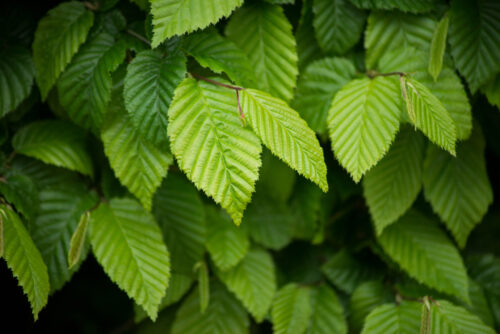
The Hornbeam is a favorite for anyone who loves a structured, elegant look (it’s actually different from a standard Beech). It has gorgeous, vibrant green leaves that create a totally opaque wall of foliage. These trees are famous for their use in formal European gardens because they can be sheared into very specific shapes. Whether you want a small hedge or a tall green wall, the Hornbeam is a sophisticated choice for blocking prying eyes.
++English Yew (Taxus baccata)
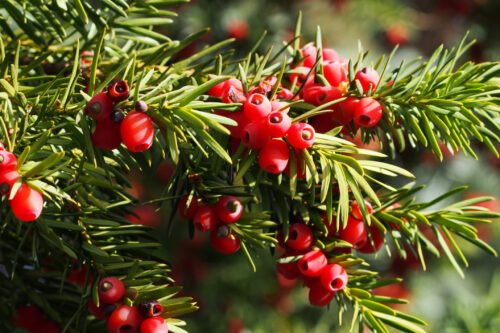
The Yew is a top-tier pick for a long-lasting privacy screen. Gardeners love it for its deep, dark green needles and the bright red berries that pop against the foliage. It’s incredibly dense and stays green year-round. Just a heads-up: Yews are toxic if ingested, and the sap can sometimes cause skin irritation. It’s a good idea to wear gloves and long sleeves when you’re out there doing your annual pruning!