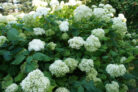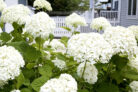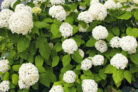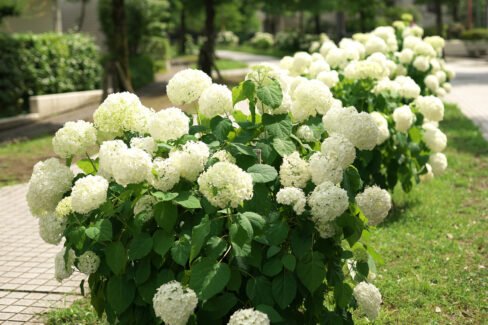
Thanks to its massive, pillowy blooms, the ‘Annabelle’ hydrangea is often called the Smooth Hydrangea or even the “Snowball” hydrangea. Those gorgeous flower heads are stunning, but they carry a lot of weight! Sometimes, the plant needs a little extra help to keep from flopping over. Here’s a quick guide on how to give your Annabelle the support it needs.
When should you stake your hydrangea?
In the gardening world, we call this “staking.” Whether your plant needs it depends on a few things: the size of the blooms, the age of the plant, and where you’ve chosen for your hydrangea’s location. If you’ve tucked it into a spot protected from the wind—like right up against a house wall—the plant won’t struggle as much with the weight. Picking the right spot is actually the first step in protecting your hydrangea from drooping.
How to support your plant the right way
My favorite way to stabilize these beauties is by using bamboo stakes. They’re sturdy, affordable, and have a natural look that blends right into the garden. You’ll want to grab a few stakes and make sure they match the size of your hydrangea. Line them up around the plant and drive them at least 12 inches (30 cm) deep into the soil. This ensures they stay put and provide a solid foundation for the long haul.
Here’s what you’ll need:
- Bamboo stakes
- Garden twine or string
- A small saw (to trim stakes to size)
Once your stakes are in, run some twine between them to create a supportive framework. Let the plant grow naturally through this. Once blooming season arrives, you can gently tie the heavier stems to your bamboo frame with twine. If bamboo isn’t your style, you can also use a metal garden grid or hoop. However, I think bamboo looks much more organic in a backyard setting. Plus, it’s a durable material that won’t leach any weird chemicals into your soil.