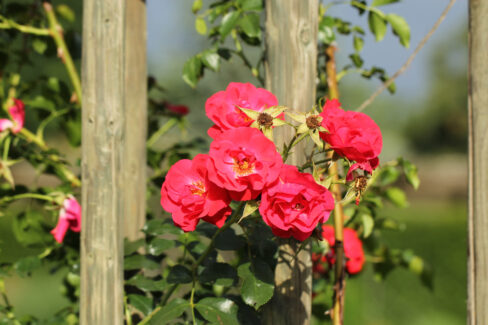
It takes a few years for a climbing rose to really hit its stride and show off its full floral potential. Ideally, once they’re settled, you want to leave them right where they are. However, life happens, and sometimes you just have to move them. If you’re planning a garden “relocation” for your rose, here’s everything you need to keep in mind to make the transition smooth.
Reasons for Transplanting
Sometimes, the original spot for your climbing rose just doesn’t work out. If you notice the soil is depleted, or perhaps a nearby tree has grown and cast too much shade, your rose will start producing fewer blooms. That’s your signal that it’s time for a change of scenery. Before you dig, make sure the new spot checks these boxes:
What your rose is looking for in a new home:
- A sunny or partially shaded location
- Good air circulation (to prevent mildew!)
- Moderately moist soil
- Nutrient-rich substrate
A pro-tip many gardeners swear by is planting climbing roses facing East or West. This way, they get that beautiful morning or evening light without being scorched by the brutal midday sun. If your soil is a bit lacking, don’t worry—you can always boost the quality by mixing in some compost or other quality fertilizers.
How to Move Your Climbing Rose
Once you’ve picked out the perfect new spot, start by digging a nice, wide planting hole. If your garden soil tends to hold onto water, go ahead and add a drainage layer at the bottom to prevent “wet feet.” Now, it’s time to prep the rose itself. Give it a good, hard prune—trust me, a trimmed-back rose is much easier to handle and move than one with wild, trailing canes.
Next, grab your spade and carefully dig a circle around the base of the plant. You’ll want to dig down at least two shovel-lengths deep. Since climbing roses are deep-rooted, be prepared to put in a little elbow grease to get under that root ball. Gently lift the plant from the ground. If you notice any damaged roots, just snip them off with a pair of sterilized garden shears.
Finally, settle your rose into its new home. Once it’s in the ground, give it a deep soak and keep a close eye on the watering for the next few weeks while it gets established.