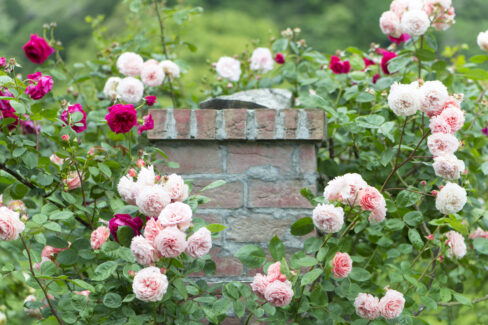
If you want your climbing roses to really thrive, giving them a solid head start is key. By following a few simple steps during planting, you’ll ensure your roses grow strong and reward you with a stunning display of blooms when the time is right.
When is the best time to plant?
The best window for planting climbing roses is usually in the second half of the year. For bare-root roses, October is generally considered the “sweet spot.” By this time, the roses have dropped their leaves and are heading into their dormant phase. This makes it the perfect time to get them in the ground because the plant won’t be stressed out by the move. You can technically plant them later in the fall too, just make sure the ground isn’t frozen yet!
What your climbing rose needs to thrive:
- A sturdy trellis or support structure
- Nutrient-rich soil
- A spot with full sun or partial shade
- Consistently moist (but not soggy) soil
Step-by-step: How to plant your climbing roses
Once you’ve picked out the perfect sunny spot, go ahead and dig a planting hole. If your soil tends to hold onto water, adding a drainage layer at the bottom is a smart move to prevent root rot. Feel free to mix in some rose fertilizer or compost to give the soil a nutrient boost. Before you put the plant in, make sure you have a sturdy trellis or support ready for those canes to climb. Now, you’re ready to set your rose in its new home.
After placing the rose, fill the hole back in with soil and give it a good soak. Keep an eye on the watering over the next few weeks—climbing roses are thirsty plants, especially when they’re working hard to grow leaves and buds. It’s best to get your trellis up early; as soon as the canes are long enough, you can start gently tying them to the support. This helps guide the plant and encourages it to grow upward exactly where you want it.
Winter protection for new roses
It’s really important to get your roses in the ground before the first hard frost. The roots need a little time in unfrozen soil to get established. To give them an extra layer of protection, mound some soil around the base of the plant to insulate the roots. You can also lay down some evergreen boughs for added warmth. If a sudden cold snap hits, slipping a burlap sack over the young shoots is a great way to protect those tender stems from frost damage.
Keep in mind that not every climbing rose will burst into bloom in its first year. If you’ve just planted a new one, you might need a little patience. Often, the plant puts all its energy into growing a strong root system and tall canes first. Stick with it, support that early growth, and you’ll be enjoying a wall of flowers before you know it!