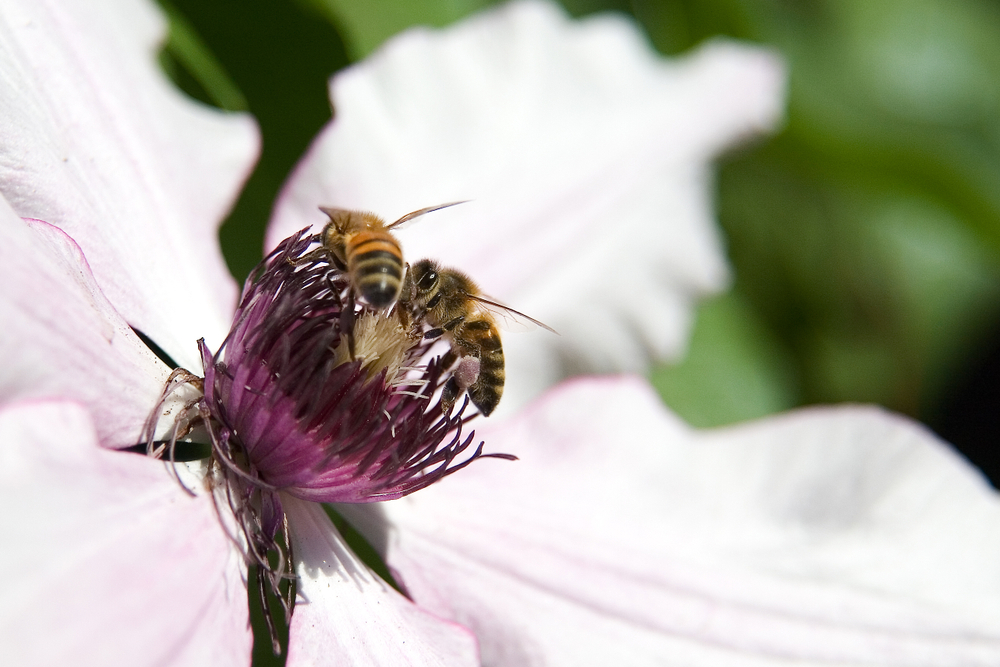
Bee-friendly perennials are a fantastic way to offer wild bees and honeybees a lush, all-you-can-eat buffet right in your backyard. Today, I’m sharing the 7 most popular perennial plants for our favorite pollinators, plus a little “insider tip” for an insect-friendly garden.
[[plants]]
++Verbena
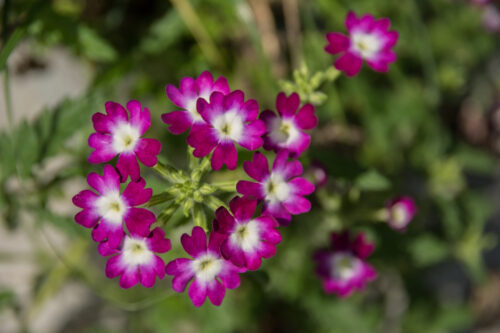
Verbena is a total multitasker—it looks just as great in a garden bed as it does in a window box. These herbaceous plants feature clusters of tiny blooms in white, purple, pink, or red at the tips of their stems. Since Verbena isn’t fully winter-hardy in many US zones, it’s often grown as an annual. However, if you let these bee-magnets go to seed, they’ll often self-sow and pop back up every year without you lifting a finger!
++Golden Marguerite (Anthemis tinctoria)
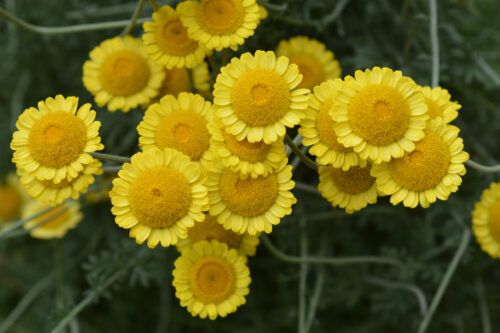
Also known as Dyer’s Chamomile, this native wildflower is a favorite for naturalistic or meadow-style gardens thanks to its cheerful, golden-yellow petals. It typically grows between 12 and 24 inches tall. From June through September, it produces flat, daisy-like flowers that are packed with nectar and pollen. That’s exactly why you’ll find it in so many bee-friendly seed mixes! It’s a hardy self-seeder, so expect it to stick around for the long haul.
++Blanket Flower (Gaillardia x grandiflora)
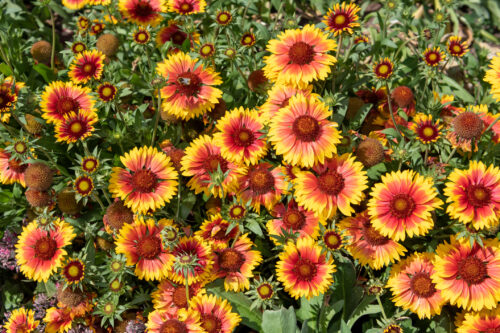
Blanket Flower is a classic for a reason. If you want a bee-friendly garden, this one is a must-have. With a long blooming season from July to October, these colorful flowers are a vital food source for local insects. Depending on the variety, the colors range from bright yellow to fiery orange and deep red. Pro tip: they look most stunning when planted in small groups in a warm, sunny spot.
++Goldenrod (Solidago)
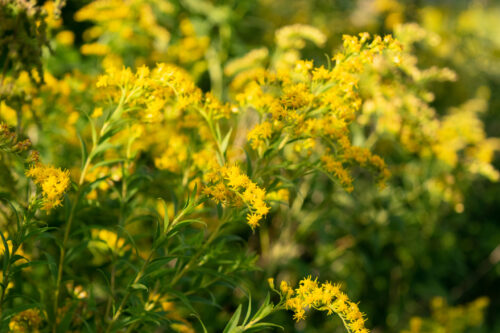
For a while, Goldenrod had a bit of a bad reputation for being too aggressive in the garden. But don’t let that scare you off! Modern cultivars are perfectly behaved and garden-ready. They still offer those gorgeous, golden plumes that bees love, but without the “hostile takeover” of your flower bed. Since they bloom late into October, they provide a critical food source right when other flowers are starting to fade for the season.
++Stonecrop (Sedum)
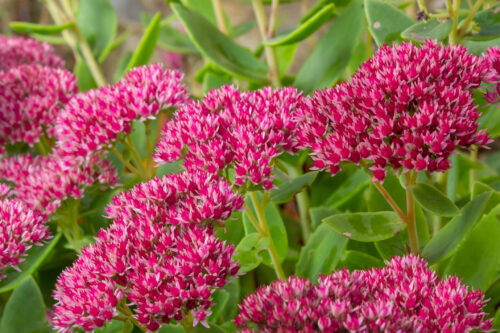
The name “Stonecrop” might sound a bit rugged, but these plants are actually beautiful, low-maintenance powerhouses. Whether they are bushy or low-growing (often used for green roofs), Sedums really hit their stride in late summer. Their star-shaped flower clusters come in shades of yellow, white, or pinkish-red. Because they have thick, succulent-like leaves, these hardy perennials are incredibly drought-tolerant and tough as nails.
++Catmint (Nepeta cataria)
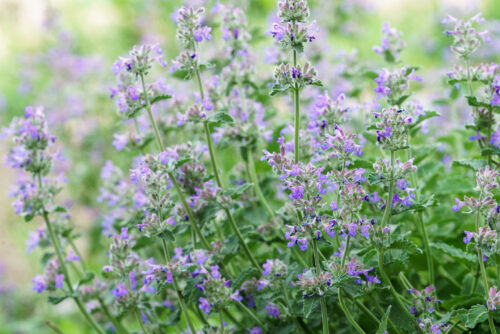
A member of the mint family, Catmint is easy to spot with its silvery-gray, fuzzy leaves and spicy scent. The violet-blue flowers appear from May through autumn and act like a magnet for bees. The stems have a lovely, airy arch to them, giving the plant a relaxed, cottage-garden look. You can plant it as a single specimen, but it looks especially dreamy when planted in dense clumps of three to five.
++Yarrow (Achillea)
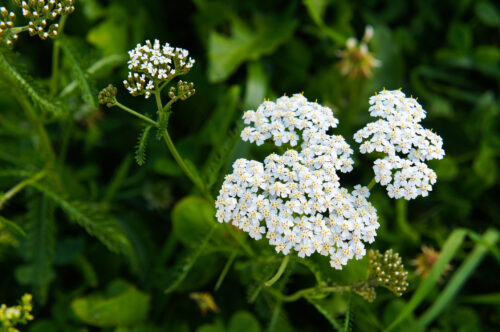
While Yarrow might not produce quite as much nectar as some other heavy hitters, it makes up for it with an incredibly long blooming season. It’s a reliable food source for insects even when other options are scarce. With varieties ranging from 4 inches to 5 feet tall, there’s a Yarrow for every spot in your garden. Bright yellow varieties are super popular, but the classic white Common Yarrow looks beautiful in a wilder, natural corner of the yard.
%%Globe Thistle (Echinops)
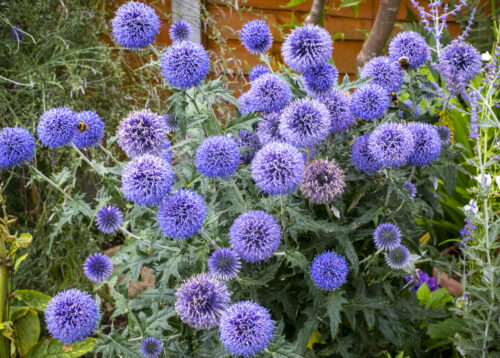
Looking for something unique? Globe Thistle brings amazing texture to the garden with its spiky leaves and perfectly spherical flowers. If you give it a spot in full sun, it will produce stunning white or steel-blue globes. These start blooming from the top down starting in July, providing a feast for the bees. They are very drought-tolerant and love the heat, making them the perfect companion for your other bee-friendly favorites.