True blue is actually pretty rare in the garden—only about seven percent of all flowers bloom in this heavenly hue. If you’re looking to add some cool, calming tones to your backyard, you’re in the right place. I’m sharing the 7 most popular blue flowers to grow, plus a little “secret” tip for getting the most intense color possible.
[[pflanzen]]
++Grape Hyacinth (Muscari)
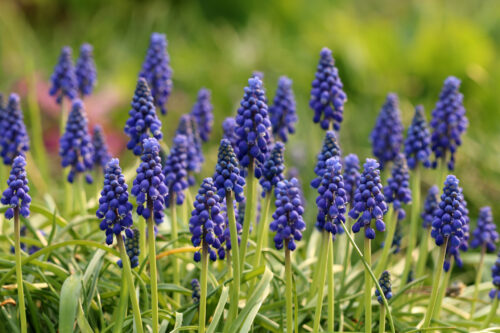
Every spring, Grape Hyacinths create stunning carpets of deep blue. These hardy little bulbs have moved beyond garden beds and can often be found naturalizing in the wild. These perennial plants typically sprout two to seven narrow leaves, with each bulb sending up a single stalk topped with a cluster of tiny, bell-shaped flowers that look just like a bunch of grapes.
++Bluebeard (Caryopteris)
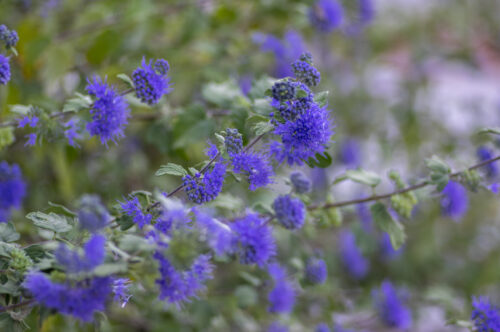
If you love supporting your local pollinators, Bluebeard (also known as Blue Spirea) is a must-have. Blooming in August and September, its nectar-rich flowers are a magnet for bees and butterflies. The color is a breathtakingly pure, deep blue. While it looks like a typical perennial at first glance, it’s actually a subshrub because of its woody base. Thanks to the silvery-fuzz on its leaves, Bluebeard is a champ at handling heat and drought.
++Gentian (Gentiana acaulis)
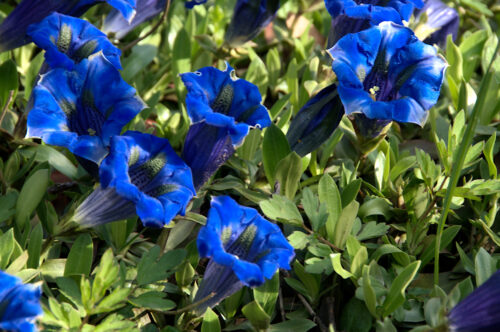
For a real showstopper, look no further than the trumpet-shaped, vivid blue blooms of the Gentian. These plants are surprisingly low-maintenance because they actually prefer to be left alone! They thrive in spots where other plants might struggle, like dry rock gardens or gritty, well-draining soil. If you want a rich carpet of flowers, skip the fertilizer—too many nutrients can actually make this little blue wonder weak and sickly.
++Siberian Iris (Iris sibirica)
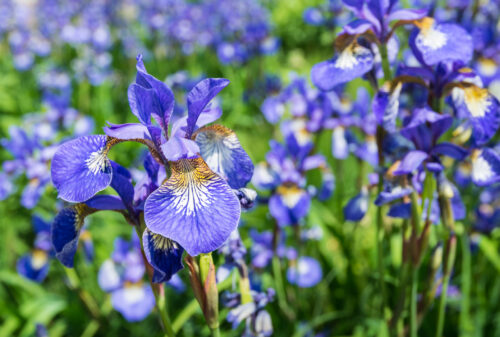
Despite the name, the Siberian Iris isn’t just from Siberia; it’s right at home in temperate zones, often found near ponds or in damp meadows. Starting in mid-June, reddish buds open into elegant three-part flowers with intricate dark blue veining. Standing anywhere from 1 to 5 feet tall, these irises are like a beacon for bees, butterflies, and hummingbirds.
++Bellflower (Campanula)
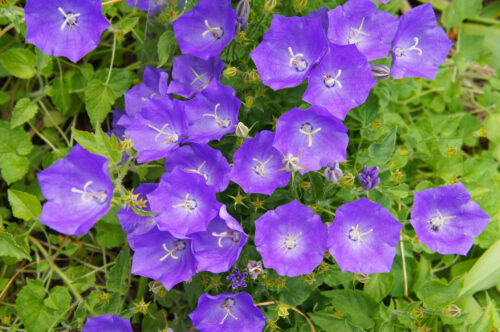
The Bellflower is a classic garden staple that never goes out of style. You can easily spot them by their charming bell- or star-shaped blooms, which pop up between June and September depending on the variety. They are incredibly versatile and play well with other perennials. Plus, they aren’t picky about where they live—they’ll happily grow in full sun or partial shade.
++Delphinium
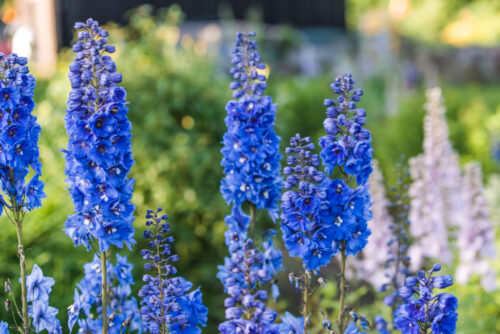
If you want drama, Delphiniums deliver with flower spikes that can reach up to six feet tall. They bloom in various shades of blue from June to August. Their unique shape—with a little “spur” at the back of the flower—gives them a whimsical look. Because they get so tall, they can be a bit sensitive to wind, so be sure to plant them in a sheltered spot or give them some stakes for support. They look absolutely stunning planted next to white daisies!
++Forget-Me-Not (Myosotis)
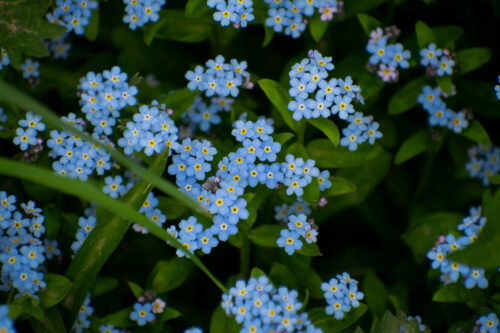
The Forget-Me-Not is probably the most iconic blue flower out there. While the name is romantic, its botanical name, *Myosotis*, actually means “mouse ear,” referring to the shape of its leaves! These early bloomers love moist spots like woodlands or the edges of streams. If you’re looking for a garden variety, the Great Forget-Me-Not (Brunnera) has slightly larger flowers and works great in naturalistic beds. Just remember: they love their water, so keep that soil moist!
%%Blue Hydrangea (Hydrangea)
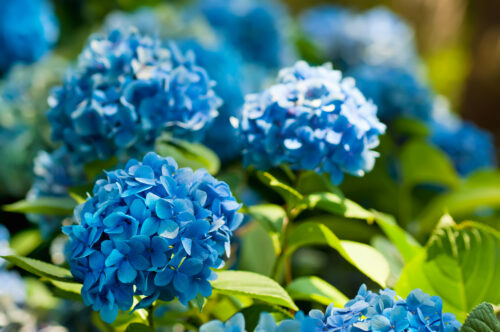
My “pro tip” for blue in the garden is the Hydrangea. These big, nostalgic pom-poms are gorgeous, but keeping them that royal blue color takes a little science. The secret ingredient is aluminum sulfate (often sold as “Blueing Powder” or found in specific fertilizers). If you have pink hydrangeas, adding this to acidic soil can turn them blue, and it will help existing blue flowers stay vibrant instead of fading back to pink or purple.