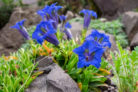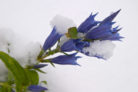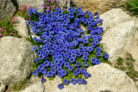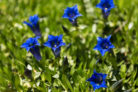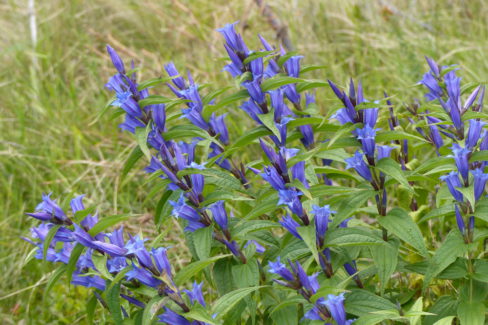
The Gentian family is a big one, with about 35 species native to Europe. Most of us immediately think of the classic, low-growing Blue Gentian found in the high Alps, but there are also taller varieties that feel right at home in wild meadows and woodlands. Since wild Gentians are protected species, plant breeders have developed some fantastic varieties specifically for our home gardens.
Appearance and Bloom Time
The little Blue Garden Gentian looks just like its wild cousins, featuring a low rosette of leaves that gives way to those iconic, trumpet-shaped flowers. If you’re looking for height, the taller species are also available for home cultivation. And while that electric blue is the “signature” look, you can actually find Gentians in a whole rainbow of colors, including pink, white, purple, yellow, and even red.
Different species bloom at different times of the year. If you plan your garden right and choose a mix of varieties, you can enjoy these stunning blooms from early spring all the way into late autumn.
Location and Soil
You’ll want to pick your spot carefully because Gentians are homebodies—they really don’t like being moved once they’re settled. Here’s what they need to thrive:
- A spot with partial shade
- Protection from harsh, direct midday sun
- A location sheltered from the wind
- Soil pH depends on the variety (some love lime/alkaline soil, others prefer it acidic)
- Nutrient-rich soil
- Excellent drainage (they hate “wet feet”)
- Consistent moisture (don’t let them dry out!)
- If your soil is heavy, consider adding a drainage layer when planting
Care and Maintenance
Once your Gentians have established themselves, they’re actually pretty low-maintenance. In fact, they prefer to be left alone! The biggest rule is to make sure the soil stays consistently moist; those roots should never completely dry out. You can trim back any dead foliage in the fall or early spring. If you have older plants that are looking a bit tired, you can divide them in the spring to give them a fresh start.
Propagation
If you leave the faded flowers on the plant, they’ll produce seeds and spread on their own. If you want to be more hands-on, you can harvest the seeds and sow them elsewhere in the fall. Just a heads-up: Gentians are “cold germinators,” meaning the seeds actually need the winter chill to wake up and sprout.
You can also propagate by division. Gently lift the plant from the ground and pull it apart into sections. Replant the pieces in a suitable spot and give them a good watering to help them settle in.
Winter Protection
Gentians are hardy perennials, but they definitely appreciate a little extra “blanket” during the coldest months. Covering them with some brushwood or evergreen branches works wonders. If you’re growing Gentians in pots, move them to a sheltered spot and place the containers on a piece of styrofoam or wood to insulate them from the frozen ground. You can also wrap the pots in garden fleece for extra warmth.