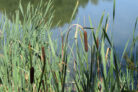
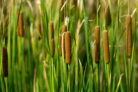
Cattails (often called “bulrushes”) are frequently confused with common reeds. Even though they belong to the same general plant family, they actually differ in quite a few ways. Let’s dive into the similarities and differences so you can tell them apart like a pro.
Clearing Up the Lingo
In everyday conversation, people tend to use the terms “reeds” and “common reed” interchangeably. Generally speaking, “reeds” is a broad term used for almost any green plant that grows in wet or marshy spots. While both cattails and common reeds fall under that big “reed” umbrella in casual talk, they are actually two distinct types of grasses.
What Cattails and Common Reeds Have in Common
Both cattails and common reeds belong to the Poaceae (sweet grass) family. They are both hardy marsh and aquatic plants that love hanging out in bogs, along lake shores, and in garden ponds or other still waters.
Here are a few more things they share:
- They are hardy, perennial aquatic plants.
- They work great as a natural privacy screen for swimming ponds and lakes.
- They provide a vital natural habitat for insects, birds, and reptiles.
- Both plants pull their nutrients directly from the water, which helps prevent algae blooms. However, this aggressive growth can sometimes lead to “silting,” where the water eventually fills in with organic matter.
Making the Right Choice for Your Garden
If you’re looking to add some decorative grasses to your backyard pond, you should weigh the pros and cons of cattails versus common reeds.
One thing to watch out for is that both can potentially damage your pond liner. With common reeds, the sharp root systems are usually the culprit. Cattail rhizomes are a bit less pointy and generally safer for liners, but they have a different drawback: voles love to snack on them. If these little critters start digging for a cattail snack, they might accidentally puncture your liner in the process.
Both grasses are also very “competitive,” meaning they like to take over. While they starve out pesky algae, their rapid self-propagation can also crowd out your other shoreline plants. A great tip to keep them in check is to plant them in specialized planting baskets.
Generally speaking, cattails and common reeds come with a similar set of pros and cons. At the end of the day, the one you choose really comes down to which look you prefer for your landscape!