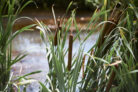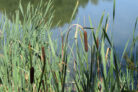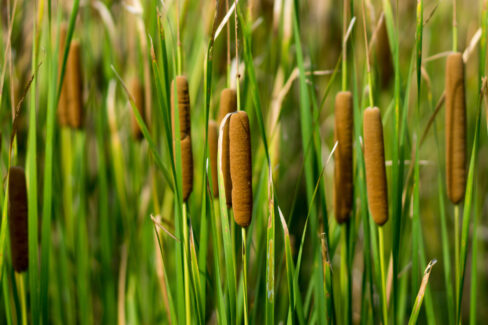
You might know the cattail by its old-fashioned nickname, the “lamp cleaner.” Believe it or not, people actually used to use these fuzzy brown spikes to scrub out oil lamps back in the day! While we don’t use them for chores much anymore, they are absolute superstars in the garden. If you want a pond that stays crystal clear and algae-free, the humble cattail is your best friend.
Cattail Characteristics and Traits
Here’s a quick rundown of what makes the cattail so unique:
- Cattails belong to the Typhaceae family.
- Besides “cattail,” you’ll often hear them called “bulrushes” or “lamp cleaners.”
- They are incredibly hardy and grow all over the world, from tropical wetlands to chilly temperate zones.
- These are herbaceous aquatic plants that love living in the mud or shallow water.
- Thanks to their tough underground rhizomes, they are fully winter-hardy.
- As perennials, they’ll pop back up every single year to greet you.
- Cattails crave two things: lots of sun and very wet feet. They generally prefer slightly acidic soil.
- Pro tip: Prune back the dead foliage once a year to help encourage fresh, healthy growth in the spring.
- The leaves are stiff, ribbon-like, and grow straight up toward the sky.
- Depending on the variety, they usually bloom between May and August.
- The “hot dog” shaped spikes start out green and eventually turn that iconic velvety brown.
- Fun fact: Each spike is actually split into two parts. The top section is the male flower, while the thicker bottom part is the female.
- Their seeds are tiny travelers! They have little fluffy hairs that help them hitch a ride on the wind or float away on the water.
Why the name “Lamp Cleaner”?
As I mentioned, the nickname “lamp cleaner” comes from a time before electricity. Because of their sturdy, brush-like shape, they were the perfect natural tool for scrubbing the soot out of glass lamp chimneys. We’ve traded oil lamps for LEDs, but the name stuck!
How to Use Cattails in Your Garden
If you have a garden pond, cattails are a must-have. They act like a natural filtration system by soaking up the excess nutrients that algae need to grow. Basically, they do the dirty work so your water stays clear.
Did you know they’re also edible? The rhizomes are packed with starch and can be eaten much like a potato. Just make sure you cook them thoroughly before serving them up!
Cattails and Conservation
Generally speaking, cattails aren’t on the protected species list. However, because they love to grow in wild wetlands and along lakeshores, you have to be careful. These areas are often prime real estate for nesting birds, so there might be seasonal local rules about when you can harvest or clear them to protect the local wildlife.