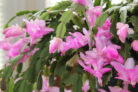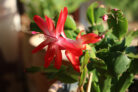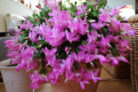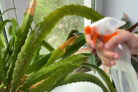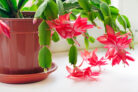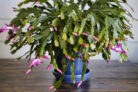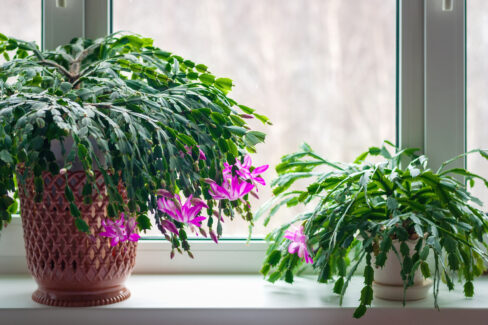
The Christmas cactus actually hails from South America—specifically the lush coastal forests of Brazil. In the wild, these plants are “epiphytes,” meaning they grow nestled in the branches of trees rather than in the dirt. However, the beauties we keep in our living rooms today aren’t usually the wild species, but rather specially bred hybrids designed to thrive indoors.
How did the Christmas cactus get its name?
The official botanical name for the genus is *Schlumbergera*, named after Frédéric Schlumberger, a famous French cactus collector and breeder. Around here, we simply call it the Christmas cactus because it puts on its spectacular floral show right around the holidays. By the way, while it looks similar to the Easter cactus, they are only distant cousins. You can easily tell them apart by looking closely at the shape of their flowers and their leaf segments.
Where is the best spot for a Christmas cactus?
If the summer is warm, your Christmas cactus will love spending some time outside in the garden or on the patio. Just make sure to bring it back inside once the temperatures start dipping toward 50°F (10°C). Generally, these plants love a location that is warm and humid. However, during their resting phase, they actually prefer to be kept a few degrees cooler than usual to help them prep for blooming.
How do I properly care for a Christmas cactus?
There’s a reason the Christmas cactus is a favorite for beginners—it’s incredibly low-maintenance! It needs very little fertilizer and doesn’t require much water. In fact, if you notice the leaves looking limp or droopy, it’s usually a sign of overwatering rather than thirst. The secret to getting those beautiful buds to form is a cool resting period; without that temperature drop, your Christmas cactus might not bloom at all.
When and how does a Christmas cactus bloom?
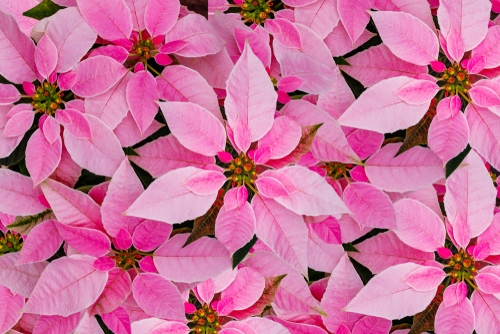
In most homes, the Christmas cactus shows off its vibrant colors from late November through January. While individual flowers only last a few days, the plant produces so many buds that you’ll have a constant display for weeks. If you want to get fancy, you can actually shift the blooming period by a few weeks just by adjusting when you start its resting phase.
Quick Facts:
- Origin: Brazil
- Natural Habitat: Growing on trees in coastal forests
- Climate: Prefers warm, humid conditions
- Sensitivity: Does not like lime/calcium (hard water) for watering or misting
Pro Tip: Since it’s an air plant (epiphyte) by nature, the Christmas cactus isn’t used to getting all its nutrients from heavy soil. It’s also quite sensitive to hard water, so try to use filtered water or rainwater if you can!