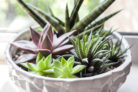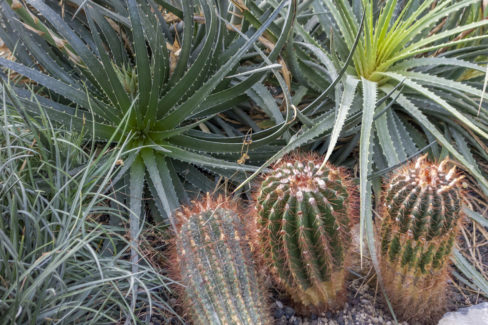
Both agave species and all members of the cactus family are succulents. Because they look so similar and love the same sunny spots, it’s super common for people to mix them up. If you’ve ever wondered what actually sets them apart (and what they have in common), this quick guide will clear things up!
Similarity #1: Botanical Classification
Agaves and cacti share a ton of traits because they both fall under the “succulent” umbrella. In the plant world, “succulent” basically means any plant that has mastered the art of storing water in its tissues. This superpower allows them to breeze through long droughts without needing any extra help from us.
Because of this, their watering schedules are pretty much identical: you want to wait a good while between waterings. Only give them a drink once the soil is bone-dry and feels gritty to the touch. Both plants are prone to root rot if they sit in water, which often leads to yellowing leaves or stems. Their shared survival tactics also mean they have the exact same taste in weather and “real estate.”
Similarity #2: Climate & Sunlight Needs
An agave loves nutrient-poor, dry soil and a sunny spot just as much as any cactus does. Both succulents are native to Central and North American habitats and can often be found growing side-by-side in the wild. This means their love for the sun and their preferred potting mix are identical.
Whether you’re planting an agave or a cactus, the soil should be gritty and made of porous materials. This ensures the roots get plenty of air and prevents water from pooling at the bottom. You want a substrate that doesn’t hold onto moisture for too long. If you mix in mineral additives like lava rock or pumice, your succulents will feel right at home and grow just like they would in the desert.
Difference #1: Where They Store Water
Even though both are succulents, they have different “storage tanks” for their water. Agaves store their moisture in their leaf rosette. That’s why most agave species have those thick, fleshy leaves—they’re basically water reservoirs! Because of this, agaves are known as “leaf succulents.”
Cacti, on the other hand, collect and store moisture in their stems, earning them the title of “stem succulents.” Since a cactus stem is usually much bulkier than an agave leaf, some of these prickly guys can actually survive even longer droughts than agaves can.
Difference #2: The Bloom Cycle
This is a big one! Agaves are “monocarpic,” which is a fancy way of saying they bloom only once in their entire lives. Once that spectacular flower stalk dies back, the main plant usually dies too. Cacti, however, can bloom regularly throughout their lives, allowing them to reproduce via seeds many times over. To make up for their “one-and-done” blooming habit, agaves tend to produce “pups” (offsets) much more frequently than cacti do, using those little clones to keep the family line going.