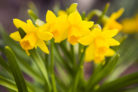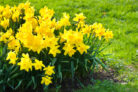
Whether you call them daffodils, narcissus, or Easter bells, most people use these names interchangeably. But is that actually correct? Well, not exactly! While we often use “Easter bell” (or *Osterglocke* in German) as a catch-all term for any yellow daffodil, it technically only refers to one specific variety.
Stick around to find out how this spring favorite got its name and what sets it apart from the rest of the family.
The Easter Bell: A Very Specific Member of the Family
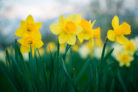
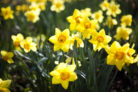
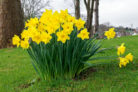
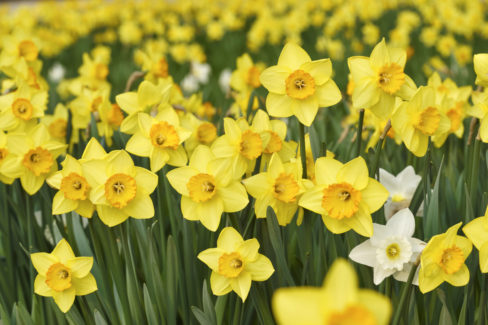
Here’s the rule of thumb: every Easter bell is a daffodil, but not every daffodil is an Easter bell. Specifically, we’re talking about the Wild Daffodil (or Yellow Trumpet Daffodil). Like all its cousins, it belongs to the Amaryllis family.
Key Features of the Classic Easter Bell
- Grows up to 16 inches tall (though some other daffodil varieties can get twice that big!)
- Long, strap-like linear leaves
- Classic yellow bloom
- Only one single flower per stem
- A distinct, tube-shaped central “trumpet” (corona)
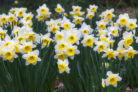
Pro Tip: These days, you aren’t stuck with just plain yellow. Thanks to modern breeding, you can find these trumpet daffodils in shades of orange, white, or even bicolor combinations.
Other Popular Daffodil Varieties
- Large-Cupped Daffodils: These bloom from March to May; keep in mind their colors can sometimes fade as the season progresses.
- Small-Cupped Daffodils: Blooming March through April, these have a much shorter central cup.
- Double Daffodils: These showstoppers have more than six petals and bloom from April to May.
- Triandrus Daffodils: Often called Angel’s Tears, these bloom in mid-spring with 3 to 6 dainty flowers per stem.
- Cyclamineus Daffodils: Known for their swept-back petals, these early birds bloom as early as February.
- Jonquils: Famous for their incredible fragrance and narrow, reed-like leaves.
- Tazetta Daffodils: These are heavy bloomers with a strong scent; some varieties even bloom in late autumn.
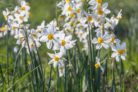
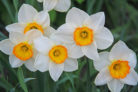
- Poet’s Daffodils: Stunning white petals with a tiny yellow cup rimmed in red; usually blooming in late spring.
- Wild Species: These usually feature narrow petals and a prominent central cup.
- Split-Cupped Daffodils: Also known as Butterfly Daffodils, these have a “split” center and bloom in early spring.
The Story Behind the Name
So, how did this flower get its festive nickname? It’s pretty straightforward: in many regions, these bright yellow trumpets burst into bloom right around Easter Sunday.
The botanical name *Narcissus*, however, has a much more dramatic origin. It comes from the Greek myth of Narcissus, a young man so obsessed with his own beauty that he perished while staring at his reflection. Just like the character in the myth, daffodils can be a bit “vain” in the garden—they prefer to stand alone and don’t always play well with other flowers in a vase. But don’t worry, enjoying these blooms doesn’t make you a narcissist!