Think your shady garden spots are doomed to be dull and colorless? Think again! With the right plants, even the darkest corners of your yard can become a lush sea of flowers. Today, I’m sharing seven of the most popular blooming plants for shade, plus a little “insider secret” pick at the end.
[[pflanzen]]
++Corydalis (Lerchensporn)
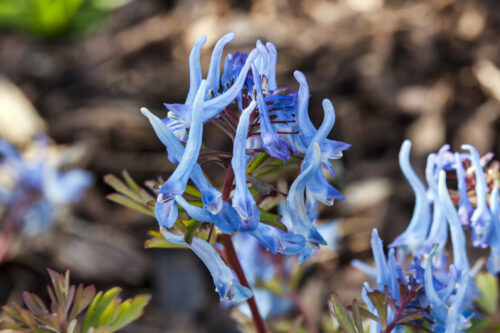
This plant family includes both annuals and perennials. The most famous varieties for shady spots are *Corydalis cava* (Hollowroot) and *Corydalis solida*. They produce absolutely charming clusters of flowers that light up the garden in shades of white, yellow, pink, red, purple, or even blue. Since different varieties have slightly different soil needs, just be sure to double-check what your specific choice prefers before you start digging!
++Astilbe (Prachtspiere)
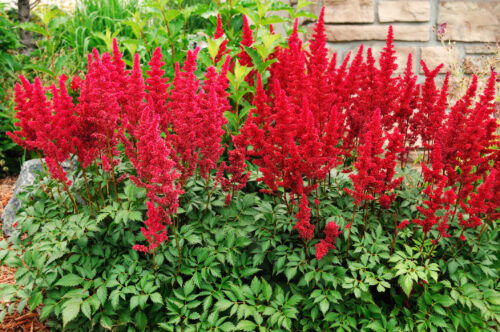
If you want a “wow” factor, Astilbe is your best friend. These stunning, upright flower plumes can consist of up to 2,000 tiny individual blossoms! They bloom from June through September in a color palette ranging from crisp white to deep red and vibrant violet. These hardy perennials grow in dense clumps and can reach heights of up to 6 feet, making them perfect for adding structure to a shade bed or hiding the “bare legs” of older shrubs.
++Coral Bells (Heuchera)
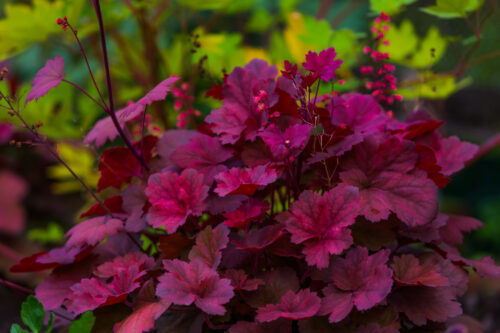
While many gardeners love Heuchera for its dainty flowers, the real star here is the foliage. The lobed leaves come in incredible colors—everything from golden-orange and deep burgundy to silver, purple, and lime green—often with intricate patterns. From May to July, tiny bell-shaped flowers in white, pink, or red float on thin stems above the colorful leaves, adding a delicate touch to your garden.
++Hostas (Funkien)
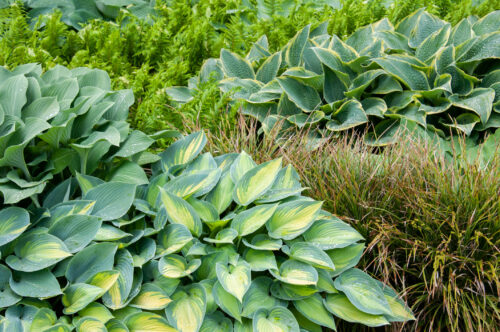
You can’t talk about shade gardening without mentioning Hostas! Their heart-shaped leaves are iconic, ranging from rich forest green to bright chartreuse and even metallic blue-gray. You’ll also find plenty of variegated varieties with creamy white edges or contrasting veins. Between June and September, they send up tall stalks with fragrant, trumpet-like flowers in white or pale lavender.
++Monkshood (Eisenhut)
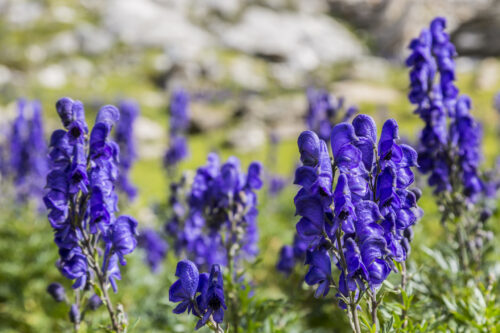
Monkshood has been a garden staple for decades. These tall perennials can reach up to 6 feet and produce striking yellow or brilliant blue flowers. The blooms grow in clusters and look just like little helmets (hence the name!). A quick heads-up: All parts of this plant are toxic. If you have curious pets or little kids running around, you might want to plant this one in a more secluded spot.
++Foxglove (Fingerhut)
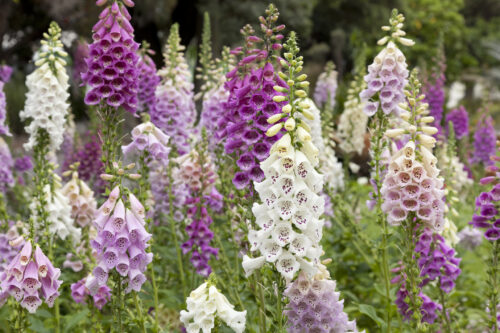
Foxgloves are biennials, meaning they spend their first year growing a lush rosette of leaves and their second year sending up a magnificent flower spike. The bell-shaped blooms open from the bottom up in shades of white, yellow, purple, or red. Once you have them in your garden, they’ll usually self-seed quite happily, so you’ll have new flowers popping up year after year. Just remember: like Monkshood, Foxglove is very poisonous.
++Forget-Me-Nots (Vergissmeinnicht)
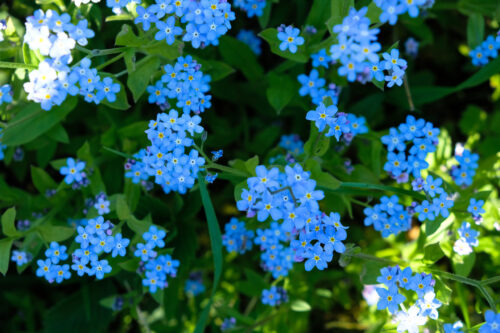
It’s hard not to fall for the charm of Forget-Me-Nots. These early bloomers are some of the first to bring color to the shade garden after a long winter. They usually grow between 8 and 16 inches tall. While the classic sky-blue is the most popular, you can also find white and pink varieties. They are biennial, so if you let them go to seed instead of cutting them back, they’ll reliably sprout again next spring.
%%Foamflower (Tiarella cordifolia)
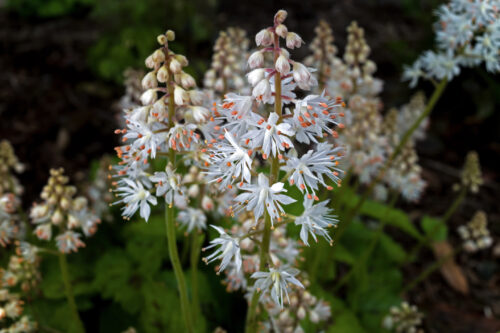
Here is my secret tip for you! With its fuzzy, heart-shaped leaves and frothy, cream-colored or pale pink flower spikes, Foamflower brings a lovely “glow” to dim areas. The flowers have a light, sweet scent and are a magnet for bees and other pollinators. It spreads via runners, making it a fantastic groundcover that will eventually create a beautiful, lush carpet under your trees.