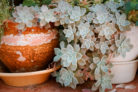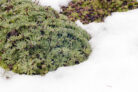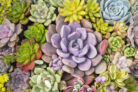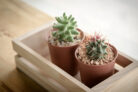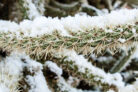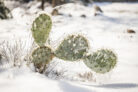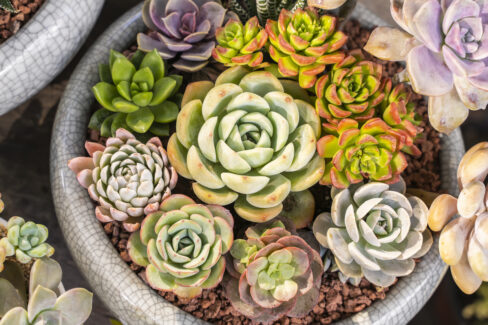
Succulents are famous for their clever survival trick: storing water in their leaves, roots, or stems. While we often associate these fleshy plants with scorching deserts, many actually hail from regions where blistering hot days turn into freezing cold nights. Because of those extreme shifts, quite a few succulent species are surprisingly tough and can handle a serious winter chill.
Winter-Hardy & Frost-Proof Succulents
The strategy of storing water is so effective that “succulent” plants have popped up all over the globe. When things get dry, these plants just sip on the moisture they’ve tucked away. However, keep in mind that being “low-maintenance” doesn’t always mean a plant can handle a blizzard.
Since many succulents originate from tropical climates or places without true seasons, they aren’t always fans of the frost. But a few “desert beauties” are built to withstand both drought and freezing temps. Here are some of the toughest contenders:
- Cacti (Cactaceae): Many can handle double-digit negative temperatures without breaking a sweat. Look for subspecies like *Opuntia* (Prickly Pear), *Echinocereus*, *Gymnocalycium*, and *Escobaria* for maximum winter hardiness.
- Hens and Chicks (Sempervivum): These are the gold standard for cold weather. All 200 known species and their countless hybrids are considered fully frost-proof.
- Stonecrop (Sedum): Most Sedum varieties native to Europe and Asia will breeze through a typical cold winter with zero drama.
- Echeveria: While many prefer the indoors, *Echeveria elegans* and *Echeveria agavoides* are the true heroes of the family when the mercury drops.
- Yucca: These architectural beauties are incredibly resilient. Varieties like *Yucca filamentosa* (Adam’s Needle), *Yucca gloriosa* (Moundlily Yucca), *Yucca baccata* (Banana Yucca), and the tiny *Yucca nana* can survive temperatures as low as -13°F (-25°C).
Semi-Hardy Succulents
Many of our favorite flowering succulents come from Africa or Central and South America. Even in these regions, temperatures can dip below freezing occasionally. If you live in a milder climate (think USDA Hardiness Zones 7 or 8), you can grow these semi-hardy varieties outdoors.
The stars of this group include certain Aloes and Agaves. For example, the stunning *Aloe aristata* (Lace Aloe), with its toothy, fleshy leaves, can handle temps down to about 23°F (-5°C). Meanwhile, *Agave inaequidens* and *Agave parryi* can survive a staggering -4°F (-20°C) as long as they stay dry.
Pro Tip: If you provide your Aloe with a little extra winter protection (like a frost blanket), it can often handle dips down to 10°F (-12°C) just fine.
Tips & Tricks for Successful Overwintering
To make sure your succulents actually survive until spring, even the “hardy” ones need a little help—mostly when it comes to moisture. In many regions, the combination of wet soil and freezing air is what kills succulents, not the cold itself. Wet feet lead to rot, which lowers the plant’s natural frost resistance.
To keep your plants high and dry, try these simple steps:
1. Location is everything: Pick a spot protected from rain, like under a roof overhang or against a south-facing wall.
2. Build a “raincoat”: You can create a simple DIY shelter using four posts and a piece of Plexiglas or heavy-duty greenhouse film as a roof.
3. The Tomato House Hack: A small unheated greenhouse or “tomato house” works wonders for keeping snow and rain off your plants.
4. Keep the air moving: Make sure your winter shelter is open on at least two sides to allow for plenty of air circulation.
Potted Succulents Need Extra Love
If you’re growing succulents in containers, they need a bit more “winter gear” than plants in the ground. Because the soil volume in a pot is so small, the root ball can freeze solid very quickly.
Here’s how to keep your potted succulents cozy:
1. Move them: Before the first hard frost, move your pots against a south-facing wall.
2. Insulate from below: Place the pots on a piece of Styrofoam or wood to block the rising cold from the ground.
3. Wrap them up: Wrap the pot in several layers of bubble wrap to protect the sides.
4. Add a finishing touch: Wrap a coconut fiber mat around the pot for extra insulation (and a nicer look!).
Note: Don’t panic if your cacti start to look a little shriveled or “deflated” in the winter. This is a natural survival strategy to concentrate their sap and prevent cell damage. They’ll plump right back up in the spring!
Small Pots Belong Indoors
If your succulent is in a pot smaller than 12 inches (30 cm) in diameter, it’s best to just bring it inside. Find a bright, cool, frost-free spot (like a sunroom or a bright windowsill) where it can go dormant. This rest period gives the plant the energy it needs for a big growth spurt in the spring.
While they’re “sleeping,” only water them once or twice a month—and only if the soil is bone-dry. Skip the fertilizer entirely, and wait until the threat of frost has passed in the spring before moving them back outside.