7 Popular Types of Knotweed for Your Garden

If you’re looking for hardy, low-maintenance plants that will keep your garden looking great for years to come, the knotweed family has some fantastic options for you.

[[plants]]

++Silver Lace Vine (Fallopia baldschuanica)
Silver Lace Vine
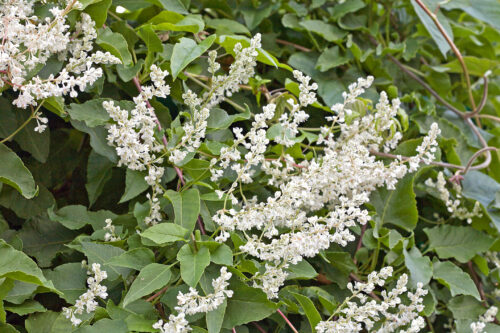
Silver Lace Vine is a plant that gardeners either absolutely love or slightly fear! It’s famous for its incredible growth rate—this climber can zoom up to 25 feet in a single year. If you need to cover a large area with green quickly, this is your best bet. Just a heads-up: it loves to spread out and can be tough on siding or masonry if you don’t keep it in check.

++Common Sorrel (Rumex acetosa)
Common Sorrel
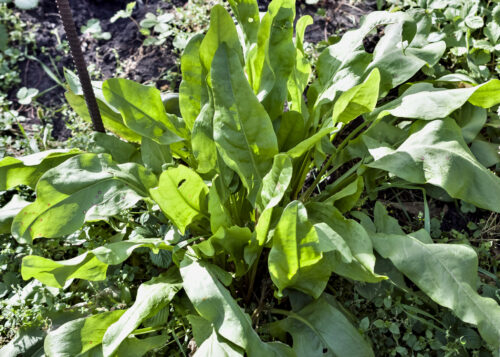
You’ve probably seen Common Sorrel growing wild in meadows. It’s easy to spot with its large green leaves and reddish flower spikes. While it’s not always the first thing people think of for the kitchen, the leaves are actually edible and packed with Vitamin C! It’s a healthy addition to your diet. You can let it grow wild in your lawn or deliberately plant sorrel in your herb garden.

++Bistort (Bistorta officinalis)
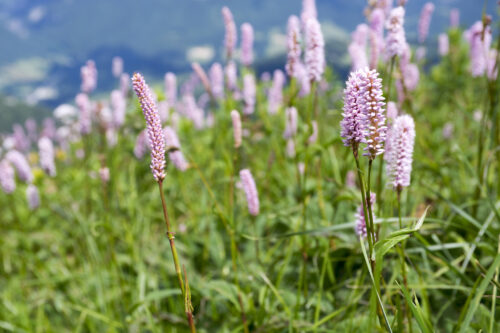
Bistort
Bistort gets its name from its twisted, snake-like root system (in fact, some people call it “Snakeweed”). In the wild, you’ll usually find it in damp meadows or near water. If you want to add this one to your garden, make sure you give it plenty of moisture—it’s definitely a fan of “wet feet.”

++Mountain Fleece (Bistorta amplexicaulis)
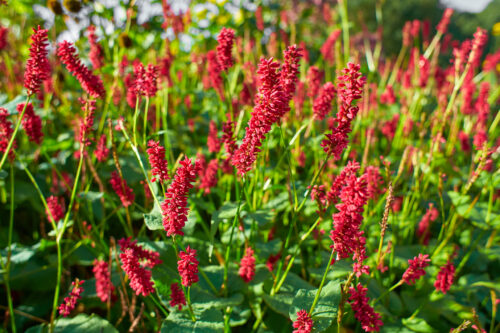
Mountain Fleece
Mountain Fleece is a real showstopper with its candle-shaped flower spikes that last a long time. They start blooming in June and often stick around until the first frost. You can find varieties in white, red, or pink. To get the best blooms, I recommend mixing some compost or humus into the soil to give the plant a little extra boost.

++Himalayan Border Jewel (Polygonum affine)
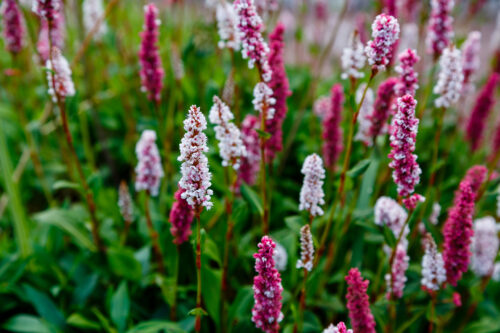
Himalayan Border Jewel
Often called Fleeceflower, this plant features cute, rounded pink flower clusters that look almost like little buttons. Since it’s native to the Himalayas, it’s tough as nails and handles cooler temperatures without breaking a sweat. It stays low to the ground and forms a thick mat, making it an excellent choice for a groundcover.

++Japanese Knotweed (Fallopia japonica)

--500x334.jpg" alt="Japanese Knotweed" width="500" height="334" class="alignnone size-medium-large wp-image-42798" srcset="https://guterboden.de/wp-content/uploads/2022/10/Japanischer-Staudenknoterich--500x334.jpg 500w, https://guterboden.de/wp-content/uploads/2022/10/Japanischer-Staudenknoterich--300x200.jpg 300w, https://guterboden.de/wp-content/uploads/2022/10/Japanischer-Staudenknoterich--1024x684.jpg 1024w, https://guterboden.de/wp-content/uploads/2022/10/Japanischer-Staudenknoterich--768x513.jpg 768w, https://guterboden.de/wp-content/uploads/2022/10/Japanischer-Staudenknoterich--1536x1026.jpg 1536w, https://guterboden.de/wp-content/uploads/2022/10/Japanischer-Staudenknoterich--2048x1368.jpg 2048w, https://guterboden.de/wp-content/uploads/2022/10/Japanischer-Staudenknoterich--488x325.jpg 488w, https://guterboden.de/wp-content/uploads/2022/10/Japanischer-Staudenknoterich--308x205.jpg 308w, https://guterboden.de/wp-content/uploads/2022/10/Japanischer-Staudenknoterich--234x156.jpg 234w, https://guterboden.de/wp-content/uploads/2022/10/Japanischer-Staudenknoterich--138x92.jpg 138w, https://guterboden.de/wp-content/uploads/2022/10/Japanischer-Staudenknoterich--350x234.jpg 350w" sizes="(max-width: 500px) 100vw, 500px" />
Japanese Knotweed has beautiful foliage that looks a lot like the leaves you’d see on a deciduous tree. It grows quite tall and spreads via underground rhizomes. This root system is why Japanese Knotweed is so resilient—it can survive through droughts and freezing winters easily. Along with the green leaves, it produces delicate, tiny white flowers.

++Garden Rhubarb (Rheum rhabarbarum)
Garden Rhubarb
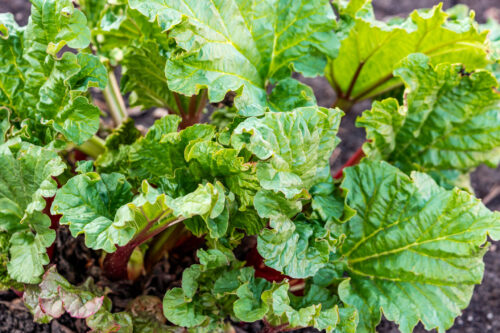
Not every member of this family has “knotweed” in its name! Rhubarb is actually one of the most popular relatives in the group. Planting this in your garden means you get a delicious harvest for pies and jams. Just remember to harvest at the right time—later in the season, the stalks can develop high levels of oxalic acid, so it’s best to pick them while they’re at their peak.

%%Water Knotweed (Persicaria amphibia)
Water Knotweed
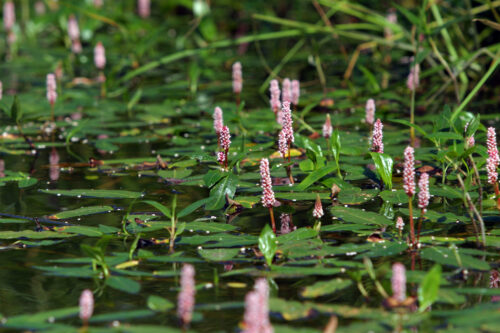
Looking for something for a soggy spot or a marshy area? There are actually aquatic plants in the knotweed family, too! Water Knotweed is a well-known variety that works great in or around a small pond. Not only does it look pretty, but it also helps improve the water quality over time.