Japanese Knotweed spreads like wildfire and is a major threat to ecosystems worldwide. Here in the States, it’s become a real headache for homeowners and conservationists alike. In fact, many local authorities strongly advise against planting this invasive perennial. If you’re struggling with a breakout or want to make sure your yard stays knotweed-free, here’s everything you need to know to get the upper hand.
Table of Contents:
- Ideal Growing Conditions
- How to Identify It
- Growing Japanese Knotweed in Pots
- Toxic or Edible?
- How to Fight Back
- The Black Tarp Method
- Using Herbicides
- Prevention Tips
Ideal Growing Conditions
In its native home, Japanese Knotweed usually pops up on volcanic ash fields. However, in North America and Europe, it loves damp areas along riverbanks and shorelines. You’ll also frequently spot it creeping along roadsides or the edges of forests.
When it comes to light, this plant isn’t picky—it thrives in full sun and deep shade alike. It’s also incredibly sturdy; even windy, exposed spots won’t slow its spread.
Japanese Knotweed shows off its massive growth power in almost any soil. While it prefers nutrient-rich, moist earth, it can grow perfectly fine in dry, sandy, or loamy soil. The only things it really hates are acidic peat bogs and standing water (waterlogging).
How to Identify It
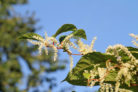
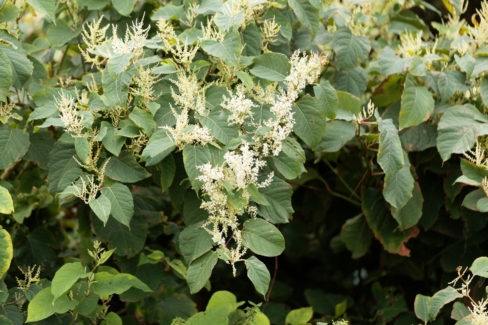
The most recognizable feature of Japanese Knotweed is its delicate, creamy-white flower clusters (panicles). These look quite decorative draped over the heart-shaped leaves and usually appear from August through October.
When it’s not in bloom, you can identify it by the foliage and stems.
Here’s what to look for:
- Leaves: Leathery green, about 5 to 7 inches long.
- Shape: Broadly oval or heart-shaped with a pointed tip, roughly 3 to 5 inches wide.
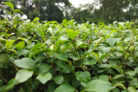
- Stems: Arranged in a zigzag pattern, these stems are hollow (like bamboo) and can reach heights of 10 feet. They often have a reddish-purple speckled appearance.
- Texture: If you run your finger along the fine veins on the underside of the leaf, you’ll feel tiny, almost invisible hairs.
After the first frost, the parts above ground will die back. However, the powerful, deep-reaching root system (rhizomes) survives the winter just fine underground. Come spring, they wake up and grow back into a massive bush faster than you’d believe.
Growing Japanese Knotweed in Pots
The only way I’d ever recommend “cultivating” Japanese Knotweed is in a container. This is the only way to keep its aggressive spreading under control.
If you go this route, keep these tips in mind:
- Size matters: Use a pot with at least an 8-gallon (30-liter) capacity.
- Soil: Standard compost-based potting soil works great.
- Drainage: Always put a layer of gravel or clay pebbles at the bottom to prevent waterlogging.
- Watering: Water regularly whenever the top inch of soil feels dry.
- Feeding: No need for heavy fertilizer if you repot it with fresh soil once a year (ideally right after pruning).
- Pruning: Give it a radical haircut in the fall or late winter.
Pro Tip: Since Japanese Knotweed can regrow from even the tiniest piece of root, never put the clippings in your compost pile. Bag them up and dispose of them completely.
Toxic or Edible?
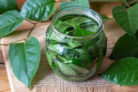
Even though it’s an invasive nightmare for the environment, Japanese Knotweed isn’t actually poisonous. In fact, it’s quite the opposite! You can prepare the young shoots much like rhubarb or asparagus.
In traditional Japanese medicine, a tincture made from the root is used for blood pressure and cholesterol management.
Despite the rumors, it is completely non-toxic to humans and pets. The young shoots are edible and very juicy.
How to use it in the kitchen:
- The Rhubarb Connection: Like rhubarb, knotweed contains oxalic acid, giving it a nice tart flavor. Just a heads-up: too much oxalic acid can cause an upset stomach in kids or people with sensitive tummies.
- Roots & Leaves: Both are edible.
- Shoots: Young shoots are great in fresh salads or as a side dish.
- Leaves: When cooked, the leaves look and taste a bit like spinach.
- Roots: You can peel them and boil them in salt water—they taste surprisingly like asparagus.
Important: Even when cooking with it, be careful with the scraps! Any raw pieces should go in the trash, not the garden. A rhizome fragment just 1/2 inch long is enough to start a whole new infestation.
How to Fight Back
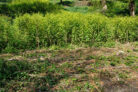
If you spot Japanese Knotweed in your yard, you need to act fast. It will take over your entire garden before you know it.
The roots can dive up to 10 feet deep into the earth. Because it spreads via rhizomes, the plant can regenerate from almost nothing. Even tiny stem fragments can take root and start new plants.
Rules for the battle:
- Dispose of everything immediately: Do not put it in your compost or “green waste” bin. It belongs in the heavy-duty trash (the black bin).
- Burning: If local laws allow, burning the dried stalks is a very effective way to kill them.
- Soil safety: If you dig it up, don’t reuse that soil elsewhere in your garden—it’s likely full of root fragments.
For small patches (10–40 sq. ft.):
You can try mechanical removal. Dig it out, pull it up, and be meticulous. Use a pickaxe to break up the soil and make sure no root pieces are left behind.
For larger patches (over 40 sq. ft.):
Digging alone won’t cut it. From April to November, mow the area down to the ground every three weeks. Crucial: Clean your mower and tools thoroughly afterward so you don’t accidentally “plant” hitchhiking fragments in other parts of your yard.
This removal process can take up to 5 years of persistence. Since you’ll have a lot of waste, check if your local waste management has a specific protocol for invasive species.
The Black Tarp Method
Another way to kill off this fast-grower is by “starving” it of light. By covering the area with a heavy-duty tarp, you stop photosynthesis, and the plant eventually dies. You’ll need patience, though—this takes 1 to 2 years.
How to do it:
- Cover the entire infested area with light-proof black plastic or a heavy tarp.
- Make sure the edges extend at least 5 feet beyond the last visible plant.
- Overlap any seams by about 8 inches and weigh them down heavily.
This will significantly weaken the plant. Once you finally remove the tarp, dig up any remaining rhizomes to finish the job.
Herbicides
Using chemicals in the garden is always a tough call because of the impact on wildlife and the environment.
Only if natural methods fail and you absolutely must stop the spread quickly should you consider a broad-spectrum herbicide like Roundup (glyphosate). Don’t just spray it everywhere—targeted application is much more effective and better for the planet.
Application Tips:
- From June to September, inject the herbicide directly into the hollow stems every 6 weeks.
- Alternatively, you can “paint” the leaves and cut stems with a brush.
- Never spray herbicides near water sources or ponds.
- It works best right after the plant has been mowed.
Usually, you can knock out 90% of the stand in the first year this way, but you’ll definitely need a follow-up treatment the next season.
Prevention Tips
The best defense is a good offense: just don’t let it into your garden in the first place! There are plenty of other decorative “Knotweed” relatives that look great without being invasive, like Mountain Fleece or Giant Fleeceflower.
When landscaping, make sure your fill dirt or topsoil is from a clean, reputable source. One tiny root fragment in a load of “free dirt” can lead to years of work.
Finally, if you see it growing in your neighbor’s yard, have a friendly chat with them about it. Not everyone realizes how destructive this plant can be, and it won’t be long before it decides to crawl under the fence and move into your yard, too!