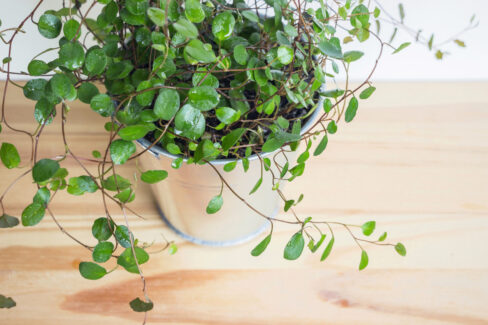
Both varieties of Mühlenbeckia make fantastic houseplants! Those long, trailing vines covered in tiny green leaves look absolutely stunning draped from a high shelf or cascading out of a hanging basket. If you’re looking to bring some “Maidenhair Vine” (as we often call it) into your home, here’s everything you need to know to keep it happy and healthy.
Finding the Perfect Spot for Your Wire Vine
The Mühlenbeckia, also known as the Creeping Wire Vine, is pretty flexible when it comes to lighting. It thrives in everything from bright spots to partial shade. This versatility is great because it gives you plenty of options for where to place it indoors, much like when using it as a groundcover in the garden. The only place it won’t be happy is a dark, windowless corner. Just keep in mind that this plant really loves its soil to stay consistently moist.
When you keep Mühlenbeckia as a houseplant, you’ll actually need to water it a bit more frequently than you would if it were planted outside. However, the golden rule is to avoid standing water at all costs—soggy “feet” can lead to root rot. It’s much better to water a little more often rather than giving it a massive soak all at once. For the best results, use a high-quality, nutrient-rich potting mix so your plant has plenty of fuel to grow.
Caring for Your Mühlenbeckia
From April through September, your Mühlenbeckia is in its peak growing phase and needs a steady supply of nutrients. To keep those beautiful vines looking lush, you should definitely add a fertilizer to your routine. Simply mix a standard liquid houseplant fertilizer into your watering can once or twice a month. If possible, use soft water or rainwater. If you only have hard tap water, just let it sit out in the watering can for a day or two before using it.
Quick tips for a healthy houseplant:
- Water regularly (don’t let it dry out completely!)
- Fertilize from April to September
- Give it a good trim in the spring
Every spring, you should give your Mühlenbeckia a trim. Pruning doesn’t just keep the “wire” look tidy and prevent it from getting too wild; it actually stimulates fresh, new growth. Once that spring growth spurt hits, it’ll bounce back thicker than ever. Just make sure to use a sharp, clean pair of pruning shears for the job!