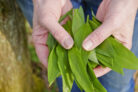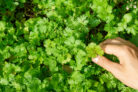
Wild garlic season is notoriously short, so if you want to enjoy that punchy, garlicky flavor all year long, preserving it is the way to go. And here’s a pro tip: you don’t have to stop at the leaves! You can actually preserve several different parts of the plant to keep your pantry stocked.
Pickling Wild Garlic in Vinegar
The easiest way to save your harvest is by making wild garlic vinegar. It’s a total game-changer for homemade salad dressings. Plus, since you can use different parts of the plant, you can effectively extend your wild garlic harvest season by several months.
You can pickle:
- Leaves
- Flowers
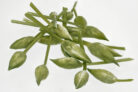
- Flower buds
- Bulbs
You have two choices here: simply submerge the wild garlic in vinegar, or whip up a quick pickling brine. A cooked brine is usually best for the buds and bulbs. Feel free to get creative and add your favorite spices to the mix! Once you’ve used up the greens, that leftover vinegar makes a fantastic marinade.
Preserving in Oil
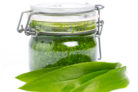
Infusing oil with wild garlic is another delicious option, though it takes a tiny bit more effort. You can’t just toss fresh leaves into a jar of oil, or you’ll risk fermentation (and nobody wants that).
The best method is to quickly sauté the wild garlic first. Use a little bit of the same oil you plan on using for the jar, give it a quick toss in the pan until it wilts, and let it cool completely before submerging it in the oil.
If you’d rather skip the stove, let the leaves air-dry and wilt for a few hours first. Reducing the moisture content helps prevent spoilage. Just make sure the wild garlic is completely covered by the oil at all times—any bits sticking out are an invitation for mold to grow.
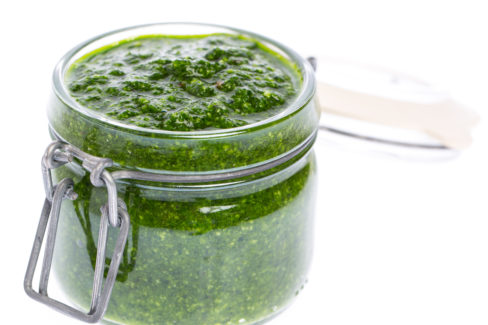
Wild Garlic Pesto
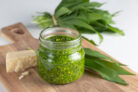
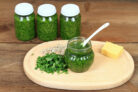
Of course, we can’t talk about wild garlic without mentioning pesto! While most people just use the leaves, you can actually mix in the flowers too. The blossoms have a very subtle hint of honey that adds a really sophisticated layer of flavor to your pesto.
One quick tip for the best texture: use a sharp knife to hand-chop your leaves and flowers. Try to avoid the immersion blender if you can. Blenders whip too much air into the oil, which makes the pesto spoil faster. Plus, over-processing the greens can sometimes give the pesto a slightly bitter edge. Stick to the old-school way for the best results!