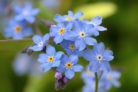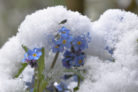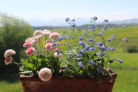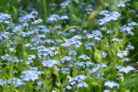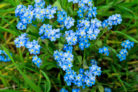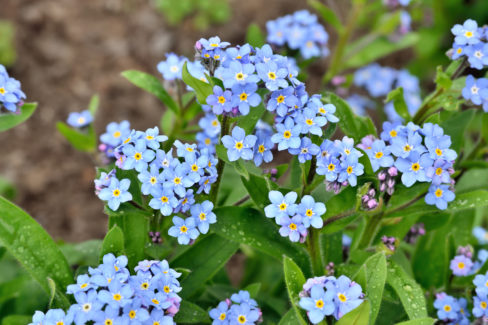
These popular spring blooms represent the hope of seeing a loved one again soon, and they fulfill that promise every single year. Forget-me-nots are incredibly easy to grow and require very little maintenance. Even if you don’t have a green thumb, you really can’t go wrong with these little beauties.
Planting Your Forget-Me-Nots
As a classic spring flower, forget-me-nots are usually planted in the garden or in containers starting in April. You’ll typically find pre-grown young plants—usually Woodland or Water forget-me-nots—at your local garden center. They thrive in a shady or partially shaded spot that still gets a decent amount of light. Forget-me-nots aren’t big fans of direct, scorching sun unless you can keep the soil from drying out. Here’s what they look for in a home:
- Woodland varieties like slightly moist soil.
- Water forget-me-nots prefer marshy areas, like the edges of a pond.
- The soil should be well-draining so water doesn’t just sit there.
- Avoid waterlogging at all costs!
- They love nutrient-rich, slightly acidic soil.
- A sandy to loamy texture works best.
If you’re planting a large group of them, make sure to space them at least 8 inches (20 cm) apart. If you’re tucking them into a balcony window box, you can plant them a little closer together for a fuller look.
Starting Your Own Seeds
You can also start your own forget-me-nots from scratch. A greenhouse is ideal, but starter pots kept in a sheltered spot on your balcony or patio work just fine too. You’ll want to start as early as possible—ideally in the summer—by sowing the seeds in pots or trays and placing them in a semi-shaded area. Don’t bury the seeds! Forget-me-nots are “light germinators,” so just press them onto the soil or cover them with a very thin dusting of earth. Keep the substrate consistently moist so the seeds sprout evenly.
By fall, you’ll have young plants ready to move into the garden or into larger planters. Again, keep that 8-inch spacing in mind. This gives the young plants enough time to establish a strong root system before winter hits. Even so, it’s a good idea to protect your “babies” with some evergreen branches or garden fleece to shield them from “black frosts” (heavy frost without snow cover).
Let Nature Do the Work: Self-Seeding
If you’re a fan of low-effort gardening, forget-me-nots will actually sow themselves if you don’t cut off the faded flower heads. Once the new seedlings pop up, you can thin them out (prick them) so everyone has room to breathe. Since they tend to produce a ton of seeds, just keep the strongest-looking plants. After that, the only “work” left is providing a little winter protection. You don’t even need to worry about fertilizer!
Great Garden Neighbors
Forget-me-nots don’t take up much room, which makes them perfect companions for other spring bloomers. They look fantastic paired with early bulbs like mini daffodils or grape hyacinths. Other great neighbors include:
- Daisies
- Horned violets
- Pansies
- Primroses
- Low-growing tulips
- Monkeyflowers (great for pairing with Water forget-me-nots near a pond)
- Yellow loosestrife (another pond-side buddy)
- Marsh marigolds
Forget-me-nots are also excellent for underplanting medium-height perennials. Try planting them under raspberries—they’re rumored to help keep raspberry beetles away!