Don’t let those dark corners of your yard get you down! With the right shade-loving plants, you can turn even the dimmest spots into a lush oasis. Here are some of the most popular picks for bringing life to the shadows.
[[pflanzen]]
++Pansies (Viola x wittrockiana)
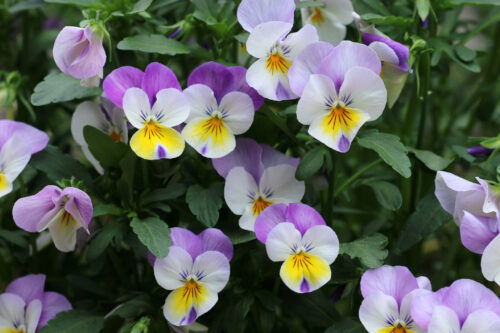
Pansies are a member of the violet family and are famous for their charming, “faced” patterns. They’re a total garden classic, whether you’re planting them in flower beds or keeping them in pots indoors. If you’re looking for something low-maintenance for a shady balcony, these are your best friends. Depending on the variety and the soil you use, you can find them in almost every color of the rainbow.
++English Ivy (Hedera helix)
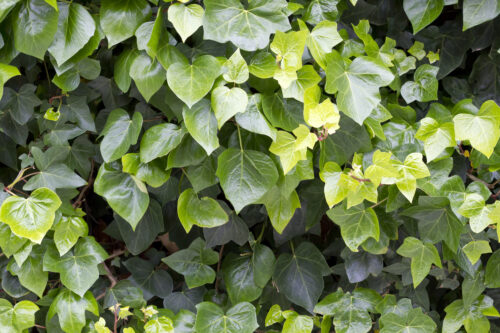
Just as iconic and shade-tolerant as the pansy, English Ivy serves a completely different purpose in the garden. It’s a powerhouse groundcover for shady patches, but it’s also great for greening up house facades or creating a natural privacy screen. It’s incredibly easy to care for—the only real “work” involved is giving it a trim when it starts to wander too far. It spreads quickly even in deep shade, making it a go-to for filling in tricky gaps.
++Periwinkle (Vinca)
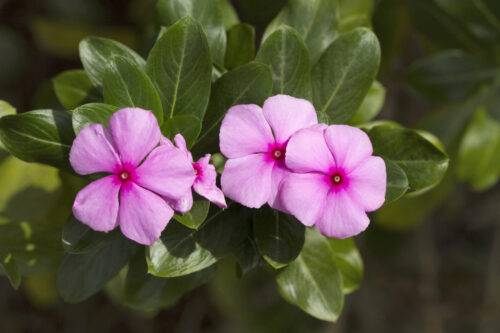
Vinca, or Periwinkle, is a hardy herbaceous plant that doesn’t need a lick of sun to thrive and spread. Along with its glossy evergreen leaves, it produces lovely blooms starting in April. Depending on the variety, you’ll see shades of blue, violet, or even crisp white. Periwinkle is a champ in low-light conditions and will grow happily even in the deepest shade.
++Japanese Anemone (Anemone hupehensis)
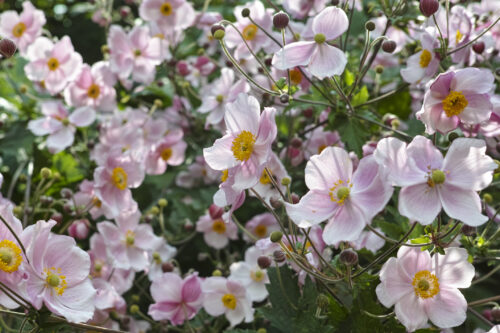
The Japanese Anemone is a delicate “windflower” that brings elegance to the late-season garden, often blooming well into October. It prefers a partially shaded spot to really show off its flowers. In those dappled areas of the garden, the white blooms (which often have a soft violet tint) look absolutely stunning. To keep them happy, make sure they have well-draining soil and plenty of moisture.
++Busy Lizzie (Impatiens walleriana)
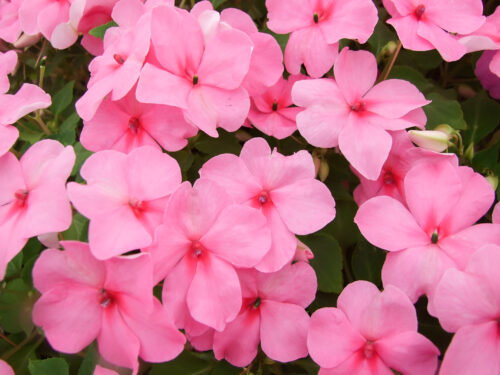
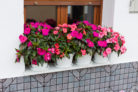
Impatiens, affectionately known as “Busy Lizzies,” are a staple for shade and partial-shade gardens. They bloom non-stop from May through October, delighting gardeners with their vibrant colors. Just be careful with their location—too much direct sun can scorch and bleach their sensitive leaves. Stick to the shade, and they’ll reward you with a carpet of color all season long.
++Fuchsia (Fuchsia)
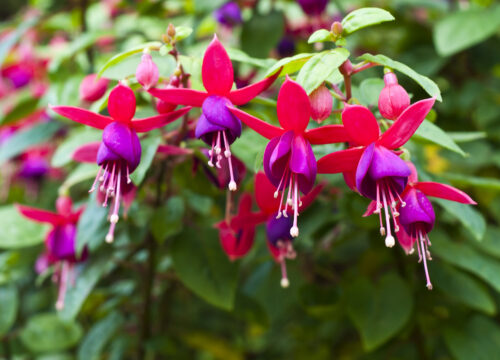
Fuchsias are instantly recognizable thanks to their unique, drooping bell-shaped flowers. They often feature striking color combos, like red or violet petals paired with a white calyx. Because they love shady spots, you’ll often see them brightening up public parks or tucked into the darker corners of private backyards. They are a must-have for any shade garden enthusiast.
++Rhododendron (Rhododendron)
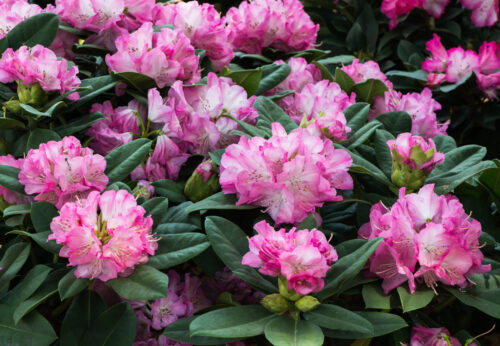
Rhododendrons are at their absolute best in partial to full shade. Given the right acidic soil and enough moisture, they grow into massive, impressive shrubs covered in clusters of showy flowers. You’ll find them in a wide range of colors, and they’re a favorite for woodland-style gardens. They really appreciate soil that is well-draining, rich in organic matter, and consistently moist.
%%Bleeding Heart (Lamprocapnos spectabilis)
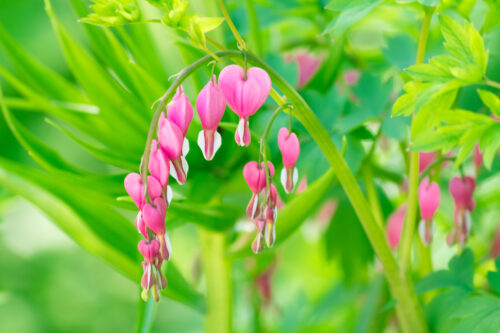
My “pro tip” for shady spots? You’ve got to try the Bleeding Heart. With its unique, heart-shaped flowers, it brings a romantic, whimsical vibe to the garden when it blooms in mid-May. Even though the flowers look exotic and delicate, the plant is actually quite tough and easy to care for. It’s very shade-tolerant and usually only needs a bit of fertilizer every two years to keep it happy.