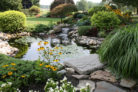
Let’s be honest: a backyard pond is just a hole in the ground until you add the right greenery. Choosing the right plants is what turns a simple water feature into a thriving, beautiful ecosystem that looks like it’s always been part of your landscape. To help you get started, I’ve rounded up some of the most popular and stunning pond plants out there.
[[pflanzen]]
++Water Plantain (Alisma)
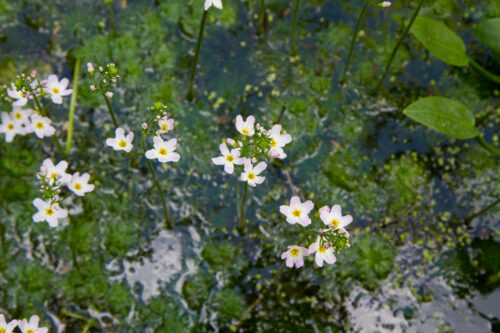
Don’t let the name “Water Plantain” fool you—this is an incredibly attractive plant for your pond’s marshy edges. When tucked into the shallow zones, it sends up delicate, airy flower panicles that create a gorgeous contrast against its large, bold leaves. The seed heads stick around well into winter, looking absolutely magical when covered in a layer of frost. Plus, because it’s a “hungry” plant, it sucks up excess nutrients, helping to starve out algae and keep your water crystal clear.
++Water Soldier (Stratiotes aloides)
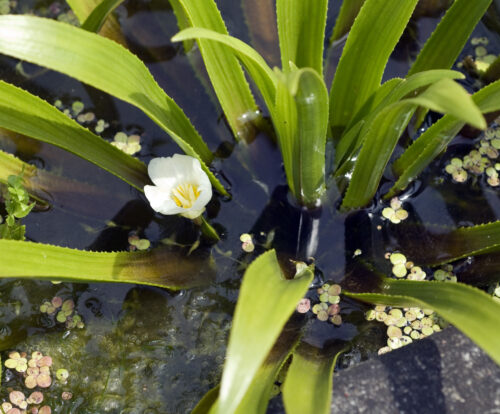
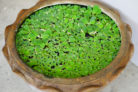
The Water Soldier is a fascinating floating plant with a bit of a disappearing act—it actually sinks to the bottom of the pond to hibernate for the winter. In late spring, its sword-shaped leaves and pure white flowers rise back up to the surface. This sturdy foliage provides excellent protection for aquatic insects hiding from predators. It’s a fantastic choice for preventing algae in nutrient-rich ponds, and since it releases oxygen underwater, your fish and other pond critters will definitely thank you!
++Whorled Water Milfoil (Myriophyllum verticillatum)
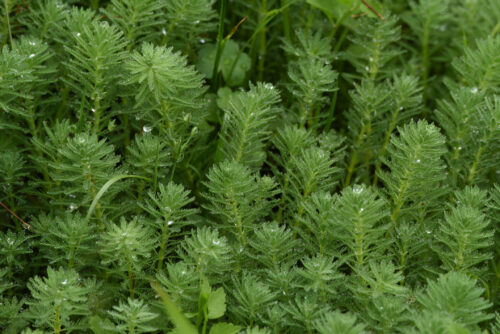
With its fine, bright green leaves and long, trailing stems, Water Milfoil is a real looker. Between June and August, it produces tiny pinkish flowers that look like they’re floating just above the water’s surface. This native plant thrives best in areas with slow-moving water. Pro tip: try planting it near where water flows into your pond; the long shoots look stunning swaying in the gentle current.
++Dwarf Cattail (Typha minima)
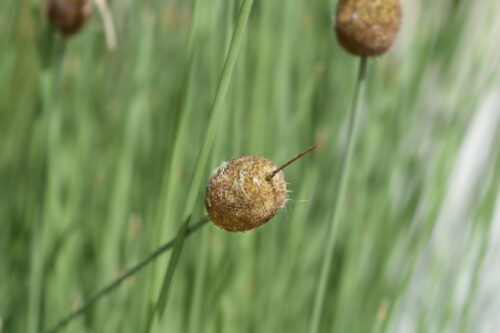
If you love the look of classic cattails but don’t have a massive lake, these little guys are for you. They are much more delicate and manageable, making Dwarf Cattails perfect for backyard pond cultivation. Their iconic “sausage” flower spikes appear between May and August. They don’t just stay on the bank, either—they like to grow right into the shallow water, creating a perfect jungle gym and hiding spot for dragonflies and small pond life.
++Purple Loosestrife (Lythrum salicaria)
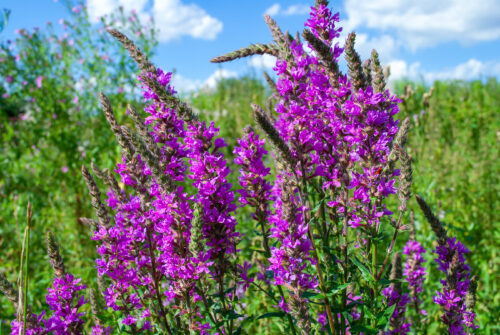
If you want a pop of color, Purple Loosestrife is a showstopper. Reaching heights of up to four feet, its vibrant purple-red flower spikes are a magnet for bees and butterflies from July through September. It’s also incredibly hardy. If your pond edge is a bit rocky or lacks soil, you can simply pop it into a mesh planting basket with some aquatic soil and weigh it down with stones. It’s as easy as that!
++Blue Flag Iris (Iris versicolor)
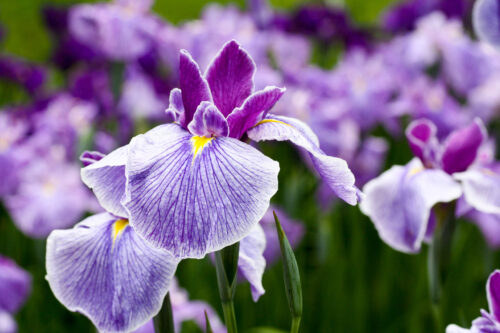
The Blue Flag Iris is unmistakable thanks to its stunning, multi-colored blooms. In early summer, you’ll see beautiful patterns of white, yellow, and violet. This low-maintenance plant is a bit of a “workhorse”—it spreads easily to fill in bare spots, stabilizes the shoreline with its roots, and acts as a natural filter for the water. It’s happy right at the water’s edge or submerged in up to eight inches of water.
++Water Lily (Nymphaea)
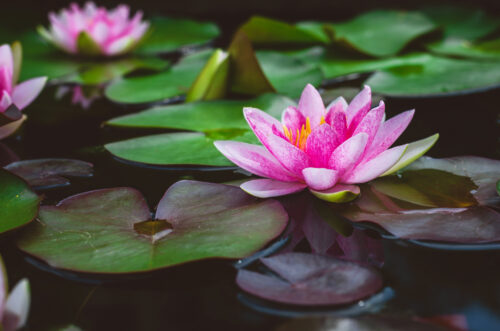
Is it even a pond without a water lily? Known as the “Queen of the Pond,” these favorites feature long, flexible stems that reach from the pond floor to the surface. While individual flowers don’t last forever, the plant is a blooming machine, often producing new buds all the way into October. Just remember: to get those iconic blooms, lilies need plenty of space, a bit of depth, and a sunny spot in calm water (they aren’t big fans of splashing fountains!).
++Water Crowfoot (Ranunculus aquatilis)
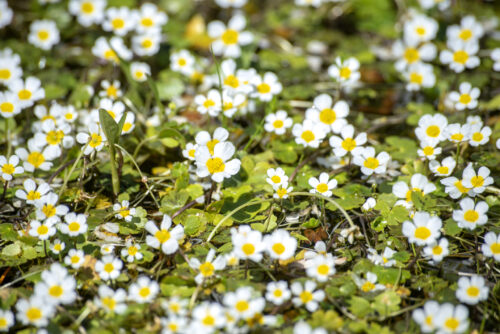
From May to September, Water Crowfoot dots the pond with charming white flowers that sit just an inch or two above the surface. The rest of the plant stays submerged, working hard behind the scenes. It’s a very hardy species that loves a sunny to partially shaded spot in shallow water. Not only does it look sweet, but it’s also a powerhouse for oxygenating your pond and keeping the water clear.