Ever wonder about those beautiful flowers popping up in meadows, along roadsides, or in sunny forest clearings? If you’ve ever wanted to put a name to the blossoms you see on your morning walk, you’re in the right place. We’re breaking down nine of the most popular wildflowers you’ll spot in the wild—plus a little pro tip for your own garden.
[[pflanzen]]
++Common Mallow (Malva sylvestris)
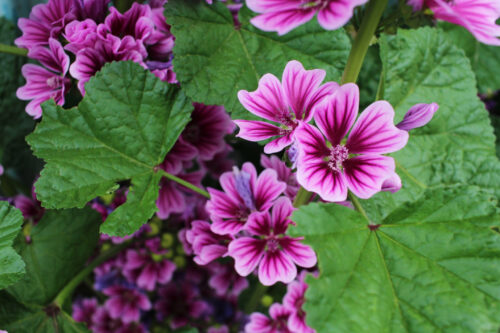
Originally from Southern Europe, this hardy perennial has made itself right at home in fields and meadows across the globe. From May through September, it shows off stunning five-petaled, purple-pink flowers. Once the bees are done with them, the plant develops seed pods that look a bit like tiny wheels of cheese (which is why some folks call it “Cheeseweed”). You can spot it by its fuzzy, heart-shaped leaves with scalloped edges. Fun fact: it’s an old-school medicinal plant often used in teas to soothe a scratchy throat.
++Brown Knapweed (Centaurea jacea)
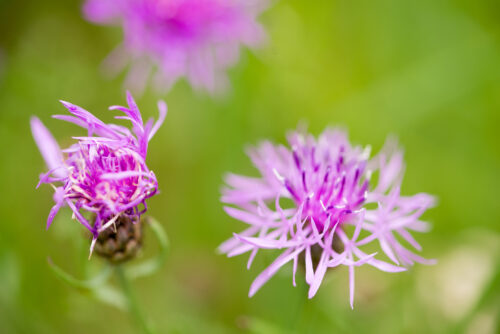
Standing tall at up to 40 inches, this is one of the bigger players in the wildflower world. It features branched stems topped with shaggy, violet flower heads. Each “flower” is actually a cluster of 60 to 100 tiny tube-shaped florets. Because it blooms well into the fall, it’s like an all-you-can-eat buffet for late-season bees and butterflies. You’ll usually find it hanging out in dry pastures and sunny meadows.
++Common Chicory (Cichorium intybus)
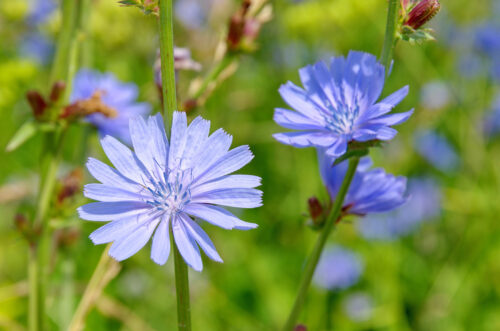
You might recognize the name from your coffee substitute, but in the wild, Chicory is a showstopper. Starting in July, it produces brilliant sky-blue flowers with fringed edges. Here’s the catch: the flowers usually open early in the morning and only stay open for a single day! By the next morning, a fresh batch of buds takes their place. It loves growing along roadsides, often creating a beautiful blue border alongside other wild species.
++Viper’s Bugloss (Echium vulgare)
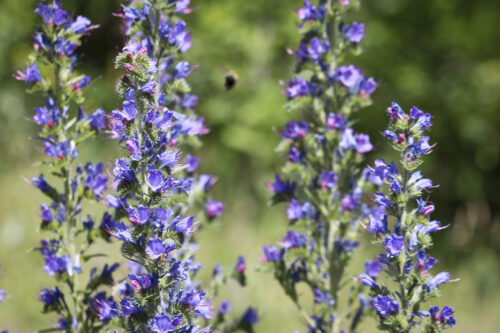
This plant is a bit of a slow burner. In its first year, it just grows a low rosette of hairy, spear-shaped leaves. But in the second year, it shoots up a stem (up to 30 inches tall) covered in blossoms. The flowers start out pink or purple and then turn a deep, vivid blue. The name comes from the way the stamens poke out of the flower, looking a bit like a snake’s tongue. It’s a pollinator powerhouse, which is why you’ll find it in almost every “save the bees” seed mix.
++Orange Hawkweed (Hieracium aurantiacum)
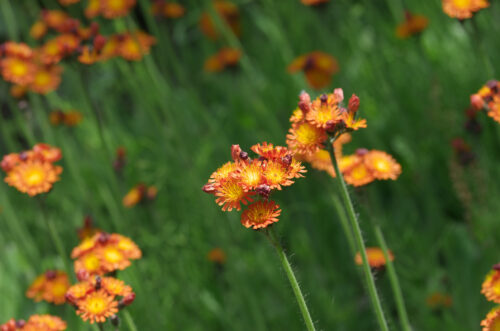
This perennial usually stays under 20 inches tall and grows straight as an arrow. The stems are covered in fine, dark hairs, and starting in June, they’re topped with clusters of fiery orange-red flowers. It’s a favorite for butterflies that share that same warm color palette. Interestingly, the fuzzy, elliptical leaves are actually edible, though most gardeners prefer to just enjoy the “Devil’s Paintbrush” (as it’s sometimes called) for its looks.
++Wild Carrot (Daucus carota)
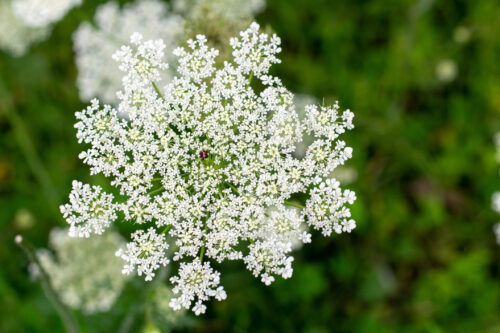
Better known to many as Queen Anne’s Lace, this is the wild ancestor of the carrots in your fridge. It features delicate, white lacy umbrellas, but look closely at the center: there’s often a single tiny dark purple or black floret. It’s a clever trick to mimic an insect, signaling to other bugs that “the food is great over here!” Once the flowers fade, the head curls up into a shape that looks like a bird’s nest—a great way to tell it apart from its toxic lookalike, Poison Hemlock.
++Bird’s-Foot Trefoil (Lotus corniculatus)
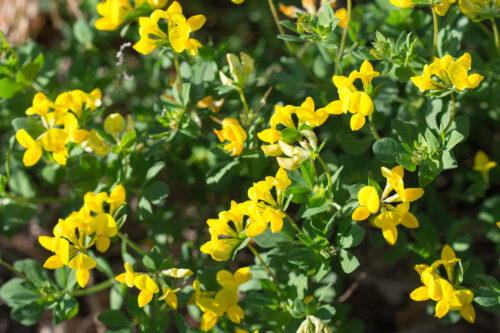
This low-growing beauty rarely gets taller than 4 to 10 inches, forming pretty mats of yellow along the ground. Bird’s-Foot Trefoil gets its name from its seed pods, which look like—you guessed it—a bird’s foot. It blooms from May to September and is a vital nectar source for a huge variety of butterflies and moths. If you want a “living carpet” that helps the environment, this is your plant.
++Common Columbine (Aquilegia vulgaris)
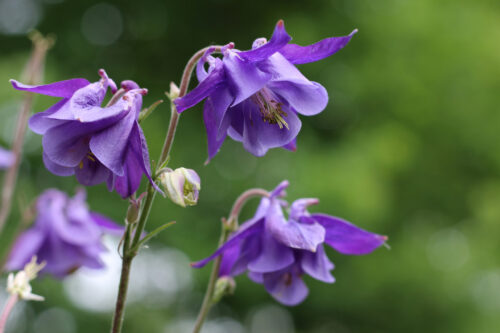
A favorite in both the wild and cottage gardens, the Columbine is famous for its unique, bell-shaped flowers. They usually come in deep shades of violet and have distinctive “spurs” on the back of the petals. Because they produce so much nectar, you’ll almost always see bumblebees hanging around them, trying to squeeze their way inside for a snack. It’s a classic choice for anyone looking to add a bit of woodland magic to their yard.