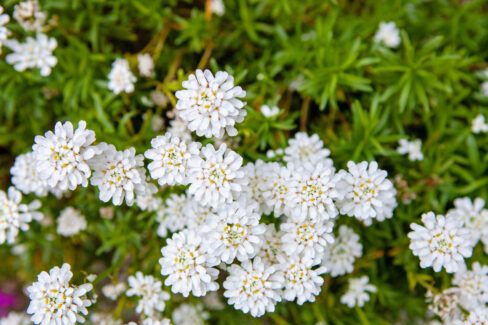
Candytuft is one of those low-maintenance perennials that just makes a garden pop. With its brilliant white blooms, it’s perfect for brightening up those sunny corners of your yard. What’s really impressive is the sheer volume of delicate flowers it produces—and they keep coming for months!
The Long Blooming Season of Candytuft
The name “Candytuft” actually comes from the word *Candia*, an old name for Crete, but its German name (*Schleifenblume*) refers to the little bow-like shape of the four-petaled flowers. The Evergreen Candytuft features white, umbrella-like clusters that often fade into a lovely soft pink as they age. Depending on the variety, you can also find them in shades of purple, red, and rose.
If you give it a sunny spot, Candytuft loves to spread out as a beautiful groundcover. There are over 40 species out there; most start showing off their blooms in May and keep producing new flowers through August. Here’s a pro tip: If you prune your Candytuft once the first round of flowers fades and add a little compost, you can actually encourage a second bloom that lasts until October. It’s a fantastic way to keep your garden glowing from spring all the way through fall.
Fun Facts and Care Tips
Candytuft belongs to the mustard family (*Brassicaceae*), and there are about 40 different species ranging from annuals and perennials to small shrubs. They originally hail from the mountainous regions of Southern Europe. Around here, the Evergreen Candytuft is the most popular choice because it handles the winter like a champ. To keep yours thriving, here’s a quick cheat sheet:
- Give it a light trim and thin it out a bit after winter ends.
- Make sure to water it during those long, dry summer stretches.
- Do a second pruning (cut it back by about a third) after the main flowering period.
- Feed it with some compost after pruning.
- If you’re expecting a really harsh winter, cover it with some evergreen boughs for protection.
Candytuft is a total sun-worshiper; if you plant it in partial shade, you won’t get nearly as many flowers. It prefers sandy, mineral-rich soil that drains well but stays slightly moist. It also loves lime, so you don’t have to worry about using filtered water—regular tap water works just fine!
One thing to keep in mind: once the flowers fade, the plant develops small seed pods. In some species, these seeds are slightly toxic and can cause an upset stomach if eaten. If you have little ones running around the garden, it’s best to keep them at a distance. By late summer, those pods will burst and scatter seeds. If they find a good spot to grow, you’ll have brand-new Candytuft blooming by the very next year!