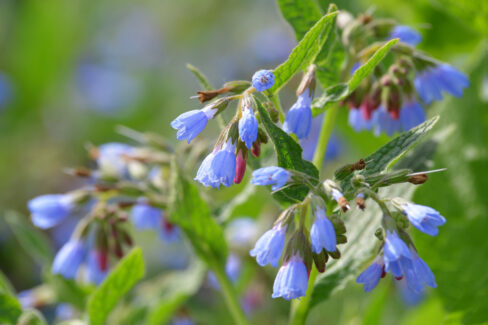
Comfrey—or *Symphytum officinale* if you want to get fancy—is a total powerhouse for any backyard. It’s a medicinal herb, a fantastic natural fertilizer, and it looks great in a flower bed to boot. It definitely deserves a spot in your garden, but since it’s a long-term guest, you’ll want to pick the perfect home for it. Here’s the lowdown on where comfrey likes to put down roots.
Sun and Warmth Bring Out the Best
If you want your comfrey to be packed with those beneficial compounds and covered in blooms, you’ve got to give it some sun. A warm, sunny spot—ideally facing south—is the gold standard. When the plant gets soaked in summer sun, it ensures that even your dried comfrey stash stays potent and high-quality.
Don’t have a full-sun spot? No worries. Comfrey does just fine in partial shade, like under the canopy of deciduous trees. Just steer clear of pine or evergreen trees; the soil there is usually too acidic for its liking. And for my friends living at higher elevations, good news: this hardy herb can handle mountain gardens up to about 3,000 feet.
The “Dream Home” Soil
While comfrey is pretty adaptable, it’ll grow much faster if you give it what it craves. Here’s what the ideal soil looks like:
- A neutral to slightly acidic or slightly alkaline pH.
- Rich in organic matter and nutrients.
- High nitrogen levels (comfrey is a “heavy feeder”).
- A loamy or even slightly swampy texture that holds onto moisture well.
Pro Tip:
If you want to prep the area before planting, mix in some natural compost. This keeps things organic, so you can safely enjoy the benefits of comfrey as a medicinal herb or even try it in small culinary amounts.
Give It Room to Grow (For a Long Time!)
Comfrey is a perennial, meaning it dies back to the roots in the fall and pops back up in the spring. A single plant can keep coming back for up to 20 years! Because of that, you’ll want to pick a spot where it can stay for the long haul.
Moving an established plant is a huge pain because it develops a massive taproot. If you decide you want it somewhere else later, it’s actually easier to propagate a new plant from a root cutting than to try and dig up the old one.
Finally, remember that a happy comfrey plant gets big. Give it plenty of elbow room—about a 3-foot radius—so it can spread out and do its thing without crowding its neighbors.