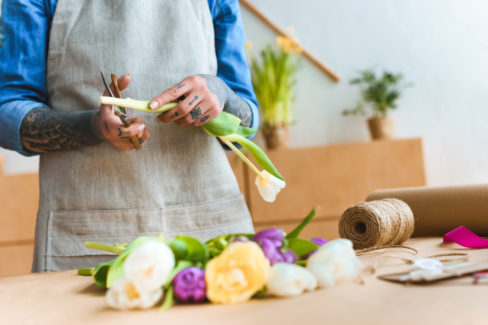
Tulips are the ultimate spring classic. Honestly, is it even springtime if you don’t have a big, bright bouquet sitting on your table? But as much as we love them, tulips can be a little finicky. If you want your blooms to stay perky instead of drooping after two days, you’ve got to give them a little TLC.
Keeping Your Tulips Fresh
Tulips are part of the lily family, and there are actually over 1,000 varieties out there in just about every color of the rainbow. Depending on the look you’re going for, you might run into:
- Darwin Hybrids: The classics with strong, tall stems and simple blooms.
- Double Tulips: These look almost like peonies because they’re so full.
- Fosteriana Tulips: These Central Asian beauties have some of the largest petals in the family.
- Fringed Tulips: They have a cool, “frosted” edge on the petals.
- Greigii Tulips: Early bloomers known for their unique striped foliage.
- Parrot Tulips: Super showy with twisted, ruffled petals.
- Lily-flowered Tulips: Elegant, pointed petals that last a long time.
- Rembrandt Tulips: Famous for their “broken” or streaked color patterns.
- Viridiflora Tulips: Unique blooms featuring distinct green streaks.
The good news? Every single one of these makes a great cut flower. With the right care, they’ll stay fresh and beautiful for days. It all starts with the perfect cut.
Prepping Your Stems for the Vase
To make your bouquet last, start with quality stems. When you’re at the store or market, check that the stems and leaves aren’t bruised or crushed. Damaged stems can’t “drink” water properly, which leads to early wilting. If you’re lucky enough to be cutting them fresh from your own garden, always use a sharp knife rather than garden shears to avoid crushing the tissue.
Before they go into the vase, strip off the lower leaves. This makes them easier to arrange and prevents leaves from rotting underwater, which keeps the water cleaner. Use a sharp knife to trim the stems to your desired length, cutting them at a slight angle. This increases the surface area of the “straw,” allowing the tulip to pull up water more efficiently. Pro tip: If you are mixing tulips with other flowers, cut the tulips a little shorter than the rest. Tulips are famous for continuing to grow several inches even after they’re in the vase!
I really recommend staying away from scissors when trimming your flowers. The wide blades tend to pinch the stem shut, destroying the internal “plumbing” that carries water to the bloom. A clean cut with a knife can keep your tulips looking great for up to ten days.
Ongoing Care for Your Bouquet
Once your tulips are in the vase, a few simple habits will keep them happy:
- Use soft water (low in lime/calcium) if possible.
- A tiny splash of lemon juice can help lower the pH level of the water, which tulips love.
- Don’t overfill the vase! Tulips actually prefer shallow water. If the water level is too high, the stems can turn brown and mushy.
- If your bouquet came with a packet of flower food, use it! It’s packed with nutrients and helps keep bacteria at bay.
- Pluck out any flowers that are starting to fade.
- Change the water every two days to keep it fresh.
- Give the stems a quick fresh trim every time you change the water.
- Keep your vase in a spot with room-temperature air, away from direct sunlight or heaters.