By James Hartley|Published on November 16, 2022|Updated on January 23, 2025
If you’re looking for a way to keep your garden looking lush and vibrant even when the snow starts to fly, evergreen shrubs are your best friends. Unlike deciduous plants that drop everything in the fall, these hardy beauties constantly renew their leaves, providing a year-round splash of green that makes a fantastic alternative to traditional conifers. Today, I’m sharing seven of the most popular evergreen shrubs for your landscape, plus one of my personal “insider” favorites!
[[pflanzen]]
++Boxleaf Honeysuckle (Lonicera nitida)
--500x332.jpg" alt="Boxleaf Honeysuckle" width="500" height="332" class="alignnone size-medium-large wp-image-45137" srcset="https://guterboden.de/wp-content/uploads/2022/11/Immergrune-Heckenkirsche-Heckenmyrte--500x332.jpg 500w, https://guterboden.de/wp-content/uploads/2022/11/Immergrune-Heckenkirsche-Heckenmyrte--300x199.jpg 300w, https://guterboden.de/wp-content/uploads/2022/11/Immergrune-Heckenkirsche-Heckenmyrte--1024x681.jpg 1024w, https://guterboden.de/wp-content/uploads/2022/11/Immergrune-Heckenkirsche-Heckenmyrte--768x510.jpg 768w, https://guterboden.de/wp-content/uploads/2022/11/Immergrune-Heckenkirsche-Heckenmyrte--1536x1021.jpg 1536w, https://guterboden.de/wp-content/uploads/2022/11/Immergrune-Heckenkirsche-Heckenmyrte--2048x1361.jpg 2048w, https://guterboden.de/wp-content/uploads/2022/11/Immergrune-Heckenkirsche-Heckenmyrte--488x325.jpg 488w, https://guterboden.de/wp-content/uploads/2022/11/Immergrune-Heckenkirsche-Heckenmyrte--308x205.jpg 308w, https://guterboden.de/wp-content/uploads/2022/11/Immergrune-Heckenkirsche-Heckenmyrte--234x156.jpg 234w, https://guterboden.de/wp-content/uploads/2022/11/Immergrune-Heckenkirsche-Heckenmyrte--138x92.jpg 138w, https://guterboden.de/wp-content/uploads/2022/11/Immergrune-Heckenkirsche-Heckenmyrte--350x233.jpg 350w" sizes="(max-width: 500px) 100vw, 500px" />
Don’t let the delicate name fool you—the Boxleaf Honeysuckle (also known as Wilson’s Honeysuckle) is incredibly tough. It handles freezing temperatures like a champ and requires very little maintenance. Growing between 3 to 5 feet tall, it’s a perfect fit for smaller suburban gardens. Like many evergreens, it features small, leathery leaves. In late spring, it produces tiny white flowers that are easy to miss tucked away in the dense foliage, followed by small purple berries.
++Firethorn (Pyracantha coccinea)
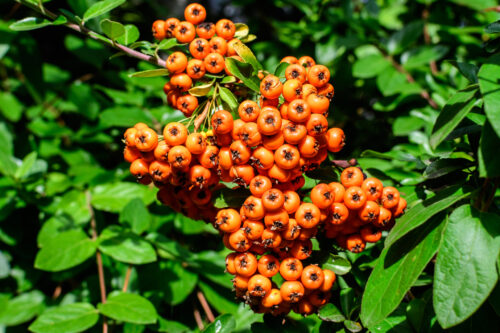
Firethorn is a total winter rockstar. It’s fully hardy and adds amazing texture to the garden with its rugged, evergreen leaves. The real show-stopper, though, is the crop of pea-sized berries that appear in late August. Because they’re quite tart, birds usually leave them alone until late in the season, meaning you get to enjoy those bright pops of color almost all winter long. It’s heat-tolerant and handles urban pollution well, making it a versatile choice for sunny or partially shaded spots.
++Boxwood (Buxus)
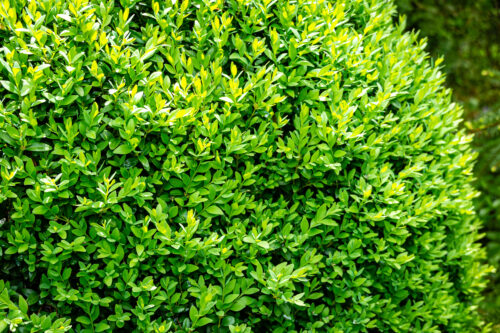
Even though the Boxwood Moth and certain fungal diseases have given gardeners a bit of a headache lately, Boxwood remains a classic for a reason. Its tiny leaves and dense growth habit make it the gold standard for topiary and formal hedges. It handles heavy pruning like a pro—most gardeners give it a trim at least twice a year. Pro tip: Keep your Boxwood’s immune system strong with the right fertilizer, and look into eco-friendly treatments to keep those pesky pests at bay.
++Japanese Azalea (Rhododendron japonicum)
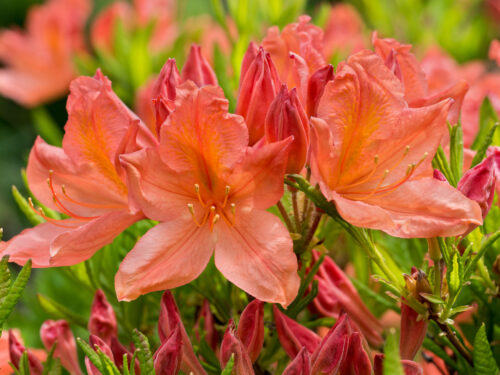
A member of the Rhododendron family, the Japanese Azalea is a fantastic way to add a burst of color to your front yard. It stays relatively compact, reaching about 5 feet, and develops a lovely, wide-spreading canopy. I love how the foliage takes on a bronze-red tint in the winter before the new growth kicks in. Then, in April and May, the whole shrub gets smothered in stunning blooms ranging from white and pink to deep purple.
++Holly (Ilex)
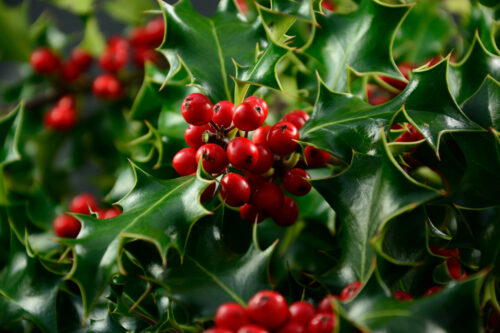
Nothing says “winter garden” quite like the iconic spiky, glossy leaves of the Holly. While some varieties can get quite large, many garden cultivars grow as manageable, bushy shrubs. They produce small white flowers in late spring, which eventually turn into those vibrant red, yellow, or orange berries we all love. To keep your Holly from drying out during “winter droughts” (when the ground is frozen but the sun is out), try to plant it in a spot with partial to full shade.
++Red Tip Photinia (Photinia x fraseri)
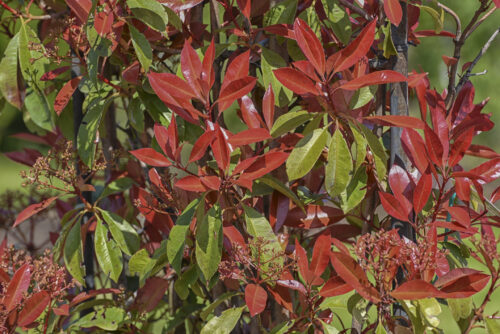
If you need a fast-growing privacy hedge, the Red Tip Photinia is a great candidate. It can reach 6 to 10 feet tall and features long, glossy leaves that often have a beautiful reddish-green shimmer. In late spring, it produces large clusters of white flowers followed by red berries that the local birds will absolutely thank you for. Just a heads-up: this one prefers slightly milder climates, as it can be a bit sensitive to extreme hard freezes.
++Rhododendron (Rhododendron)
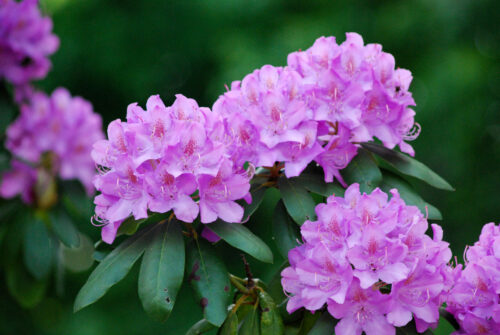
Whether you want a massive focal point or a flowering hedge, there’s a Rhododendron for you. By mixing different varieties, you can actually have blooms in your garden from early spring all the way through fall! They offer a color palette that even rivals roses. Just remember: Rhodies are a bit picky about their “home”—they need acidic (lime-free), humus-rich soil that stays moist but drains well.
%%My Secret Tip: Leatherleaf Viburnum (Viburnum rhytidophyllum)
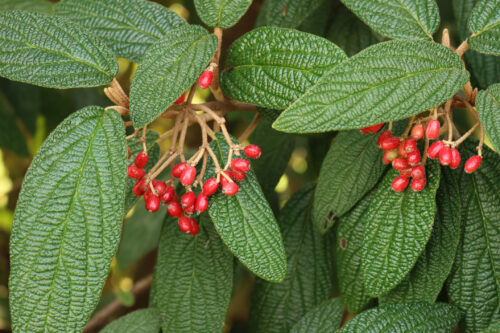
If you want something truly unique, look no further than the Leatherleaf Viburnum. It has these amazing, deeply wrinkled leaves with fuzzy undersides that stay on the branch all winter long. In late spring, it puts out massive 8-inch wide clusters of creamy white flowers that are a magnet for bees and butterflies. By August, you’ll see berries that start red and ripen to black. Fun fact: in some parts of the world, these berries are actually considered a bit of a local delicacy!