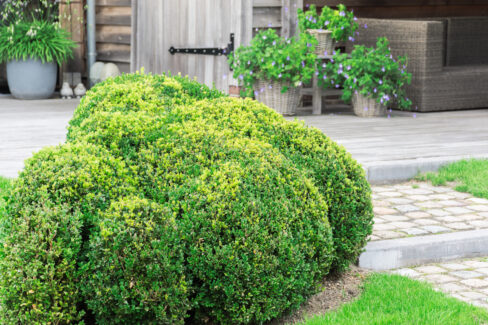
If you’re thinking about adding this evergreen classic to your yard, you probably already know it’s super versatile and generally low-maintenance. But before you head to the nursery, it’s important to look at the flip side. Even a perfectly happy, healthy boxwood can fall victim to diseases and pests. Getting rid of these uninvited guests isn’t always easy—and sometimes, it’s unfortunately impossible.
Diseases
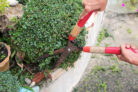
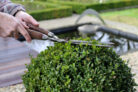
Boxwoods are prone to several fungal diseases that can be a real headache to treat. Since “curing” them is often a losing battle, your best bet is knowing the symptoms so you can catch things early. Better yet, try to prevent them altogether! You can do this by giving your plants the best possible growing conditions and choosing resistant varieties. Pro tip: Always disinfect your pruning shears after every use so you don’t accidentally spread fungal spores from one plant to the next.
Boxwood Canker – Volutella buxi
Keep an eye out for these tell-tale signs of infection:
- Leaves that twist, turn brown, and drop off
- Dried-out twigs
- Tiny orange pustules
- Spore masses on the stems and the undersides of leaves
If you spot this, your best move is a heavy pruning right down into the healthy wood.
Boxwood Rust – Puccinia buxi
This one isn’t quite as common and usually targets older “Common Boxwood” (*Buxus sempervirens*) plants. This fungus attacks from the inside out, so it can hide for a long time. The first thing you’ll notice is thickening of the leaves. Months later—usually in the fall—rusty-red spore spots appear. If you see it, remove the infected parts immediately.
Boxwood Blight – Cylindrocladium buxicola
This is the one boxwood owners fear most because it’s often a death sentence for the plant. Watch closely for:
- Dark brown leaf spots that grow rapidly
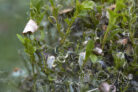
- White spore masses on the undersides of leaves
- Black streaks on the stems
- In late stages: entire branches or sections of the plant dying off
To prevent blight, plant your boxwoods in bright, airy spots. Water them from the bottom to keep the foliage dry, and never prune on a rainy day. Keeping your plants well-fed also helps their immune systems. If it does strike, cut out the infected areas immediately and try to save the plant using calcified seaweed (Algenkalk).
Quick Tip:
Some varieties are more resistant than others. Look for ‘Faulkner’ (a small-leaf variety). On the other hand, popular favorites like ‘Blauer Heinz’ and ‘Suffruticosa’ are unfortunately very susceptible to blight.
Boxwood Wilt – Fusarium buxicola
Wilt often only affects parts of the plant. You’ll notice leaves turning yellow, and eventually, those sections will die off. You might also see soft, dark patches on the bark. Just like with the others, the best fix is to prune out the affected areas.
Pests
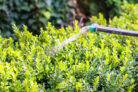
Pests are just as capable of ruining a healthy boxwood as diseases are. They multiply fast, so you have to act decisively. Pests love a stressed plant, so keeping yours healthy is your first line of defense. Since many pests overwinter on the plant as larvae or eggs, a good pruning by mid-May can really help lower the “pest pressure.” If you find an infestation, remove the sick parts and try a home remedy first. Chemical pesticides should be your absolute last resort, especially since boxwoods can be sensitive to them.
Boxwood Psyllids – Psylla buxi
These little guys cause young leaves to curl up until they look like tiny spoons (often called “cupping”). The insects lay their eggs in the summer, so a hard prune in late summer or fall can get rid of most of them.
Boxwood Moth (Caterpillars) – Glyphodes perspectalis
The boxwood moth is a small butterfly from East Asia that has become a major threat to boxwoods in recent years. It’s not the moth itself that’s the problem, but its hungry green-patterned caterpillars. They can strip a boxwood bare in no time, usually starting from the inside of the bush. Since they have several generations a year, you have to stay vigilant.
- Pick the caterpillars off by hand.
- Alternatively, spread a tarp under the bush and shake them off.
- Use a pressure washer or leaf blower to knock them out of the foliage, then collect and dispose of them.
The bacteria *Bacillus thuringiensis* is known to kill the caterpillars, and some gardeners find that a heavy dusting of calcified seaweed helps keep them at bay temporarily.
Various Aphids and Scale
Green aphids, oyster shell scale, and mealybugs all love to suck the sap out of your *Buxus*. For aphids, a simple mix of milk and water sprayed on the leaves often does the trick. Scale insects are tougher; they need an oil-based treatment to suffocate them. You can find organic options at the garden center based on neem or canola oil.
Boxwood Spider Mites – Eurytetranychus buxi
If you’re having a hot, dry summer, watch out for spider mites. They’ve only recently become a common boxwood pest. Use a neem or canola oil spray to manage them. You can also buy predatory mites online—they’re the “good guys” that will hunt down the spider mite population for you.
Quick Tip:
If you see yellow galls (bumps) inside the leaves, you’re likely dealing with boxwood gall midges. Give the plant a hard prune in the spring to get rid of them.
What do I do with the infected clippings?
Whether it’s a disease or a pest, your first step is usually pruning. But don’t just toss those clippings on your compost pile! The pathogens and larvae can survive there and reinfect your garden. Don’t put them in your green waste bin either. The safest way to dispose of them is to seal them in a plastic bag and put them in your regular household trash.