
Flowering shrubs are the secret to a vibrant, eye-catching garden. Not only do they add a pop of color and texture to your landscape, but they also serve as a vital buffet for local pollinators. Below, we’ve rounded up some of the most popular flowering shrubs to level up your curb appeal, plus a “hidden gem” tip at the end!
[[pflanzen]]
++Star Magnolia (Magnolia stellata)
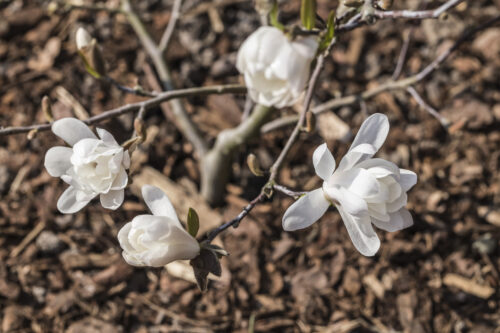
The densely branched Star Magnolia is a slow grower, making it a perfect fit for smaller yards or tight spaces. As early as March, this beauty opens up its pure white, wonderfully fragrant blossoms. The star-shaped petals surround a cool, cone-like pistil that really stands out. For the best flower show, plant your Star Magnolia in a sheltered spot with a bit of afternoon shade.
++Winter Jasmine (Jasminum nudiflorum)
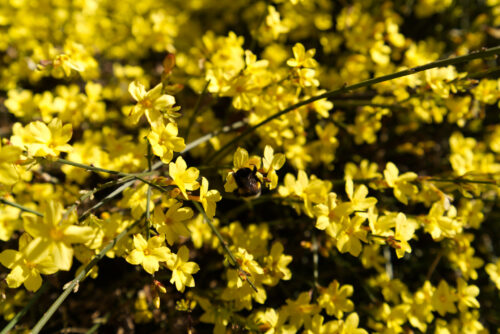
In milder regions, Winter Jasmine starts showing off its bright yellow blooms as early as late December, often lasting all the way through April. This hardy shrub is a “scrambler,” meaning it loves a little help from a trellis or fence to keep it looking bushy and upright. It’s incredibly tough and can handle both high heat and full sun without breaking a sweat.
++Weigela (Weigela florida)
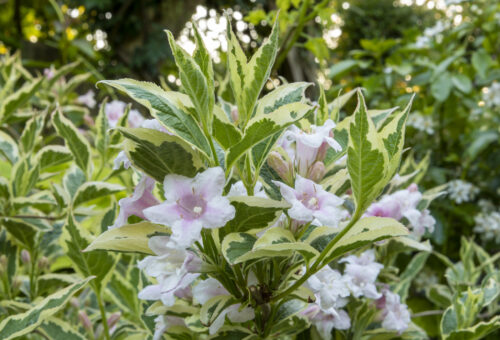
With its charming trumpet- or bell-shaped flowers in shades of white and pink, the Weigela is a staple in many American gardens. The main bloom time is April through May, but it’s common to see a second flush of flowers later in the season. These shrubs are super adaptable and will thrive in almost any sunny or partially shaded spot.
++Witch Hazel (Hamamelis)
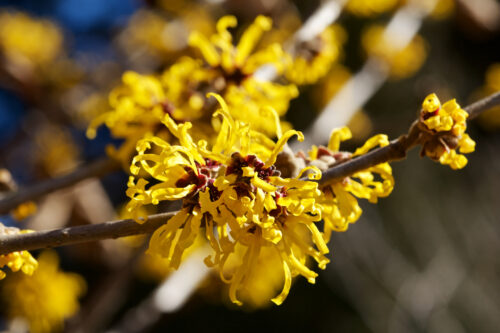
Between January and March, Witch Hazel unfurls its unique, ribbon-like petals in bright yellow or red. These narrow petals actually curl up during a frost to protect themselves, allowing the plant to withstand temperatures as low as 15°F. This elegant shrub is a bit of a “diva” when it comes to soil—it prefers deep, rich soil that holds moisture well. Since it grows slowly and naturally forms a beautiful canopy, you can usually skip the pruning shears.
++Panicle Hydrangea (Hydrangea paniculata ‘Grandiflora’)
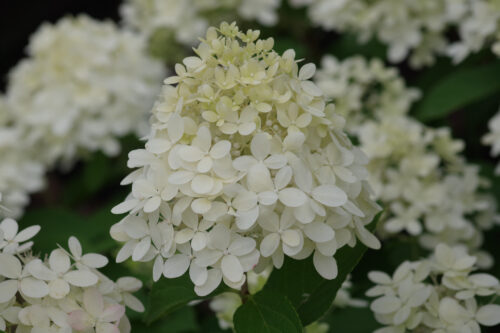
This cold-hardy favorite puts on a massive show from July to September with flower clusters (panicles) reaching up to ten inches long. These are made up of countless tiny, creamy-white blossoms. Pro tip: Don’t prune your Panicle Hydrangea in the fall! The dried flower heads look magical when covered in winter frost, adding some much-needed interest to a dormant garden.
++Forsythia (Forsythia x intermedia)
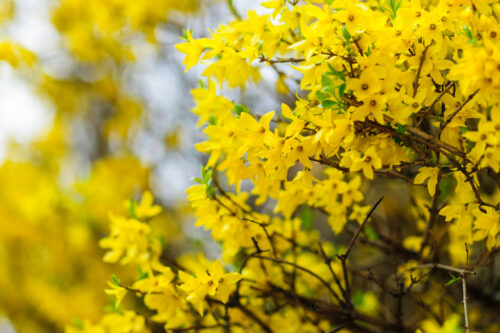
For many of us, a blooming Forsythia is the ultimate sign that spring has finally arrived. The brilliant gold-to-yellow flowers pop up on bare branches in mid-March before the leaves even appear. To get the best bloom, give them plenty of full sun. Also, make sure to water them during dry spells, as thirst can lead to fewer flowers the following year.
++Butterfly Bush (Buddleja davidii hybrids)
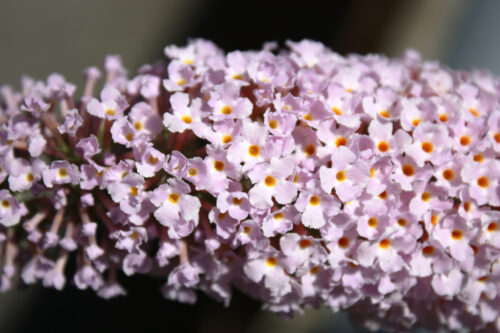
The name says it all—this shrub is a total magnet for butterflies and bees. You can find varieties in everything from pure white to deep royal purple. While the long flower spikes look a lot like lilacs, they aren’t actually related. Because Butterfly Bush can be quite vigorous (and even invasive in some areas), it’s a good idea to deadhead the spent blooms to keep it from spreading where it shouldn’t.
++Chaste Tree (Vitex agnus-castus)
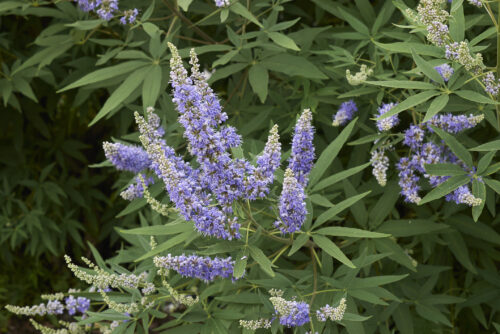
This popular late-bloomer is a member of the verbena family and a fantastic “pollinator pantry” for late summer when other flowers start to fade. Its tiny flowers range from white to pink to violet and grow in very dense clusters. The best part? The Chaste Tree is incredibly low-maintenance and isn’t picky about soil or location.
++Rhododendron (Rhododendron)
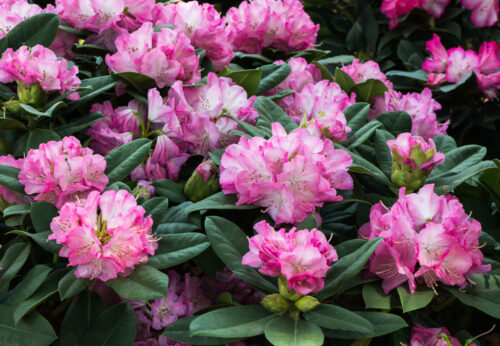
With over a thousand species, Rhododendrons are the royalty of the heath family. Their spectacular clusters of flowers come in almost every color imaginable. These shrubs love dappled shade and loose, organic-rich soil that stays consistently moist. If you give a “Rhody” the right conditions, it can grow to an impressive size and become the absolute centerpiece of your yard.
%%Seven-Son Flower (Heptacodium miconioides)
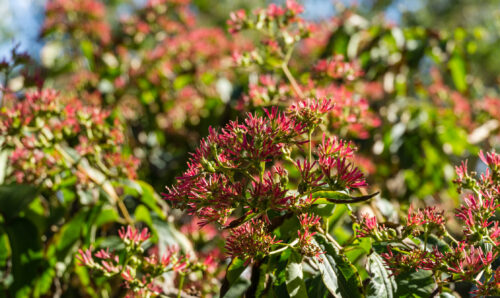
This stunning shrub has only been a garden staple since the 1980s, but it’s quickly becoming a favorite. The name is a literal translation from Chinese, referring to the way the white flowers grow in clusters of seven. It’s a huge hit with bees and butterflies, blooming from August all the way into October.