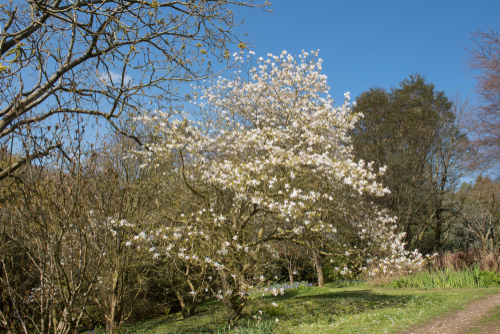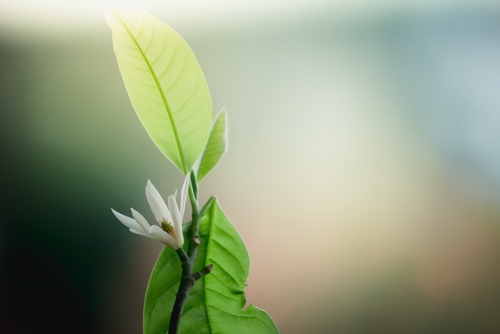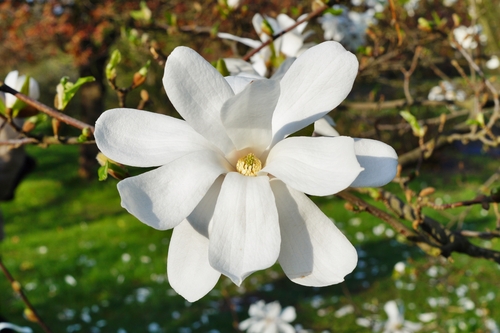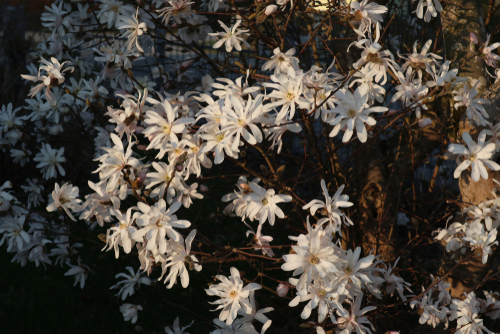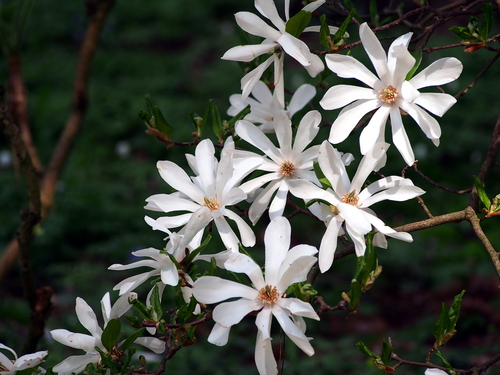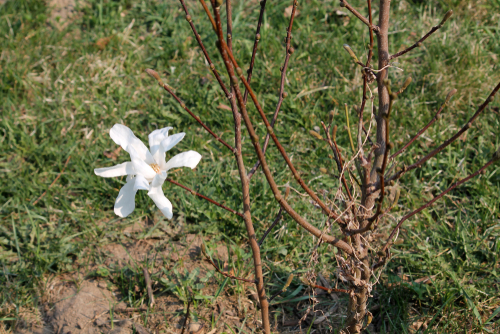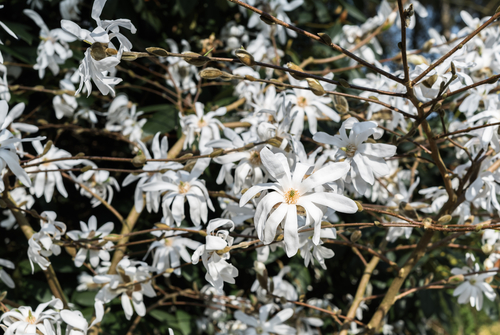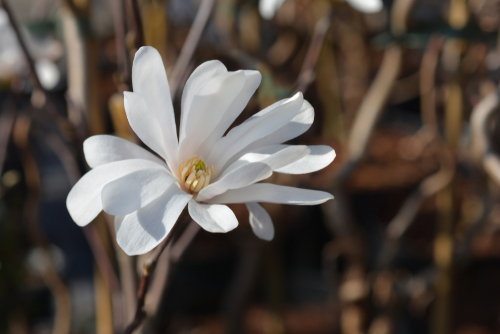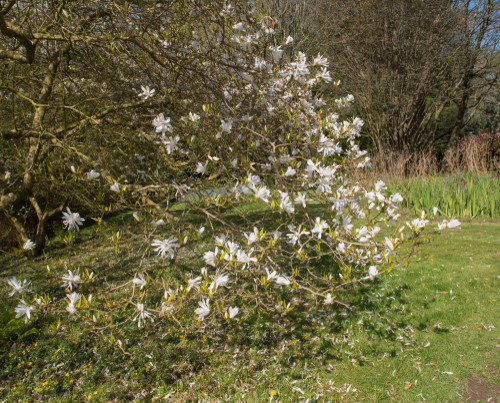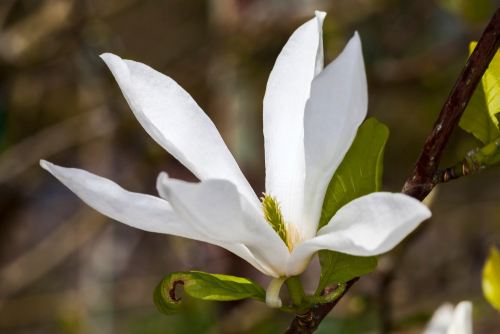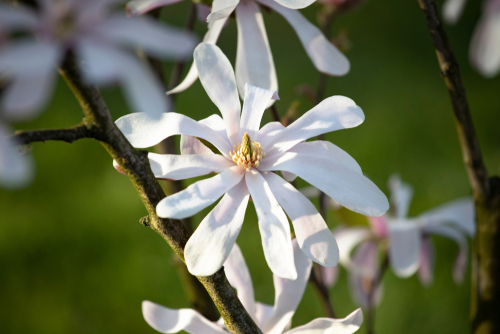
The Star Magnolia (*Magnolia stellata*) is a total showstopper. With its massive, snowy white blooms, it’s easily the star of any spring garden. While it’s actually pretty low-maintenance throughout the year, it can be a bit of a “diva” when it comes to its location—it has very specific tastes in light and soil. Plus, it’s not a big fan of the pruning shears, so you’ll want to handle it with care.
A Natural Wonder or a Hybrid?
Originally hailing from Japan, the Star Magnolia has been a garden favorite for so long that experts weren’t sure for a while if it was a natural species or a man-made hybrid. It wasn’t until the late 1950s that wild populations were discovered in the Aichi province, proving that this beauty is a true gift from nature, not a lab creation.
Picking the Perfect Spot
If you want your Star Magnolia to thrive, location is everything. You’ll want to find a spot that gets plenty of sun. If it’s stuck in the shade, you’ll notice way fewer of those iconic flowers. Since it starts blooming as early as March, try to pick a spot shielded from the wind. A late-night frost on a windy night can easily zap those delicate buds before they even have a chance to open.
Rich, Happy Soil
These plants love “eating” well, so nutrient-rich soil is a must. Before planting, it’s a great idea to mix in some humus or peat. Using rhododendron soil is a pro tip, too, since Star Magnolias prefer slightly acidic conditions. While you don’t need to go overboard when you fertilize, you do need to keep a close eye on the water. Because they have shallow roots, they dry out quickly, so keep that soil consistently moist.
Easy on the Pruning
When it comes to maintenance, less is definitely more with pruning. These shrubs naturally grow into a beautiful shape on their own, and they can be pretty sensitive if you cut them back too hard. Since they’re hardy plants, there’s no need for a fall haircut. Usually, you only need to reach for the shears if you see dead branches or if a storm has messed up its shape. Just a heads-up: if you do prune, it might take the plant a while to bounce back and start blooming again. Try to wait at least two years between any major trims.
Pests and Problems
The good news is that Star Magnolias are tough cookies and rarely deal with pests. However, they can occasionally run into fungal issues like powdery or downy mildew. You might also see bacterial infections or leaf spot diseases from time to time. The key is to act fast at the first sign of trouble so the whole plant stays healthy.
Growing Your Collection
Because they’re so gorgeous, most gardeners eventually want to propagate their Star Magnolia. There are a few ways to do it:
- Air layering
- Ground layering
- Cuttings
- Seeds
The easiest routes are definitely ground layering or taking cuttings. These methods usually have a much higher success rate than trying to grow them from seed. Air layering works well too, but it’s a bit more technical and time-consuming for the average backyard gardener.
Moving Your Magnolia
Even though it’s a sturdy plant, the Star Magnolia hates being moved almost as much as it hates being pruned. If you absolutely have to transplant it, make sure to dig a very wide and deep circle around the root ball. You want to keep those roots as intact and undisturbed as possible to help it settle into its new home.