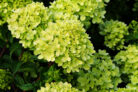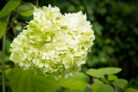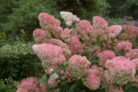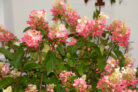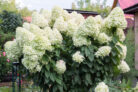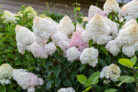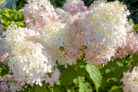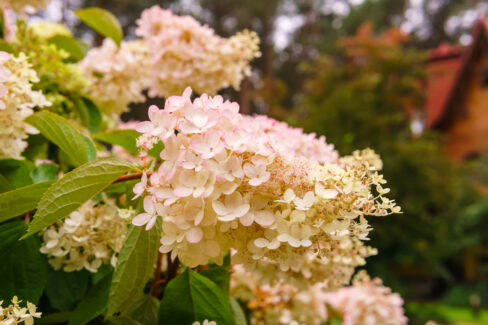
Panicle hydrangeas are a total garden highlight, treating us to those massive, lush flower heads all summer long and well into the fall. If you want your shrub to be absolutely loaded with giant blooms, the secret is a good, hard prune in the spring.
When is the best time to prune?
Regular maintenance for panicle hydrangeas definitely involves a pretty vigorous haircut. The sweet spot for this is early spring—think February or March. At this point, the plant hasn’t started pushing out new growth or forming flower buds yet. Since panicle hydrangeas bloom on “new wood” (the growth produced in the current season), you can safely cut the old stems back to just three or four pairs of buds. Don’t forget to completely remove any weak or diseased stems while you’re at it!
Tools and Technique
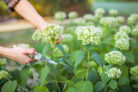
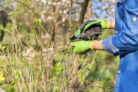
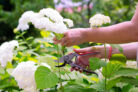
Whenever you’re pruning trees or shrubs, always start with clean, sterilized tools. This keeps nasty germs or fungi from hitching a ride from one plant to another. You’ll want a pair of bypass pruners (hand shears) and maybe a small pruning saw for thicker branches. Make sure everything is sharp and moves smoothly; you want clean snips, not crushed or ragged edges. The technique is simple: cut about half an inch above a pair of buds at a slight angle away from the buds. A sharp tool will slice right through in one go without mashing the wood.
Pruning Strategies
There are a few different ways to approach pruning, depending on how old your hydrangea is:
- Structural Pruning: Building a strong framework (Years 1–4)
- Maintenance Pruning: Keeping it compact and flowery (Year 5 and up)
- Thinning Out: Rejuvenating the shape (Year 5 and up)
Structural Pruning: Step-by-Step
Structural pruning is all about creating a sturdy skeleton of strong branches. By picking 5 to 7 healthy main stems, you can grow a beautiful, compact shrub within four years. Here’s the game plan starting from year one:
- In the first year, pick the 5 to 7 strongest stems to be your “frame” and cut them back to about 8 inches long.
- Cut all other stems off right at the ground level.
- In the second year, prune those same main stems again, but leave them a bit longer this time. Vary the lengths slightly so the bush looks natural. Keep doing this until they reach your desired height.
- Cut the outer stems back to one or two buds.
- Cut the inner stems back to three or four buds.
- This gives your hydrangea a nice, rounded “mound” shape.
Maintenance Pruning
Once your hydrangea hits its fifth birthday, the main structure should be set. Now, you just need an annual trim to keep it looking sharp. Every year, remove a few of the oldest stems right at the base. Choose some young shoots to replace them and cut those back to about 8–12 inches. Trim inner side-shoots back to three or four bud pairs, and outer ones to one or two pairs. This might feel like a “tough love” haircut, and the plant might take a little longer to leaf out, but the growth that follows will be much stronger.
Thinning Out Your Hydrangea
Every once in a while, your hydrangea needs some breathing room. Cut out old, bare “leggy” stems entirely. Shorten one-year-old shoots to about 12–16 inches. If you see a fork in a branch, you can remove one of the older stems. For crowded areas inside the bush, snip away the weaker growth. On the edges, remove any stems growing inward. Thinning it out like this encourages tons of new buds and massive flowers. In fact, a proper pruning can often double the number of blooms!
Post-Bloom Care
When the flowers fade in the fall, the dried heads stay on the shrub. You can actually leave them there all winter—they look gorgeous covered in frost or a dusting of snow. However, if you’re the type of gardener who likes to “tidy up” before winter hits, just snip the dried blooms off right above the first pair of leaves.
Common Pruning Mistakes
We’ve all been there! If you’re new to pruning, here are a few pitfalls to watch out for:
- Skipping the thinning: This leads to a tangled mess of branches and tiny flowers. The fix: Cut old structural stems to the ground and train 5 to 7 new ones.
- Not pruning hard enough: This makes the shrub look “leggy” and bare at the bottom with very few flowers. The fix: Cut all stems back by about two-thirds.
- The “Flat Top” look: Cutting all stems to the exact same length makes the bush look like a broom. The fix: Aim for a half-round shape, keeping the inner stems slightly longer than the outer ones.