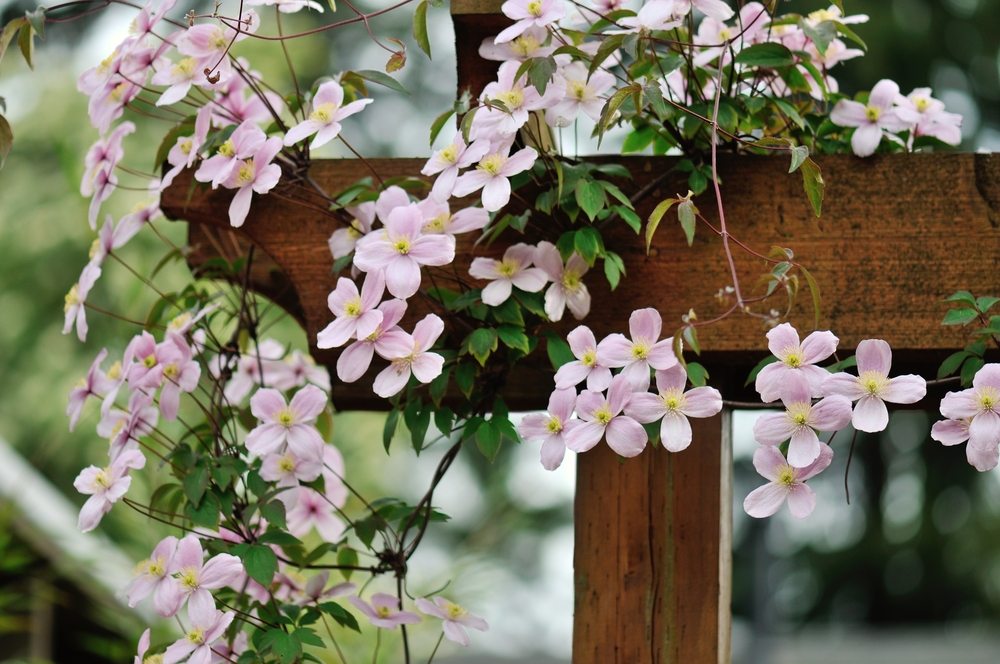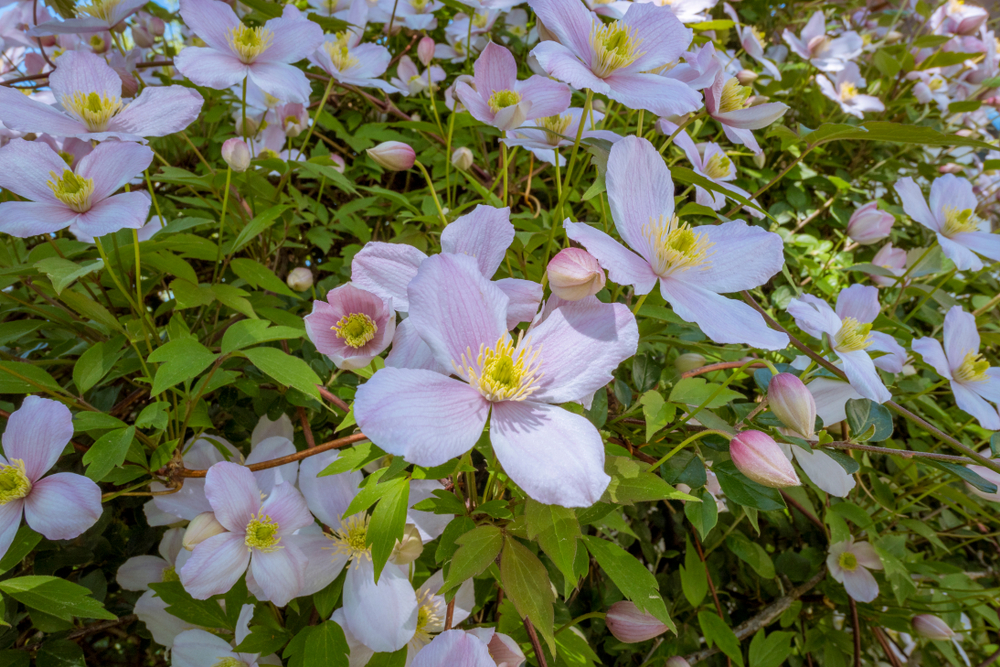
When most of us think of Clematis, we picture a classic climber scaling a trellis or a garden arch. There’s a famous rule of thumb for these beauties: they love “heads in the sun, feet in the shade.” When they’re climbing up a wall or fence, that’s easy to manage. But if you want to use Clematis as a groundcover, things get a little trickier since the whole plant is closer to the soil. Because of this, you’ll want to stick to specific varieties that can handle the job.
The Best Varieties for Groundcover
To work as a groundcover, a Clematis needs to be tough as nails. It also needs to be pretty flexible when it comes to lighting; it has to look just as good in the shady spots as it does in the sunny ones, or your “flower carpet” will end up looking patchy. Here are a few of my favorite picks for the job:
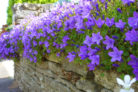
- “Praecox” (Jouinianna Clematis): This one is a powerhouse with lovely pale blue flowers.
- “Stanislaus”: Similar to Praecox, but with shorter vines and slightly larger blooms.
- “Arabella” (Integrifolia): A real showstopper with bright blue or deep purple-blue flowers.
- Clematis viticella: Most varieties of the Italian Clematis are also surprisingly good at spreading out horizontally.
Getting Them in the Ground
Whether you’ve picked up some new starts at the nursery or you’ve successfully propagated your own from cuttings, timing is everything. The best window for planting is between August and October. This gives the roots plenty of time to get established and get cozy before the winter chill sets in.
The actual planting process is pretty much the same as it is for climbing types. Start by digging a hole about one-and-a-half times the size of the root ball. I always recommend adding a two-to-three-inch layer of gravel or grit at the bottom for drainage—Clematis hate “wet feet!” Give the root ball a good soak, set it in the center, and mix some rich compost into your soil before filling the hole back up.
Pro Tips for Success
One of the perks of using Clematis as a groundcover is that you usually don’t have to worry about heavy pruning. Since they’re spreading out instead of up, they mostly take care of themselves. However, keep an eye on their “traveling” habits! If they reach a tree, a shrub, or your garden shed, they will start climbing. If you want them to stay on the ground, you might need to gently guide them back or create a border.
One last thing: keep an eye out for slugs and snails, especially on young plants that haven’t developed woody stems yet. Those little garden pests love tender Clematis shoots, so a little extra protection early on goes a long way!