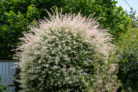
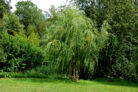
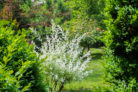
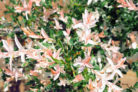
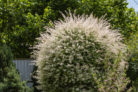
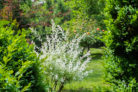
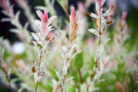
Generally speaking, the Dappled Willow (or Flamingo Willow) is a real powerhouse when it comes to growth. A healthy plant will bounce back without a hitch, even after a heavy-duty pruning. If you’re looking to experiment with topiary or specific shapes, there’s honestly no better plant to practice on. Of course, if you’re dealing with diseases or pest infestations, a radical cutback is often the only way to save the day. Here’s the lowdown on how to handle it.
There are two main scenarios you’ll run into:
- Hard pruning for ornamental shrubs
- Hard pruning for a “standard” (the tree-form version)
Timing Your Radical Cutback
It might feel a bit scary to hack away at your plant, but a hard prune actually supercharges its growth. As long as you do it right and time it correctly, your Dappled Willow will show you just how resilient it really is. Before you know it, you’ll be looking at a flush of new growth, lush foliage, and a beautifully shaped plant. Now, if your willow is sick, you might have to act immediately regardless of the season. But if you’re pruning to encourage growth, when should you actually grab the shears?
The sweet spot for pruning is early spring. Once the threat of frost has passed, you’re good to go. Your willow will take all that springtime energy and put it straight into new shoots. Just a few months later, you’ll be rewarded with a full, vibrant display. Try to avoid radical pruning during the summer months unless it’s an emergency. Usually, summer is just for “maintenance” cuts—trimming back those stray branches to keep your willow looking tidy, especially if you’re maintaining a specific shape like a globe.
Pruning Shrubs vs. Standards
If you’re growing your Dappled Willow as a natural shrub in your garden, a radical prune is about as easy as it gets. To encourage a fresh start, you can cut the entire shrub down to just a few inches above the ground. No need to painstakingly pick out individual dry twigs—just a quick, clean sweep and you’re done!
However, if you have a standard (tree-form), you need to be a bit more careful. These little trees are usually created through grafting. If you accidentally cut off or damage the graft union (the spot where the bushy top meets the trunk), you’re going to have a bad time. Here’s the step-by-step for a tree-form willow:
- Shorten all the branches—but make sure to leave at least four inches (10 cm) of growth.
- Ensure there are at least four “eyes” (buds) left on each branch.
- Make your cuts directly above one of those buds.
- Remove any completely dried-out branches right at the base.
- Thin out the crown by removing any branches that are crossing or growing inward.