Looking for plants that the bees will love and that won’t give up on you when the temperature drops? These popular bee-friendly perennials are tough as nails. They’ll breeze through a cold winter without any special protection and come back even better next year.
[[plants]]
++Tickseed (Coreopsis)
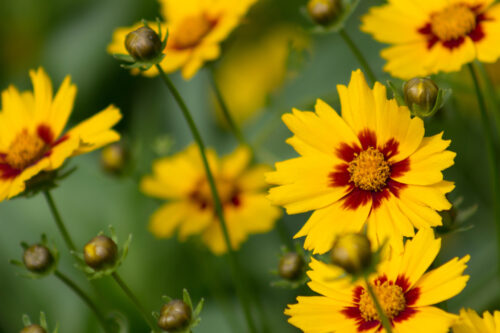
Tickseed is a real showstopper with its cheerful, sunny yellow daisy-like blooms. Depending on the variety, you can also find them in striking reds or pinks. The bloom time for Coreopsis kicks off in June, providing a steady feast for bees and other beneficial insects all through the best months of summer. By adding this perennial to your garden, you’re doing a huge favor for local biodiversity.
++Anise Hyssop (Agastache rugosa)
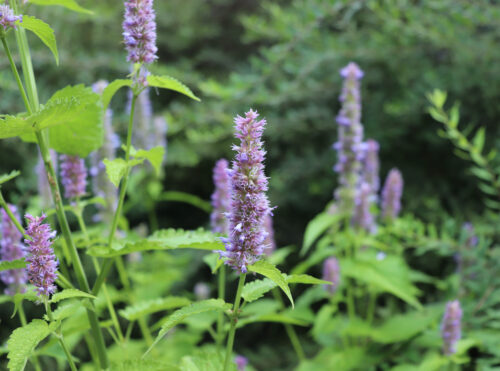
Anise Hyssop is another heavy hitter for a pollinator-friendly garden. There are tons of varieties out there, but most feature tall, upright flower spikes in beautiful shades of blue and violet. This hardy perennial usually grows to about two feet tall. It’s not picky about soil quality, but it does hate “wet feet.” Make sure you plant it in well-draining soil so the roots stay happy.
++Stonecrop (Sedum)
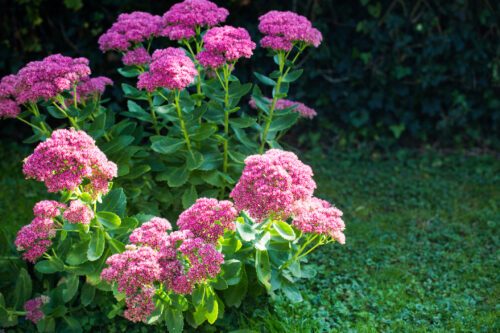
Sedum is a fantastic choice if you want interesting succulent-like foliage topped with clusters of tiny flowers. It’s incredibly winter-hardy and thrives even in poor, rocky soil. Many gardeners use it as a groundcover for sandy or gravelly spots, but it’s just as happy in standard garden soil. Those countless tiny blossoms are a magnet for honeybees, wild bees, and hoverflies, making it a vital resource for the smallest garden guests.
++Catmint (Nepeta racemosa)
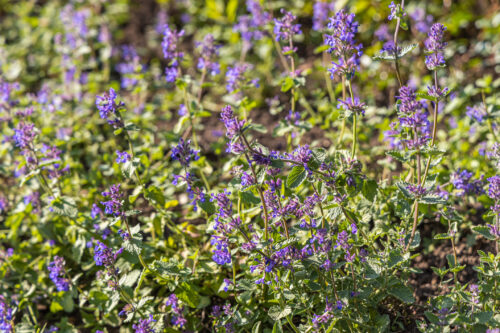
As the name suggests, cats absolutely love the scent of this plant, but so do pollinators! Catmint produces upright flower spikes that look a lot like lavender. It’s low-maintenance, hardy, and grows well in everything from sandy to clay-heavy soils. Whether you plant it in a container or directly in the ground, the bees will find it. Plus, the foliage has a lovely scent—a mix of citrus and earthy herbs.
++Golden Marguerite (Anthemis tinctoria)
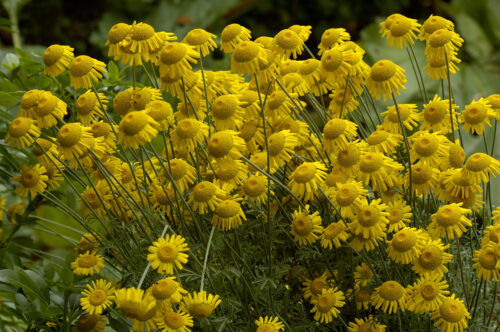
The bold, vibrant yellow of the Golden Marguerite (also known as Dyer’s Chamomile) is a real eye-catcher. Historically, these flowers were used to dye fabrics. Both the leaves and the flowers have that classic chamomile look that even kids recognize instantly. It’s a breeze to care for and survives the winter without a hitch. Just make sure to pick a spot with plenty of sunshine to keep it happy.
++Vervain (Verbena)
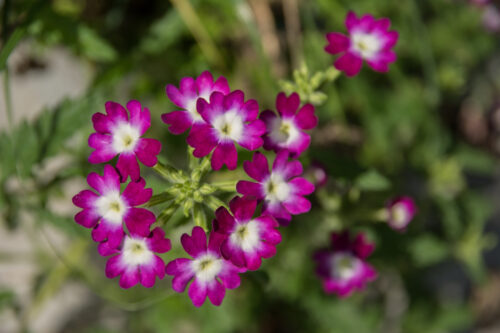
While some Verbena species hail from the Mediterranean, many varieties have become staples in temperate gardens everywhere. This perennial is winter-hardy and doesn’t need much fussing over when the frost hits. In the summer, it produces delicate little flowers that provide a massive food source for bees. It’s so decorative that it’s a favorite for formal flower beds and wilder cottage gardens alike.
++Bush Vetch (Vicia sepium)
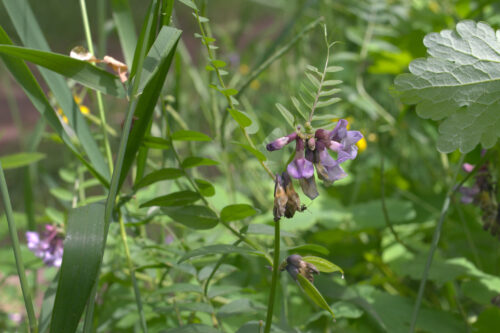
If you’re looking for a bee-friendly perennial that can climb up a fence or trellis, Vetch is a great way to go. Bush Vetch, in particular, is a hardworking plant that offers lush green foliage and charming little flowers. Throughout its blooming season, it serves as a reliable pit stop for bees and other helpful insects looking for a snack.
%%Bacopa (Sutera cordata “Everest Dark Blue”)
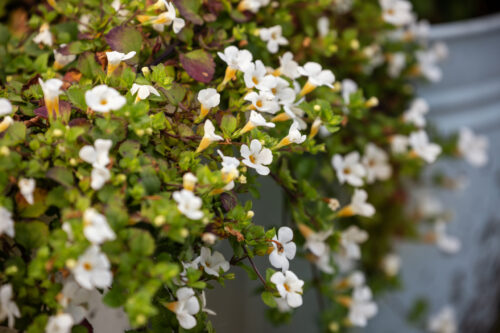
Here’s a pro tip: Bacopa (sometimes called the Snowflake Flower) is a hidden gem for pollinators. Varieties like “Everest Dark Blue” are packed with an above-average amount of nectar. You’ll hear a constant hum of activity around these plants during peak season. They start blooming as early as May and often keep going right through October, making them one of the hardest-working “long-bloomers” in the garden.