Exotic orchids are total sun-seekers by nature. Because of where they come from, they’re used to bright, sunny spots, and you’ll want to recreate that vibe at home to keep them happy. But here’s the catch: it’s all about balance. While they love the light, too much direct sun can actually scorch your plants.
Orchids Crave the Light
In the wild, these tropical beauties call the rainforests home. They usually perch high up on massive jungle trees or rocky cliffs where they can soak up plenty of sunshine. The canopy above acts like a natural filter, protecting them from the harshest, most intense rays.
Because of these roots, orchids are hardwired to thrive in bright conditions. When you’re growing them as houseplants, your goal is to find a spot with plenty of natural daylight.
Finding the Perfect Spot
When picking out a location for your orchid, look for a place that hits these marks:
- Bright and sunny, but shielded from the intense midday sun.
- Warm and cozy, ideally around 77 degrees Fahrenheit (25°C).
- Humid! They love a humidity level of at least 60%, though even higher is better.
Avoid the Midday Scorcher
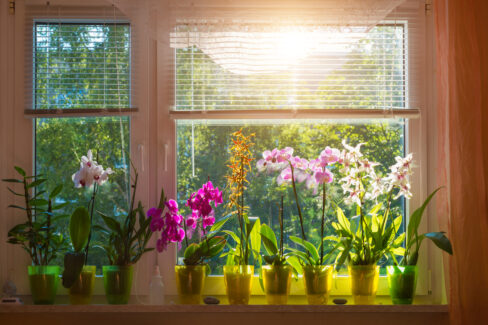
East- or west-facing windowsills are usually the “sweet spot” for orchids because of the way the light hits throughout the day. However, you’ve got to be careful with south-facing windows. The midday sun can get incredibly hot, and window glass actually magnifies those rays. To prevent “sunburn,” use a sheer curtain or a blind to filter the light during the hottest part of the day.
Brightening Up Dark Winter Days
During the winter, light is hard to come by, but your orchids still need their fix. Move them to your brightest window to maximize what little sun there is. If your home is still too dark, you can supplement with special grow lights. Fluorescent tubes with a “daylight white” (865) spectrum work great, and using reflectors can help bounce even more of that precious light back onto your plants.
Signs Your Orchid Isn’t Happy
If your orchid isn’t getting enough light, it might start stretching out—producing weak, spindly growth known as “etiolation.” Some varieties might even drop their leaves or flowers in protest. If you see this, it’s time to move them to a sunnier spot.
On the flip side, too much sun will cause actual sunburn. You’ll notice yellow patches on the leaves, often with a dark, crispy border. If that happens, move your plant to a slightly shadier area or make sure it’s protected from that direct noon sun.