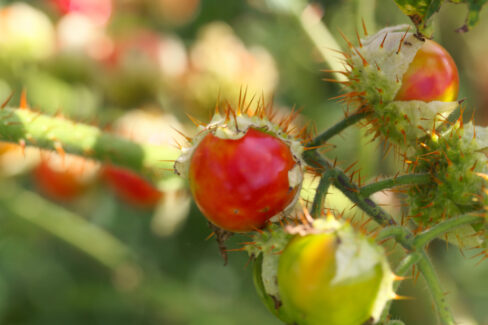
Litchi tomatoes (also known as Morelle de Balbis) are such a treat—they taste surprisingly like cherries and are super versatile in the kitchen. The only downside? They take their sweet time to ripen. If you want a head start on the season, your best bet is to overwinter your plants. This gives them a massive jump on fruit production come spring.
Prepping Your Litchi Tomato
Even though they are perennials, most people treat Litchi tomatoes like annuals and just start over every year. While growing them from seed is pretty much exactly like growing regular tomatoes, overwintering gives you a huge advantage. Instead of spending all their energy just getting tall in the spring, established plants can get straight to the business of flowering. Plus, you’ll usually get a much bigger harvest!
One reason people hesitate to keep them over the winter is, well… the thorns. These plants are prickly! If yours has grown into a massive, sprawling bush, feel free to trim back those long stems to make the plant more manageable before bringing it inside.
Potting and Moving
If your Litchi tomato spent the summer in a garden bed, you’ll need to move it into a pot in late fall. Try to do this early enough so the roots have a little time to settle in before the big move to winter quarters. If your plant is already in a container but looking a bit cramped, go ahead and size up the pot.
Use a high-quality, nutrient-rich potting soil. The good news? You can totally skip the fertilizer during the winter months while the plant is resting.
Winter Care Tips
The great thing about Litchi tomatoes is that they aren’t divas during the winter. They just need a bright spot that stays frost-free. A sunny stairwell, an unheated (but insulated) sunroom, or a frost-proof greenhouse is perfect.
Your main job over the winter is just making sure the soil doesn’t completely dry out. Water sparingly—you want the soil moist, but never soggy. If you see water sitting in the saucer, make sure to dump it out so the roots don’t rot.
And here’s a huge bonus: you rarely have to worry about pests! Those signature thorns aren’t just for show, and the plant is covered in sticky hairs that act like natural flypaper. Aphids and mealybugs usually get stuck before they can do any real damage, making this one of the lowest-maintenance plants in your winter collection.