If you’re thinking about planting a pear tree in your backyard, you’re in for a treat! There are so many amazing varieties out there, and honestly, there’s a perfect fit for almost every garden size. Before you dig that hole, though, it’s super important to understand how big these trees can actually get. Let’s break down the different sizes and growth habits so you can pick the right one for your space.
Pear trees come in all shapes and sizes. Here are the most common forms you’ll run into:
- Standard (Full-size)
- Semi-Dwarf
- Low-Standard
- Spindle and Bush
- Columnar Pears
Standard (Full-size)
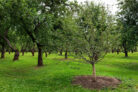
A “Standard” tree is usually grafted onto seedling rootstock. On these giants, the canopy doesn’t even start branching out until it’s about 6 to 7 feet off the ground. These trees are the real deal—they can soar up to 65 feet high! Unless you have a massive property or a mini-orchard, these might be a bit much for a typical suburban yard.
Semi-Dwarf
The Semi-Dwarf is a step down, with the trunk reaching about 3 to 5 feet before the branches start. Even though they’re “smaller,” they can still hit heights of 30 to 40 feet. They’re beautiful, but they still need plenty of elbow room to thrive.
Low-Standard
With a trunk height of about 2.5 to 3 feet, these are a bit more manageable than their bigger brothers. However, they can still reach up to 25 feet tall, which might still be a tight squeeze for a small city lot.
Spindle or Bush
This is the go-to choice for most home gardeners. These trees are grafted onto weaker quince rootstock, which keeps their growth in check. The branches start low—just 15 to 24 inches off the ground—and the tree usually tops out at a friendly 10 to 13 feet. These are perfect for training as espalier fruit against a sunny wall. The wall traps heat, which pears absolutely love!
Columnar Pears
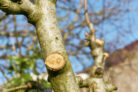
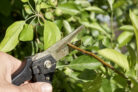
If you’re short on space, columnar pears are a total game-changer. These narrow trees grow about 6 to 10 feet tall. Thanks to their breeding and a little regular pruning , the fruit grows right along the main trunk. It makes harvesting a breeze since you don’t even need a ladder.
A Few Varieties to Consider
- Williams Christ (Bartlett) is a classic often sold as a spindle or semi-dwarf.
- Champagne Fruit Pear is a heavy hitter that can reach an impressive 30 to 50 feet.
- Helenchen Dwarf Pear is a little cutie that stays small, usually topping out between 5 and 6 feet.
Pro Tip: Always double-check the expected mature size with your nursery before you buy. It’ll save you a lot of headaches (and heavy pruning) later on! If you’re looking to grow fruit in containers on a patio, columnar or dwarf varieties are definitely the way to go.